Painting with Light

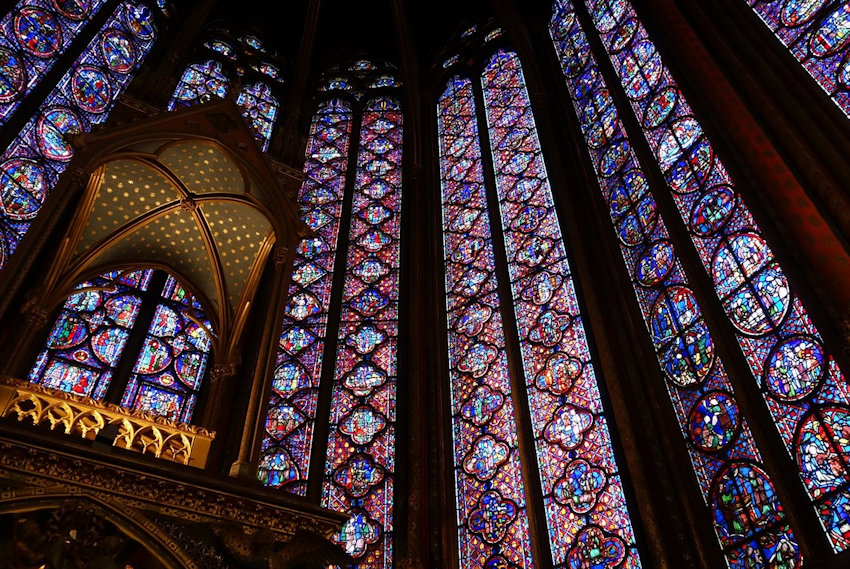
Even on a gloomy midwinter’s day, sunlight filters through stained glass, dazzling the eyes and enlightening the mind with all its glorious colors.  Stained glass windows can be found everywhere, from churches and hotels to cruise ships and homes.  First and foremost, it is a beautiful art form, but there is more to this than meets the eye.  Let’s dig a little deeper into the world of stained glass. 

Traditional Stained Glass

There are two types of stained glass:

1. Traditional Stained Glass – Individual pieces of glass soldered together, as shown above.  This labor-intensive process is well-worth the effort, but it also adds to the expense of the finished piece.  Additional details may be painted by hand on the interior face of the glass. 

Painted Glass (aka Enamelled Glass)

2. Painted Glass – Designs are painted on glass with special pigments containing ground glass, which must be fired in a kiln to permanently fuse the colors to complete the process. 

With or Without
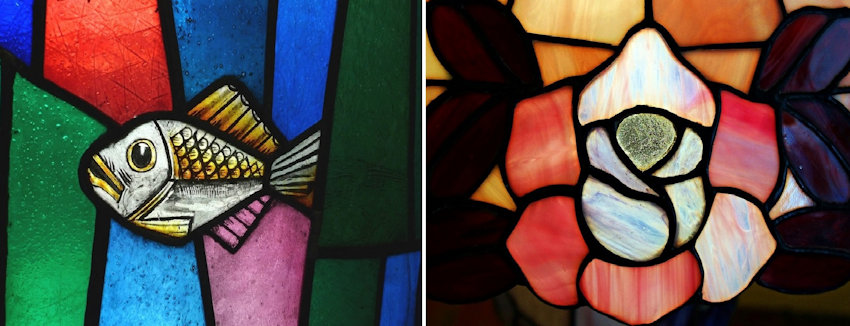
Minute details, such as this fish’s fins, scales, and lively expression, have been hand painted to create a one-of-a-kind aquatic treasure.  With bold colors and thoughtful design, the lovely rose, shown above, can stand on its own without the need for hand-painted embellishments. 

Close Encounters

This colorful contemporary glass reminds me of the musical light board in the movie, “Close Encounters of the Third Kind.”  The soft glowing colors and textured glass make you wonder what awaits inside. 

Forever Yours
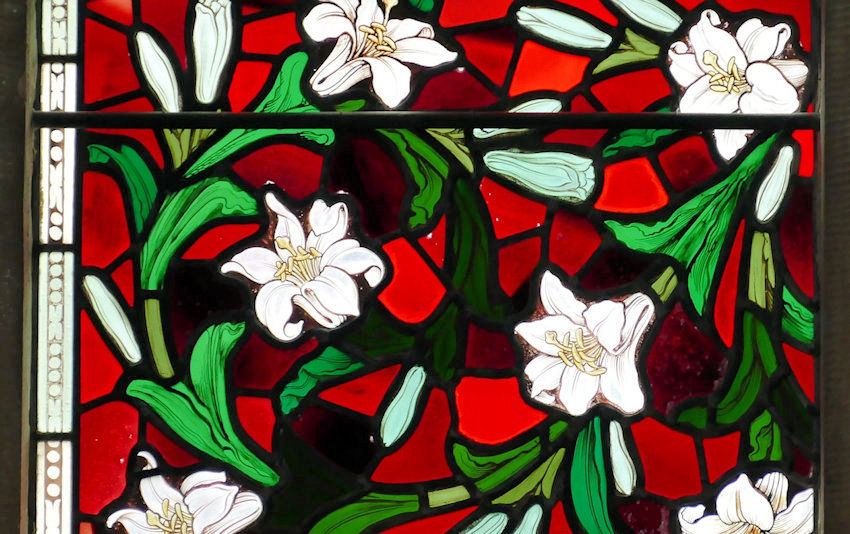
Delicately painted white blossoms, set against a bold red and green background, will flower for eternity. 

A Rose by Any Other Name

Rose windows adorn many churches around the world.  If you ever wondered what it would be like to stand inside a kaleidoscope, this is your chance to find out. 

Stairway to Heaven

Stained glass panels entice the viewer to follow the spiral path upward toward the heavenly white light. 

Tell Me a Story

Truly a picture is worth a thousand words.  Today we take reading for granted, but in the past illiteracy was common.  Story telling with pictures enabled everyone to learn.  Some windows depicted detailed biblical scenes, while others were more abstract with easily understood symbolism. 

On the Grid
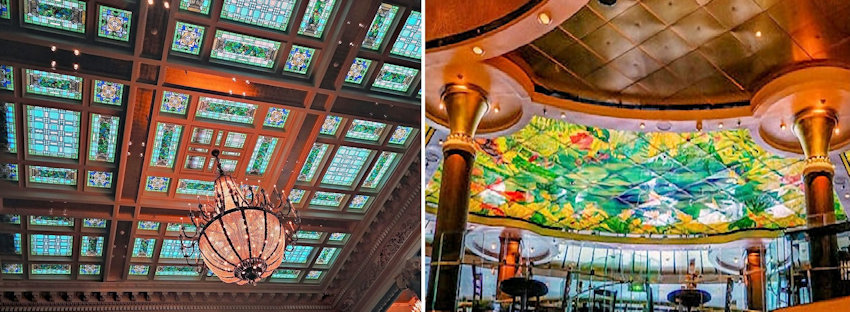
A strong rectilinear grid, repetitious patterns, and a soft blue background unify this harmonious ceiling design.  The free form, brilliant colors, and contrasting, copper architectural details provide an interesting focal point in this cruise ship lounge. 

Heads Up

Glass dome decorative motifs are complimented by the plaster architectural ornamentation.  The glass dome on the right is framed by metallic gold trim and adorned with metallic blue spheres, drawing the eye upward toward this playful stained glass focal point. 

In the Eye of the Beholder
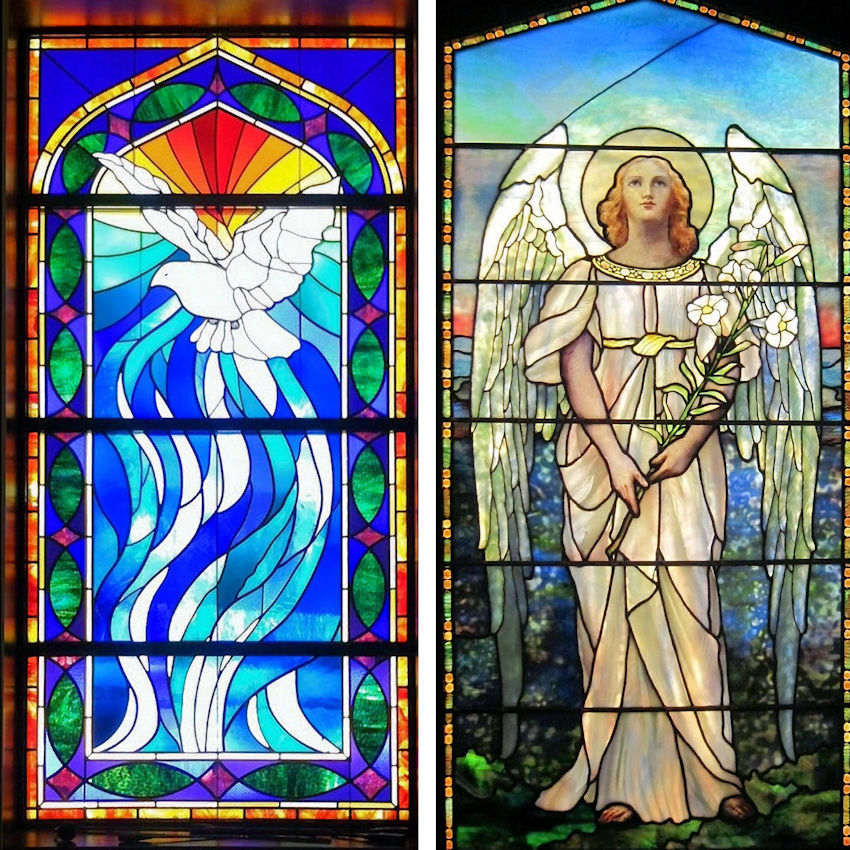
Context & symbolism go hand in hand.  In a church, a white dove usually symbolizes the Holy Spirit, but in secular architecture it is a sign of peace or a celebration of nature.  Stained glass in churches is often donated as memorials.  Did you know the artist often painted the face of an angel or saint to resemble a deceased member of the donor’s family?  You and I see an angel, but the family sees Grandma Agnes. 

A Little Piece of History
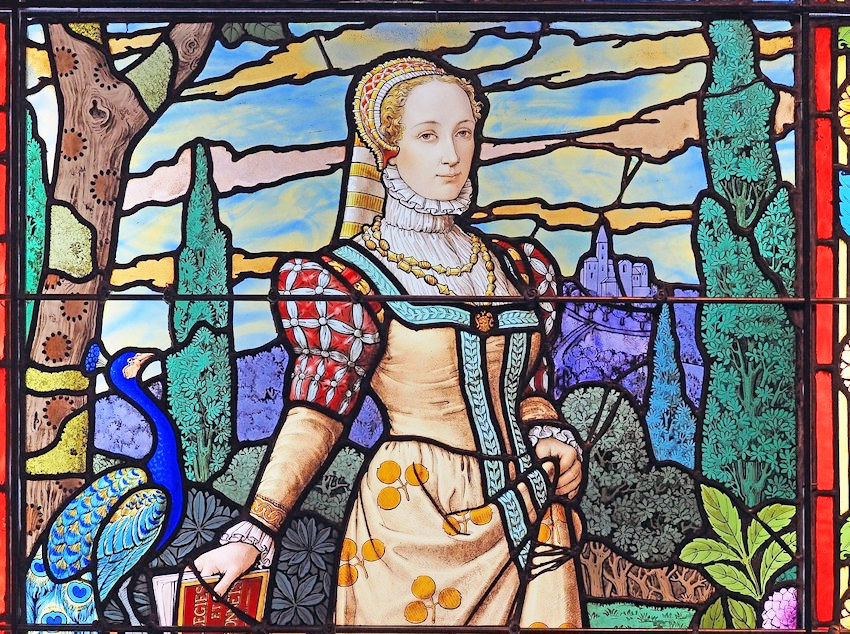
Instead of painting on canvas or sculpture, historical figures and events have been honored in stained glass.

Eternal Spring
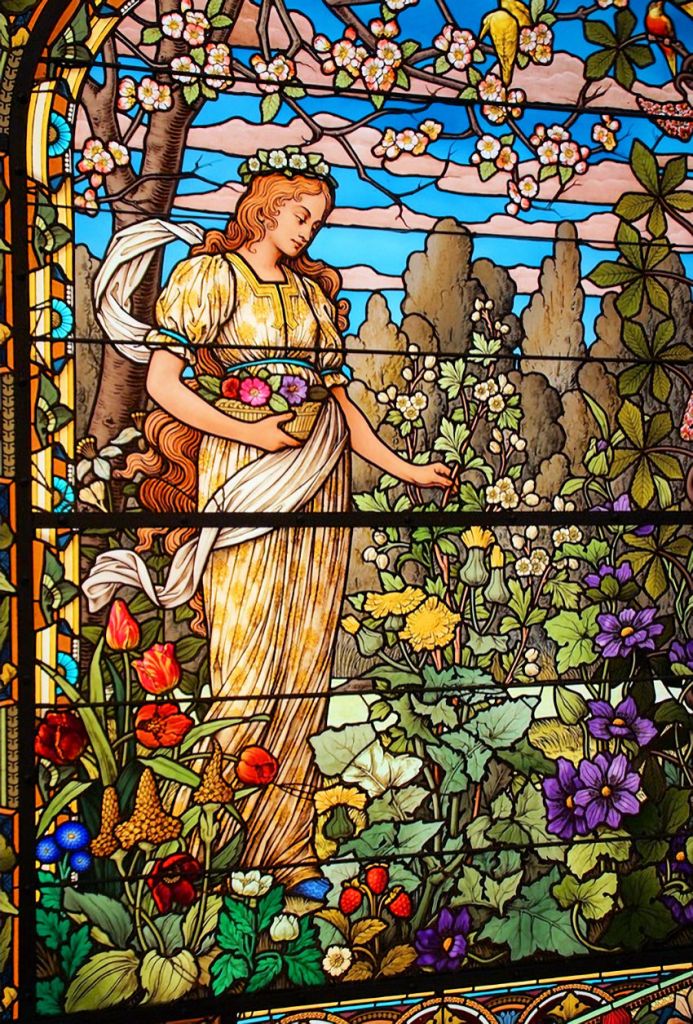
This beautiful Art Nouveau masterpiece includes a portrait as well as a very lush floral landscape in celebration of springtime. 

“Building” an Addition
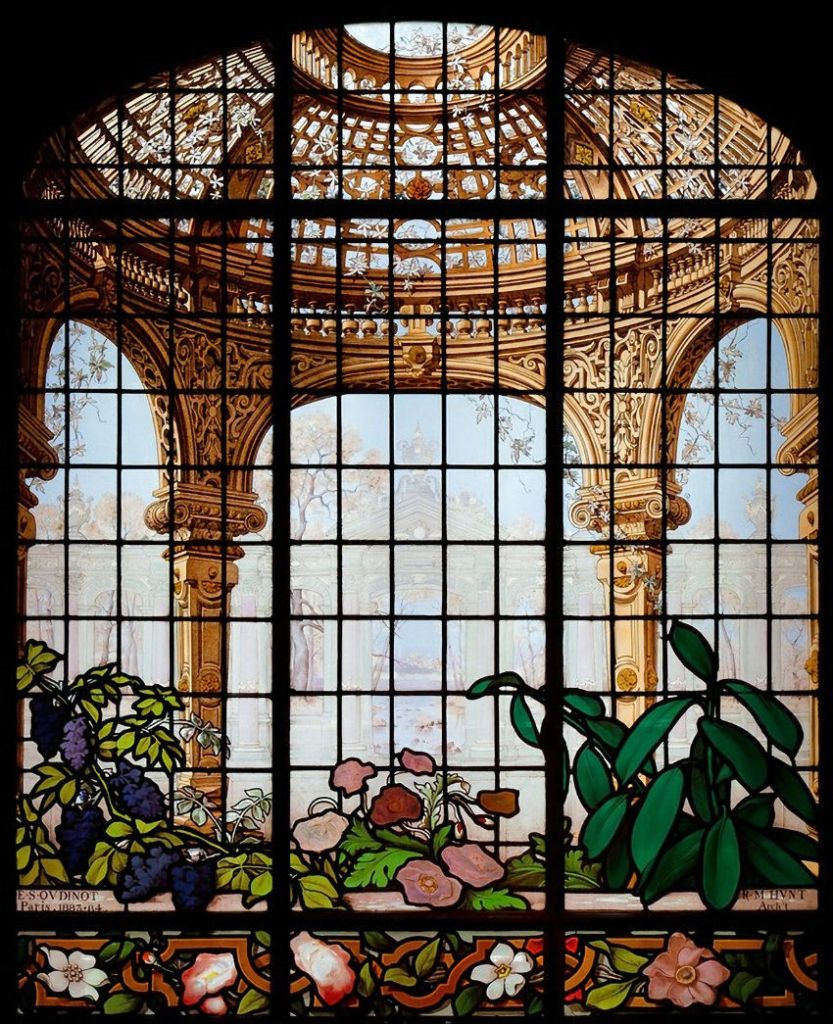
This window visually expands the architectural space, making the building and property feel stately and grand.  It can also obscure an unsightly view, while providing scenic eye candy for the viewer. 

It’s a Jungle Out There

Several artistic tricks are used to create this lively wild jungle, including perspective, overlapping images, and the shape of the individual glass pieces. 

A Grand Illusion
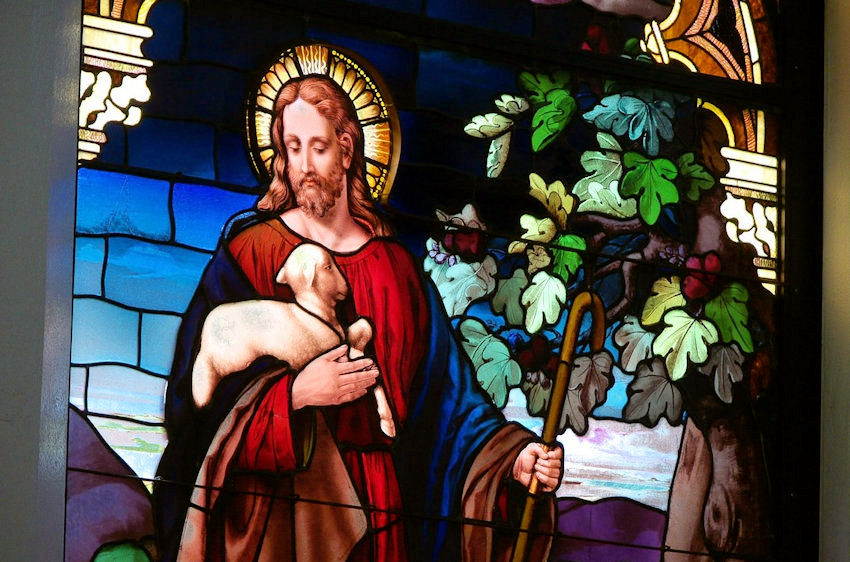
Vibrant colors and clever design are the keys to this amazing stained-glass window.  The play of light and shadow, three-dimensional rendering, and concealing most of the lead strips, creates the illusion of Christ standing in front of the window. 

Let There Be Light
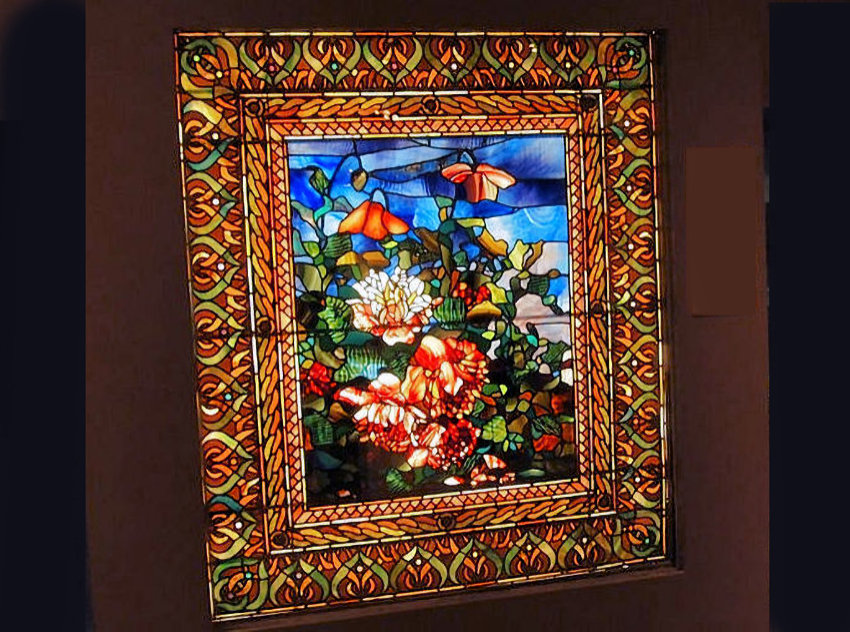
Stained Glass Wall Art

This may look like a painting in a frame, but it is all stained glass, including the “frame.”  You may not be able to tell from the photo, but this “window” is on an interior wall!  At this point, you probably have one question: How could the glass glow without sunlight?  I’m glad you asked!  A light fixture, either fluorescent or LED, is recessed into the wall.  A sheet of white glass conceals the light bulbs or tubes.  The stained-glass is the final layer.  Turn on the light and you will have the full colorful effects without the sun! 

I hope you enjoyed our little exploration and picked up a few ideas to incorporate stained glass into your life.  Until next time…

Thanks for Reading & Happy Crafting!

One Craft Leads to Another

Colorful Sunset

Because we live in such a beautiful world, it comes as no surprise that we are inspired to create using every color of the rainbow.  Many people have not had the opportunity to explore or develop their artistic abilities.  Starting small enables you to build up your confidence while learning new skills.  Coloring is a fun and easy introduction to the world of arts and crafts. 

Let’s look at the coloring media options, and then we will explore different crafts where you can apply your coloring savvy.  

Thin Core Colored Pencils

Colored Pencils Thin Core

Thin core, colored pencils have hard lead, which is great for drawing fine details.  These are inexpensive and sold in sets.  If you are looking for saturated colors, or need to fill large areas with color, use thick core pencils shown below.

Thick Core Colored Pencils

Colored Pencils Thick Core

Thick core, colored pencils have soft lead, which is essential for shading and blending.  When purchased individually, these pencils can be expensive, but craft stores often have big sales on colored pencil sets, such as Prismacolor, at very affordable prices. 

Crayons

Crayons

Crayons have been kid’s favorites for decades.  If you have them on hand, grab your favorite color and plunge into the world of coloring. 

Gel Pens

Gel Pens

The fine points on gel pens can be used for drawing intricate details or color accents.  These pens include some unusual inks, including metallic, neon, iridescent, and glitter. 

Markers

Markers

Markers produce bold colors across large areas with only a few strokes.  You can also layer colored pencil over marker to create interesting effects.  Markers may soak through paper, so be sure to place a liner under the page to prevent damage to the surface underneath. 

Sketchbook versus Coloring Page

Blank Page vs Printed Lion Page

Now you could buy a sketchbook and start doodling.  However, the dreaded blank page can be intimidating.  Coloring books are a great place to start.  As you develop your unique artistic style, you might want to pursue new crafts, which will challenge your newfound skills.  Below are side-by-side coloring pages with related crafts. 

Coloring & Watercolor Painting

Coloring & Watercolor Painting

Do you enjoy blending colors to find that perfect shade?  Painting may be the perfect choice for you.  Watercolors can be transparent, translucent, or opaque, depending upon the amount of water used.  You may want to lightly outline your overall design with watercolor pencils prior to painting, but don’t press too hard as the lines might show through the paint.  Watercolor paper is strong enough to withstand being wet and dries flat.  Acrylic and oil paints are alternate options. 

Coloring & Mural Painting

Coloring & Mural Painting

Do you find yourself drawn to bold colors and designs?  Is your motto: “Go big or go home?” You might want to try mural painting.  If wall space is limited, paint on canvas. 

Coloring & Soft Pastels

Coloring & Soft Pastels

Soft dreamy palettes are easily achieved using soft pastels as shown above.  These pigments come in easy-to-use sticks, allowing you to draw and color at the same time. 

Coloring & Mixed Media

Coloring & Mixed Media

Do you tend to choose geometric images with sharp, clean lines?  Mixed media is up for the challenge.  Technical pens, markers and watercolors were combined to render this beautiful image of Notre Dame Cathedral. 

Coloring & Stained Glass

Coloring & Stained Glass

Nature is a common theme for stained glass.  The complex patterns, and bold translucent colors are illuminated by sunlight, creating a kaleidoscope of light. 

Coloring & Mosaics

Coloring & Mosaics

If you enjoy intricate designs, mosaics fit together like puzzle pieces, which work together to create a larger image, viewed at a distance. 

Coloring & Fantasy Portraiture

Coloring & Fantasy Portrait

Yes, fantasy portraiture is a thing.  With the appropriate wardrobe, accessories, hair, makeup, and special effects created with photo editing software, fantasy becomes reality.  Make someone’s dream come true. 

Coloring & Abstract Art

Coloring & Abstract Art

Abstract art is very popular, and can be created with any medium, including oils, acrylics, watercolors, and photo editing software. 

Coloring & Embroidery

Coloring & Embroidery

Bold solid colors, floral motifs, and three-dimensional details easily translate to needle crafts, such as embroidery or needlepoint. 

Coloring is relaxing, reduces stress, and provides instant gratification.  Who knows what crafts you might explore next?  One thing I have found to be true in all my artistic endeavors: “Draw or paint what you FEEL, not what you know.”  Follow this advice and you will never be disappointed. 

Special thanks to Trudy, a local crafter, for providing all the coloring pages! 

Thanks for Reading & Happy Crafting!