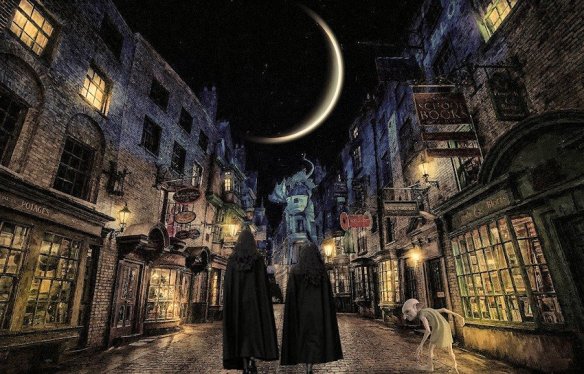
Harry Potter’s Magical Creatures

Diagon Alley
During frustrating travel restrictions, wouldn’t it be nice to wave a magic wand to restore order once again to our lives.  I suppose the next best thing is delving into a magical book or watching a movie about everyone’s favorite teen wizard, Harry Potter.

Harry Potter Owl & Griffin
While I appreciate all the characters created by J.K. Rowling, I must admit my favorites are the mysterious, magical creatures that inhabit that fantasy world.  Whether real or imagined, each is endowed with exceptional powers and abilities – some for good and others not so much.
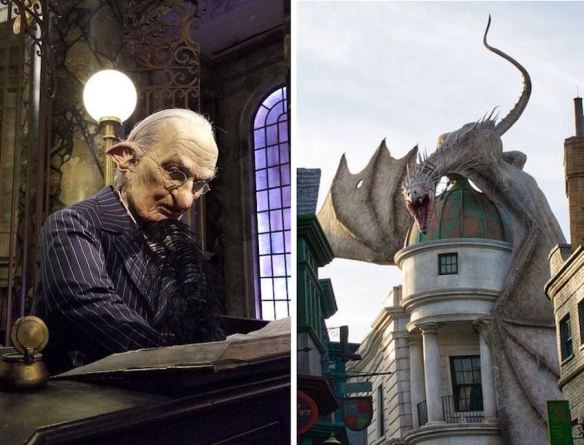
Harry Potter Goblin & Dragon
Don’t you just love goblins for balancing the books and dragons to keep it interesting?
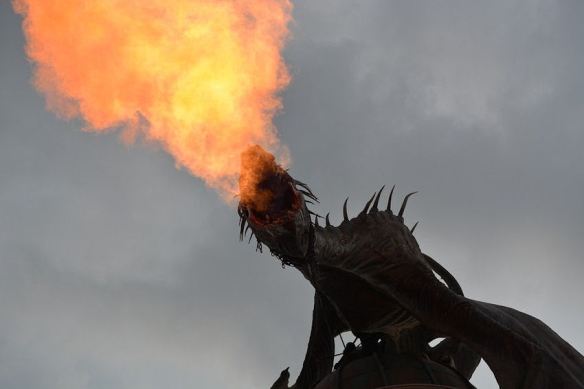
Fire Breathing Dragon
Fire-breathing dragons are awesome, but perhaps we need to find something a little less flammable? lol
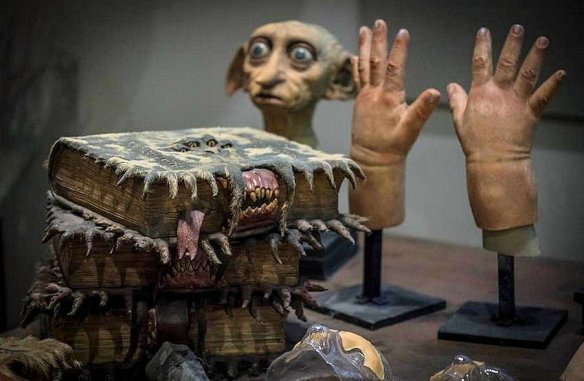
Harry Potter Monster Book
Every Harry Potter fan dreams of living in his magical world. You have read the books and seen the movies, but to experience it in the real world, you’ll need to make the trip to Universal Studio’s Wizarding World of Harry Potter. If travel isn’t on your agenda, perhaps you could bring a piece of Harry’s world into your own.
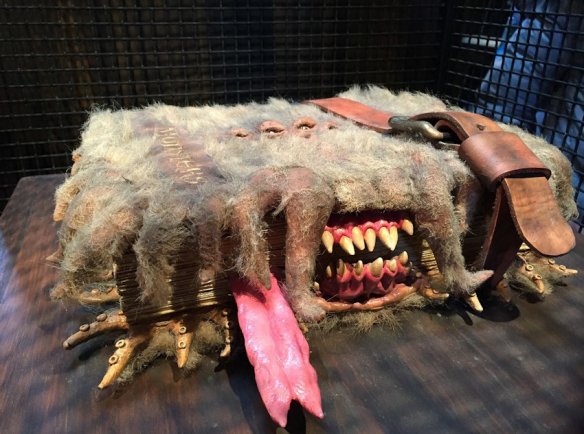
Harry Potter Monster Book
You can’t be a wizard without a few enchanted books. Who could forget the ferocious monster book? Ever wondered if you could make one?

How to Make a Monster Book Fit for a Wizard:

Raw Wood Book Box
Unfinished Wood Book Box
The moon and the stars must have aligned to make your wish come true with the discovery of this wooden book box, available through Michaels for $6.49. It’s the perfect size and thickness, and offers a strong foundation for building a monster book. As a bonus, there’s a secret compartment inside for storing your favorite spells (recipes), magic charms (office supplies), or wizardly collectibles.

Supplies:
Wooden Book Box (9.75″ x 7.5″ x 2.88″)
Black Paint – brush on Acrylic or spray paint
Sharpie Metallic gold marker – medium point
Vampire Teeth
Faux fur
4) Packing peanuts
4) Glass marbles – orange
1) Bottle fabric paint – black
1) Bottle fabric paint – white
1) Leather or vinyl belt
Glue gun
Scissors
Paintbrush

Book Box Painted Black
Book Painted Black
Paint the box black, inside and out. This dark color will make a great contrasting background for the gold paint applied in the next step.

Gilded Pages
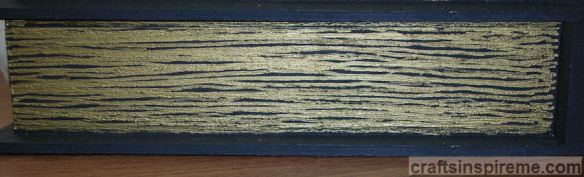
Gilded Pages
To create the appearance of gilded pages, draw horizontal lines along all three sides of the book, using a Sharpie metallic gold pen. Don’t worry about crooked lines. Pages in old books become crinkled and curled. Imperfect lines will provide an aged look.

Toothy Expression
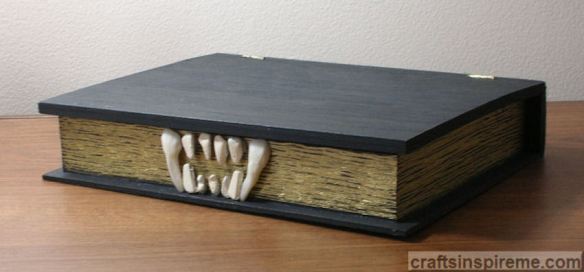
Attach Teeth
The next step is attaching teeth. Center the mouth as shown. The large fangs are from Fire Mountain Gems, and the smaller teeth are actually clear quartz crystal chips, painted to match. To simplify this step, purchase vampire teeth at a Halloween store or Amazon.

Hair Club for Monsters
Fur Cover
Faux fur from JoAnn Arts & Crafts is the perfect color and texture for this monster. Cut the piece large enough to allow a hem on all four sides. Be sure the fur will not interfere with the operation of the hinges. Please note: the raw edges of fur shed like crazy. Once they are hemmed and attached to the book the shedding stops. (Yeah!)

Faux Fur
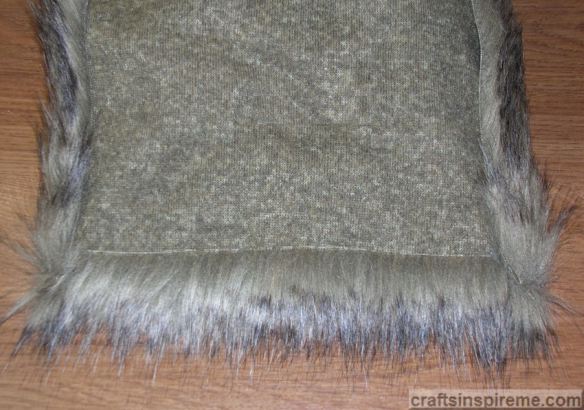
Trim & Hem Fur
The sides could be hand sewn, but these hems were made with a glue gun.

Shaped & Glued Packing Peanuts
Packing Peanuts as Eye Sockets
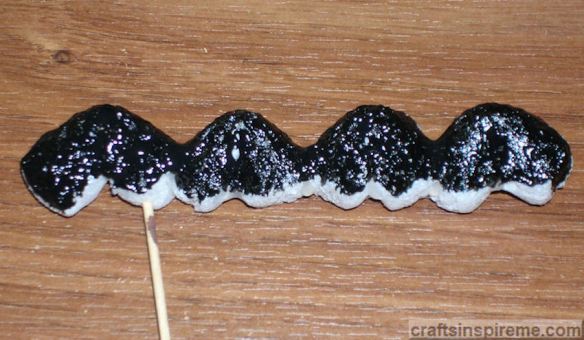
I decided this monster would have four eyes. To make the eye sockets, use four packing peanuts. Each peanut is pinched in half and glued to hold its shape. Glue the four together end to end as shown.

Painted Black
Painted Packing Peanuts
Paint the foam with black fabric paint. Use a toothpick to keep the paint off your fingers.

Orange Glass Eyes
Marble Eyes
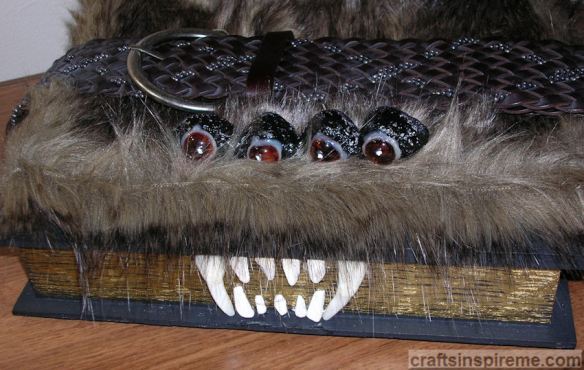
I found four orange glass marbles with red streaks resembling bloodshot eyes. Each was glued into the sockets, and outlined with white fabric paint. A white dot was added to each marble to give it that creepy glint in the eye appearance.

Final Assembly
Attach Eyes & Fur
Attach the eyes to the fur, and then secure the fur on top of the box.

Accessorize
Finished Monster Book
Last step: Wrap an old leather belt around the book to keep your monster under control.

For diehard Harry Potter fans with model building and wiring skills, there is one more step that would take this monster book to the ultimate level: mechanization!  Hide a motor inside the box to operate remote controlled wheels and hinges for the jaws.  Unleash the beast!  lol

Congratulations!  You’re now the proud owner of your very own Monster Book.  Be sure to keep it on a short leash because we all know how much it loves to shred – shoes, feet, paper – anything within reach.  For decades, kids have been telling their teachers, “The dog ate my homework!”  With a monster book as a pet, this excuse might be believable!

Do you have a favorite Harry Potter creature?  Please share your thoughts in the comments section.  Until next time…

For more Harry Potter crafts, please check out this post: “Abracadabra – Hermione & Harry’s Magic Wands.” 

Thanks for Reading & Happy Crafting!
Froggy Went A-Courting

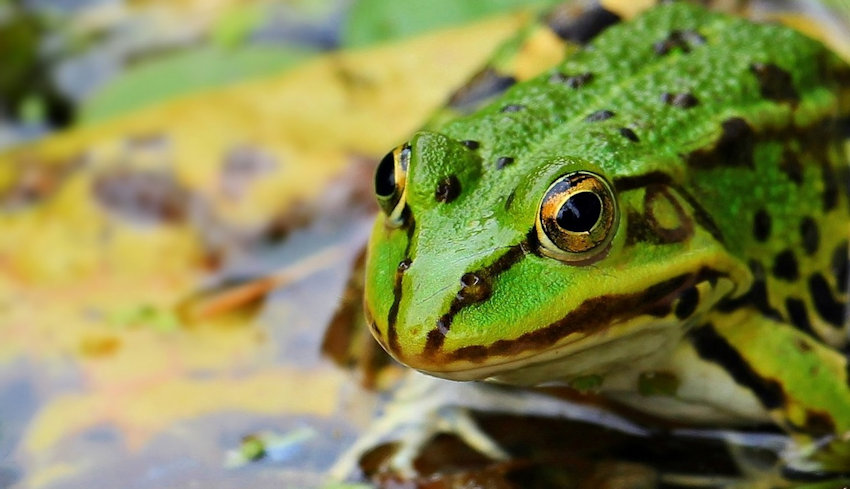
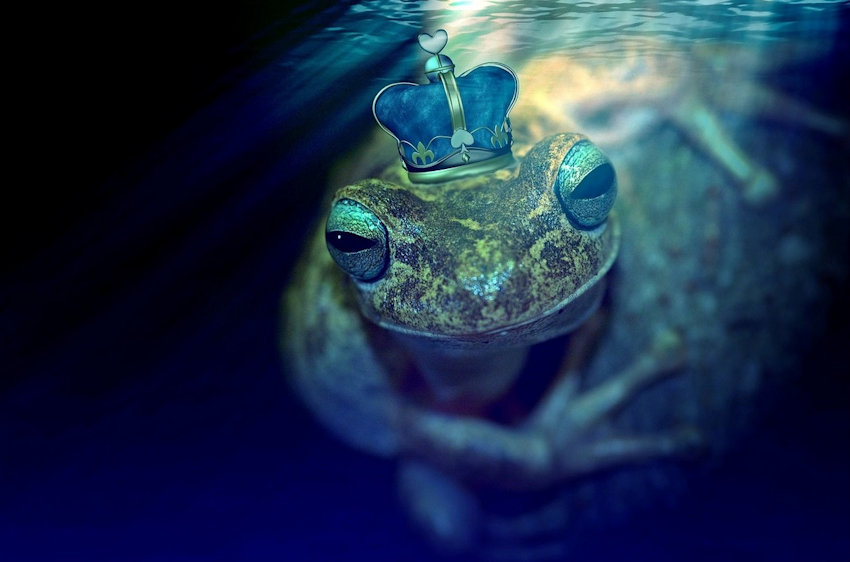
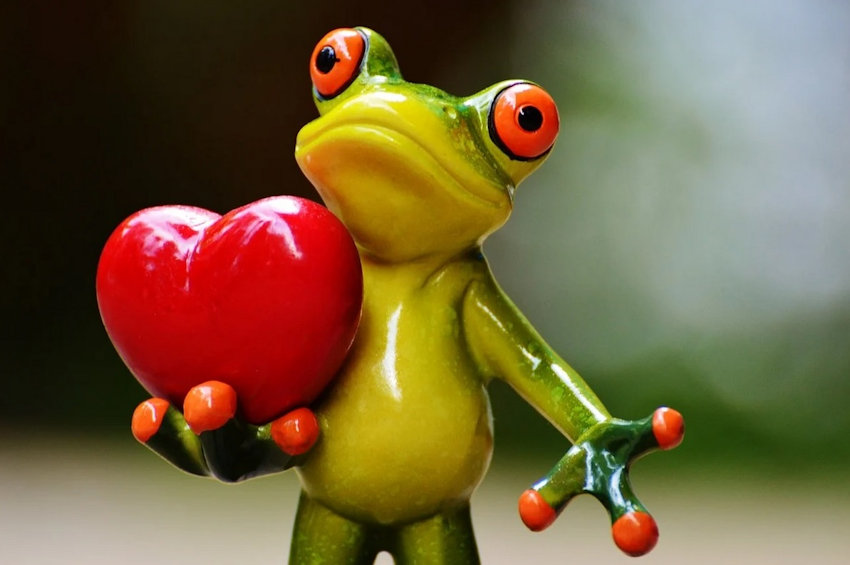
As a kid, I remember reading a book about a courting frog, which is still popular today.  And who could forget the story of the Frog Prince?  To this day, my mom kisses every frog figurine, ornament, or pendant, just in case it turns into a prince.  Nothing so far, but she remains hopeful.  This week we will be painting a frog in search of a mate.  We will start with a couple of photos for inspiration:

Inspiration

This frog has great patterns, nice mixture of greens and browns, and cool eyes. 

Inspiration

The spotted pattern on this frog would be easy to duplicate. 

How to Paint a Resin Frog:

Original Gray Resin Frog – Front

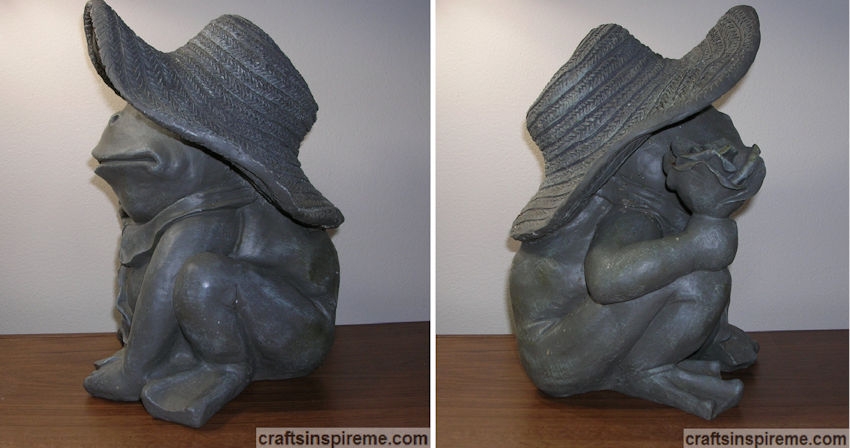
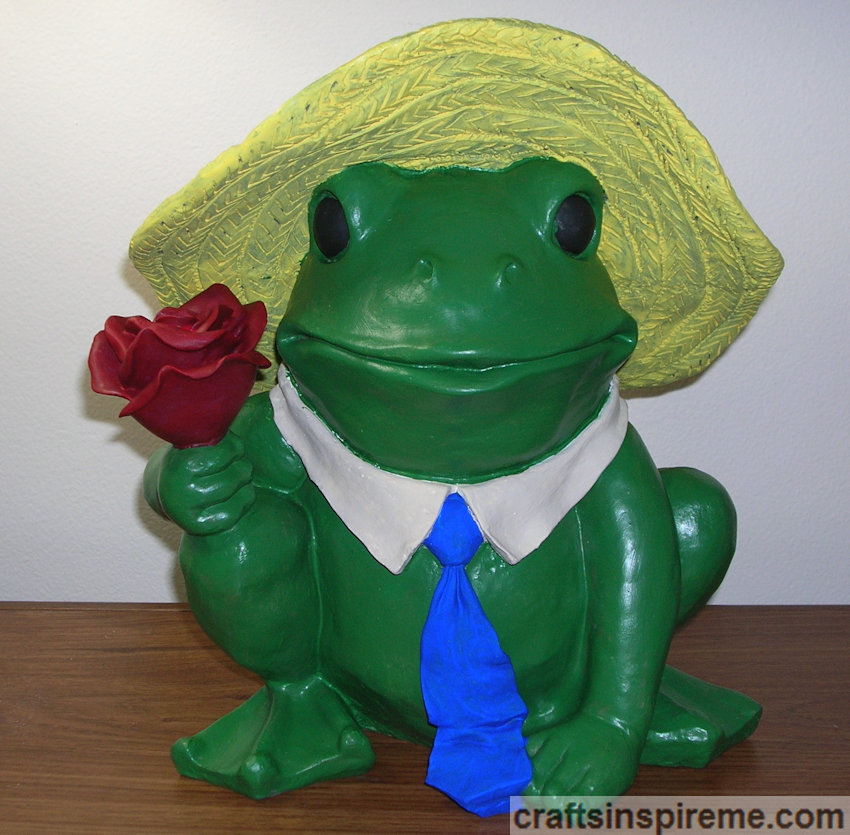
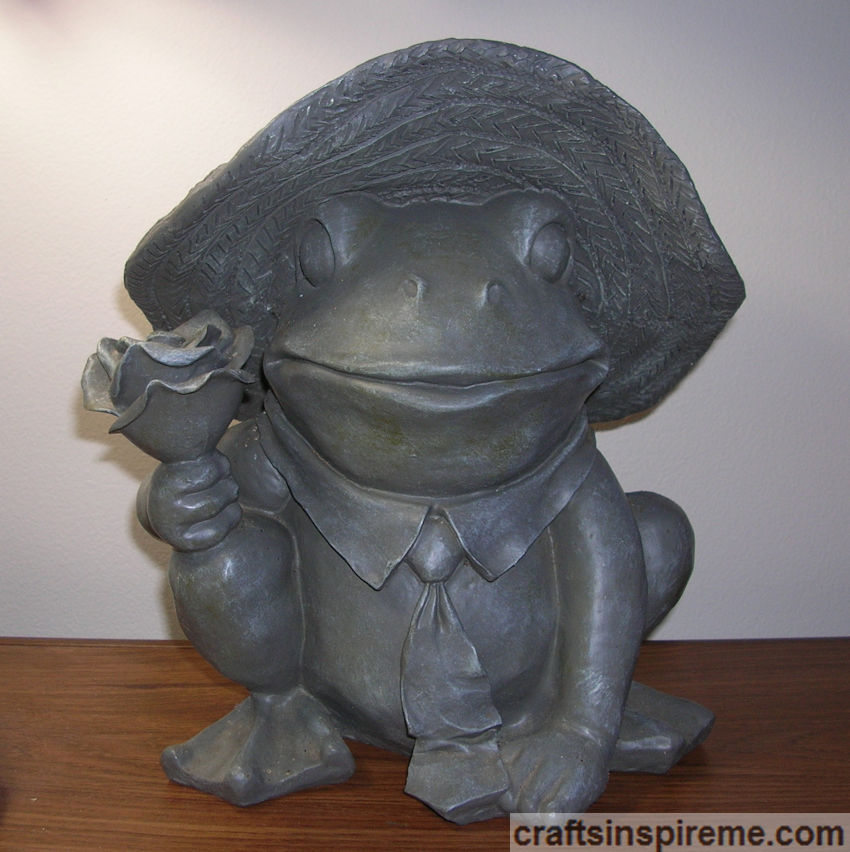
Talk about having a case of the blahs!  This cute little frog has some nice details, such as the collar, tie and the intricately carved rose.  We have been using it as a doorstop for years, and we never gave it a second thought.  That changes today. 

Original Gray Resin Frog – Profiles

The sculptor did an amazing job defining the frog’s body from head to toe, including adorable, webbed feet.  The rose has layer after layer of petals with curled edges like a living bloom. 

Original Gray Resin Frog – Back

The textured straw hat has been accurately rendered and will need to be carefully painted to maintain its integrity.  Be sure to apply a thin coat of paint, or those details may be lost. 

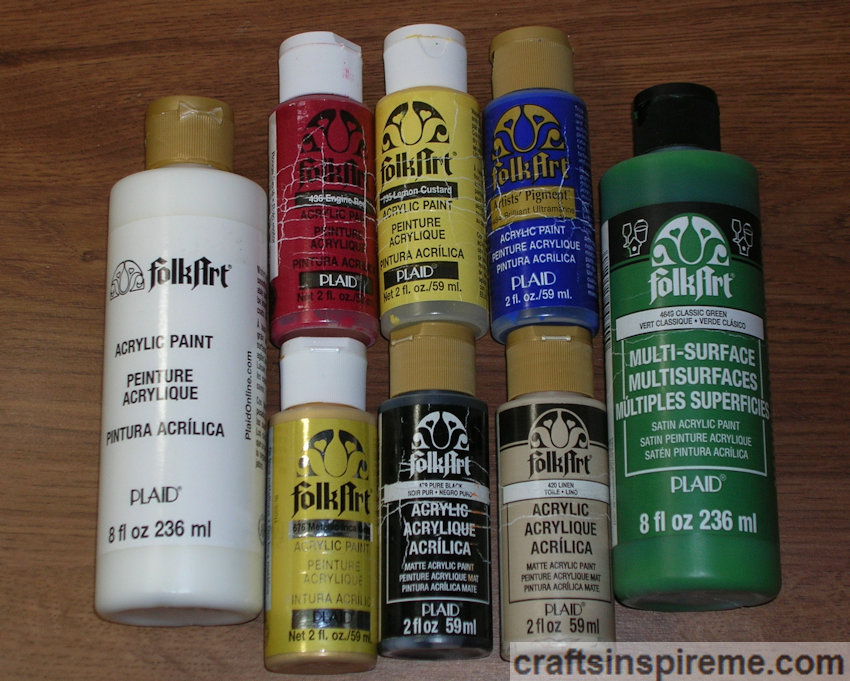
Supplies

Supplies:
Resin Frog (11” high x 10” wide x 8” deep)
Acrylic Paints – white, red, yellow, blue, green, metallic gold, black, & tan
Small detail paintbrush and thicker brush for base coats
Clear Spray Paint – gloss or matte finish

Note: If you choose to blend several paints to create a special color, be sure to make enough to complete the project because it is difficult to duplicate.  To keep wet paint fresh on a palette or dish for later use, cover the surface with plastic wrap. 

Painted Straw Hat – Front

Paint the straw hat yellow, one rough coat to preserve texture.  My mom painted the hat.  And yes, she kissed the frog too!  (lol)

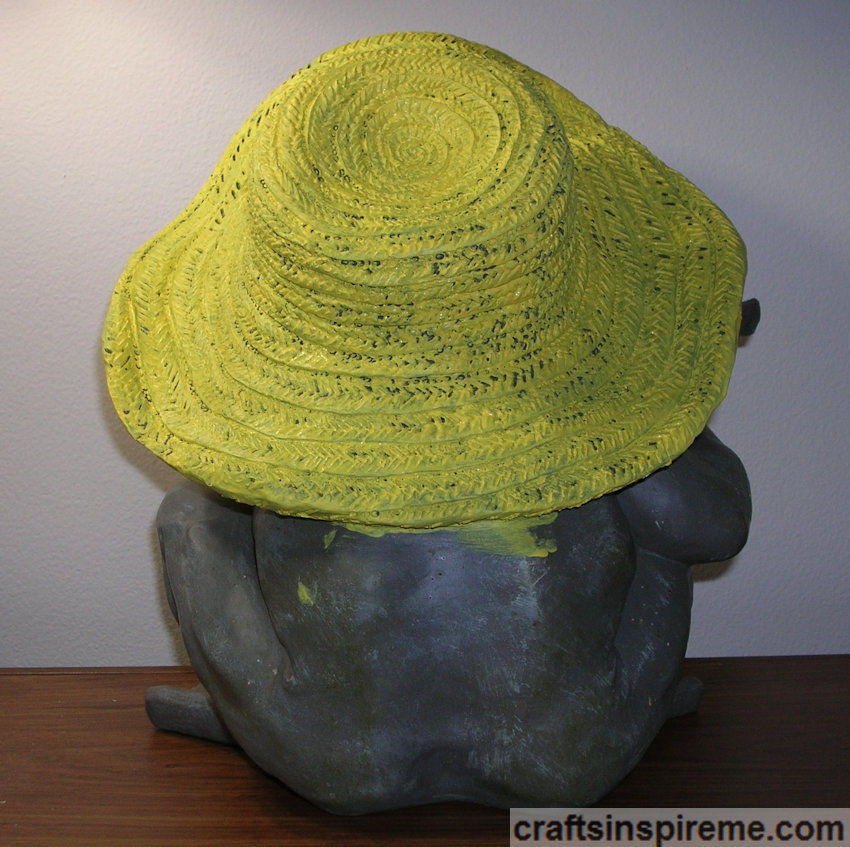
Painted Straw Hat – Back

As you can see the straw texture is still visible. 

Painted Frog – Front

Paint the frog’s entire body green.

Painted Frog – Profiles

You will need to use a fine brush in areas close to the hat to prevent green paint from marring the yellow. 

Painted Frog – Back

Be sure to paint green all the way around, even in the tight curves and at the edges of the collar, tie and rose. 

Painted Collar & Tie

On the first attempt, the collar was painted white.  I decided the contrast between the green and white was too harsh and should be softened. 

Repainted Collar & Rose

The collar was repainted tan, which has a much softer effect.  Paint the tie blue and the red rose.  The pupils are painted black and will be completed in the next step. 

Completed Painting

Finish the eyes by outlining them with metallic gold.  I experimented with a patterned iris, but he looked scary instead of cute, so I repainted the black.  Add white highlights to give this little guy twinkles in his eyes.  Look over the frog and touch up any areas as needed. 

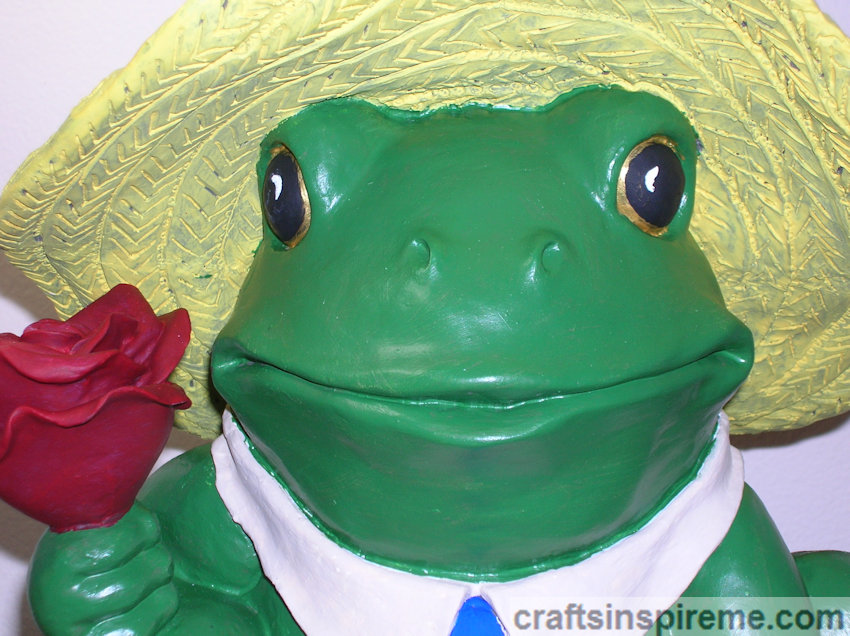
Frog Ready for his Close-Up

This is the close-up of our leading man.  All he needs now is to find the love of his life.

Clear Coat Protection

To protect the acrylic, I recommend sealing the paint with two coats of clear spray paint.  Notice how much richer the colors become after being sealed. 

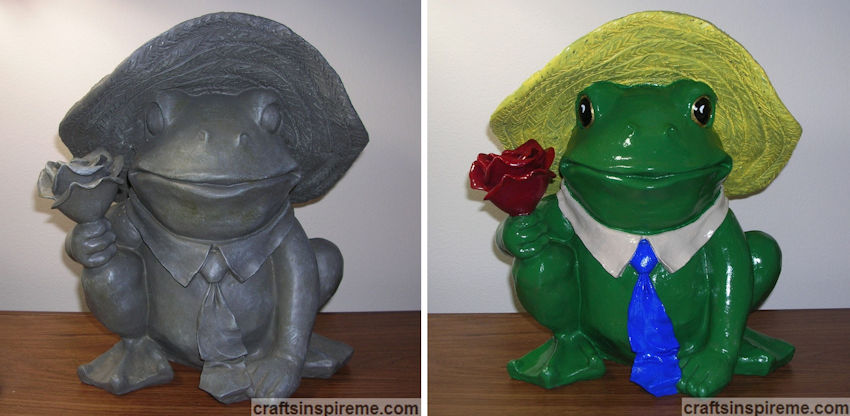
Frog Before & After

This froggy’s makeover is complete!  He went from bland gray to fashionably colorful in a few easy steps. 

Frog Royalty

If one day in your travels, you encounter a frog like this one, it might just be worth risking a kiss to find a true frog prince or princess.  Good luck painting your next project, and I hope you find that special someone! 

Thanks for Reading & Happy Crafting!

Alpacas versus Ewoks

Alpaca & Ewok

On a scale of 1-10, who is the cutest – an Alpaca or an Ewok? 

Multicolor Alpacas

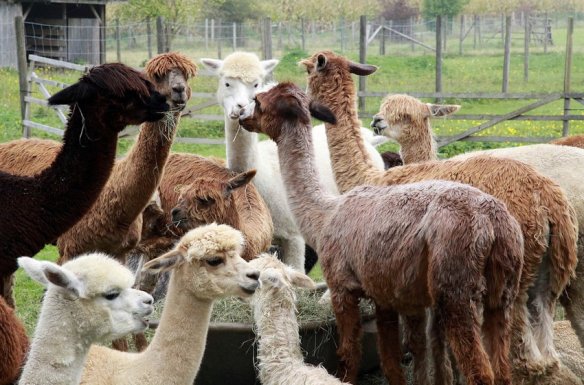
My apologies to all the Star Wars fans, but this week our craft project is all about Alpacas. 

Baby Alpaca

This baby alpaca looks so soft and cuddly like a stuffed animal. 

Adult Alpaca

Adults have long shaggy fur, which is used to make yarn for blankets, sweaters and other garments. 

White Alpaca

Some have monochromatic fur, such as the one pictured above. 

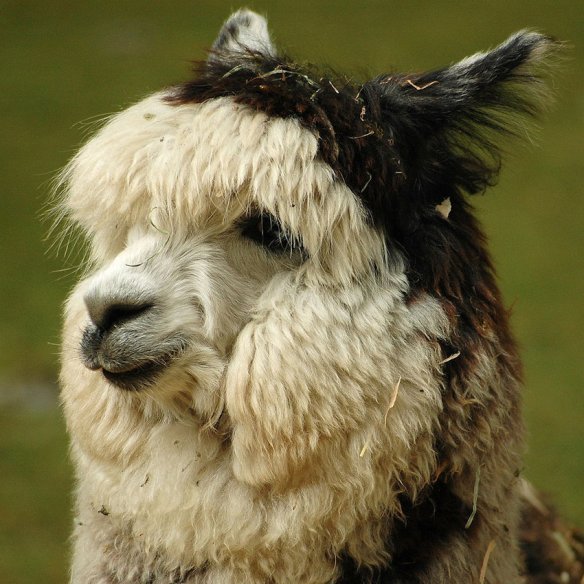
Brown & White Alpaca

Alpaca fur tends to be thick and plush in a variety of shades and a few fashion-forward combinations.  Whatever your preferences, you can’t go wrong applying those creative choices to this fun project. 

How to Paint a Wooden Alpaca:

Raw Wood Alpaca

Alpaca Raw Wood

Thick wood has been cut out in the shape of an alpaca.  Both sides and all the edges will need to be painted.  Due to the raw nature of the wood, it may require a little sanding, especially along the edges. 

Supplies

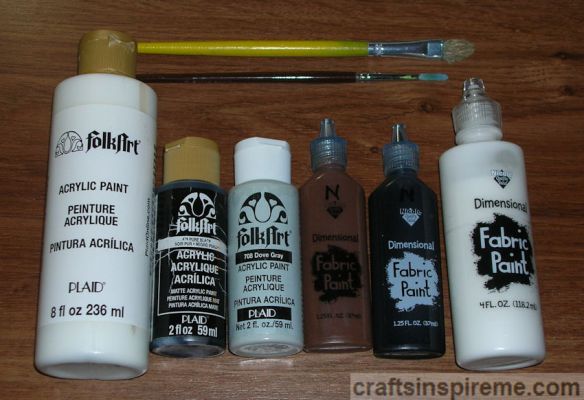
Alpaca Paints
  • Supplies:
    Wooden Alpaca (6-1/4” high x 4-1/2” wide x 1-1/2” thick)
    Acrylic Paints – gray, white, black
    Bottles Fabric Paint – brown, white, black
    Paintbrushes
    Sandpaper
    Black Sharpie Marker or pencil

Paint Base Color

Alpaca Gray Paint

Using acrylic gray paint and a brush, paint both sides of the body and all the edges. 

Paint Accent Colors & Draw Eye Detail

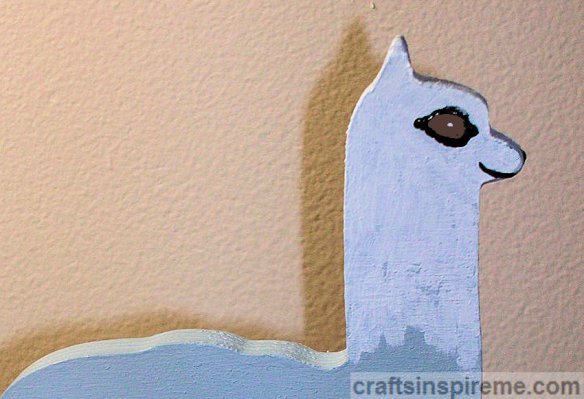
Alpaca Gray & White Paint

Apply white acrylic paint with a brush on the head, neck, lower legs and tail.  With a pencil or marker, draw the eyes. 

Define Facial Details

Alpaca Facial Details Painted

Using a combination of acrylic and fabric paints, add the eyes, nose and mouth. 

Textured Fur Detail

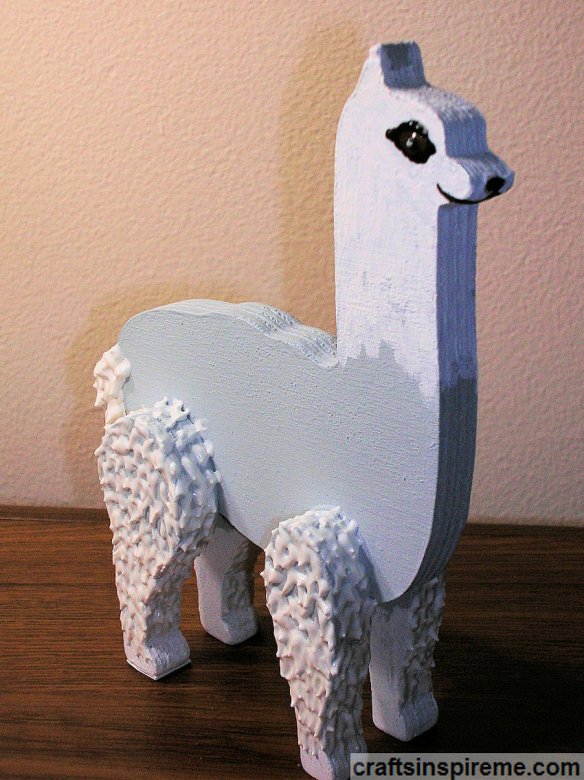
3D Paint Leg Fur Detail

Creating thick, three-dimensional fur is easy with fabric paint.  You must start at the BOTTOM and work your way up using short downward strokes.  Keep the placement and stroke size random, layering new fur over the previous sections as you work your way to the top.  Allow the paint to dry overnight because it shrinks as it dries.  Repeat this process until you achieve the desired appearance. 

Paint White Textured Fur

3D Paint Fur Legs & Tail

This photo shows the completed white fur on the legs and tail.  Repeat this process on the other side. 

Note: To achieve a very thick fur coat, you may need several bottles of fabric paint. 

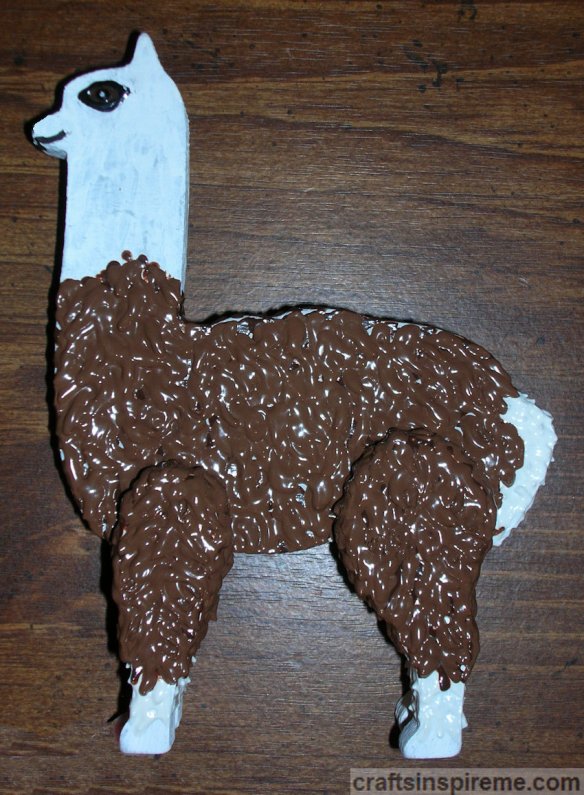
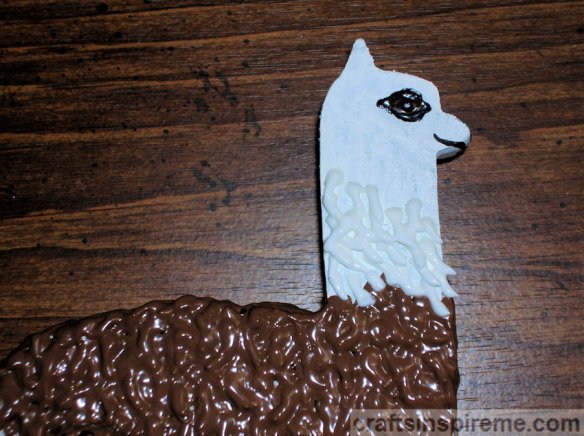
Paint Brown Textured Fur

3D Paint Fur Torso

Apply brown fabric paint on the torso, and upper legs, using the same textured process described above. 

Paint Additional Layers of Textured Fur

3D Paint Fur Layers Torso

Repeat the painted fur process as many times as needed to create a thick fur coat. 

Paint White Textured Fur

3D Paint Fur Neck

Once again using the white fabric paint, start creating the fur at the bottom of the neck and work upward. 

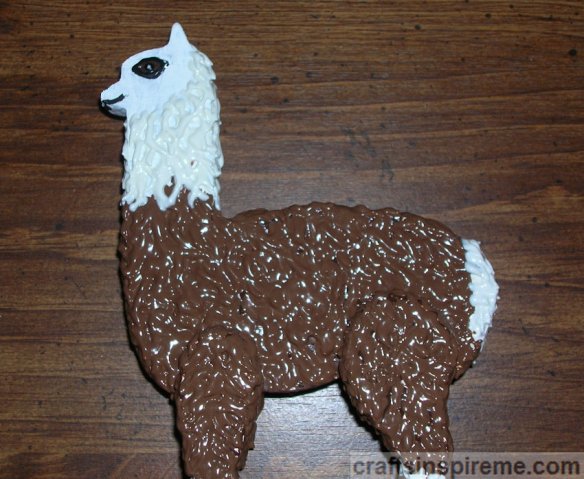
Paint Additional Layers of White Textured Fur

3D Paint Fur Neck & Tail

Repeat the process to achieve desired thickness.  Remember to thoroughly cover the edges too.  You may also want to add more fur on the tail as well for a bushy effect.  Allow time for the paint to dry between coats so that you can see which areas need more work. 

Finished Alpaca

Finished Alpaca

Congratulations!  You are now the proud parent of an adorable alpaca! 

Finished Details

Finished Alpaca Details

As you can see in this photo, the fur continues up over the top of the head, including bangs on forehead. 

Alpaca – Before & After

Alpaca Before & After2

We started with a plain wood figure, and with little effort and patience during drying times, this cute alpaca is ready to adorn your home or be given as a gift.  Either way, smiles are sure to follow. 

Thanks for Reading & Happy Crafting!
How Do You Like Your Eggs?

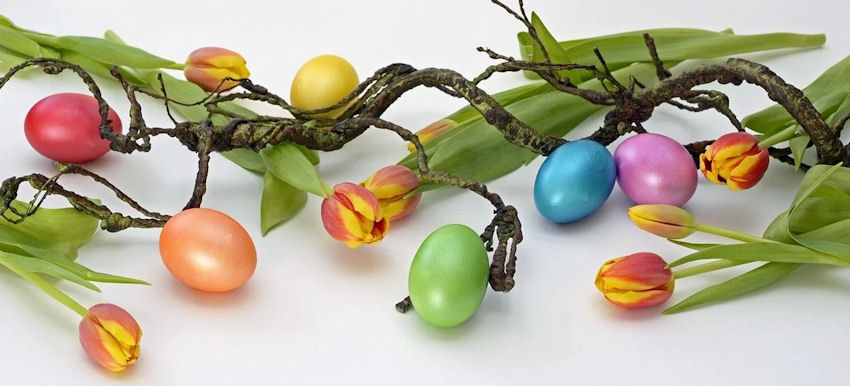
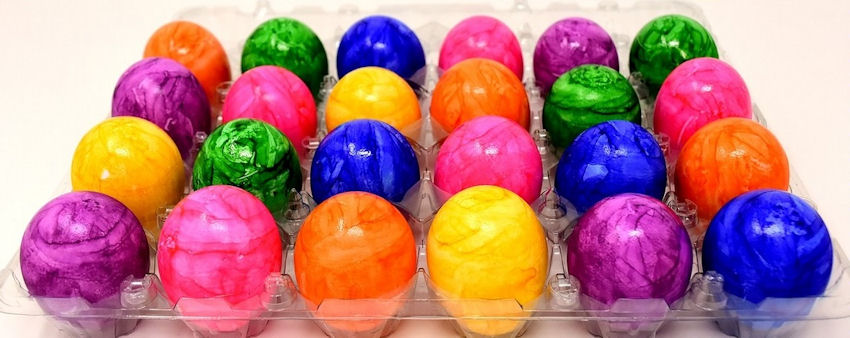
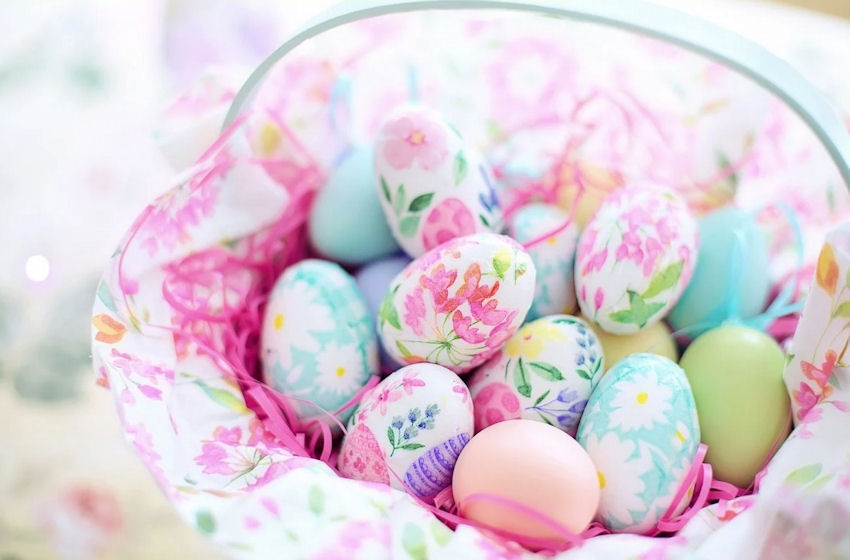
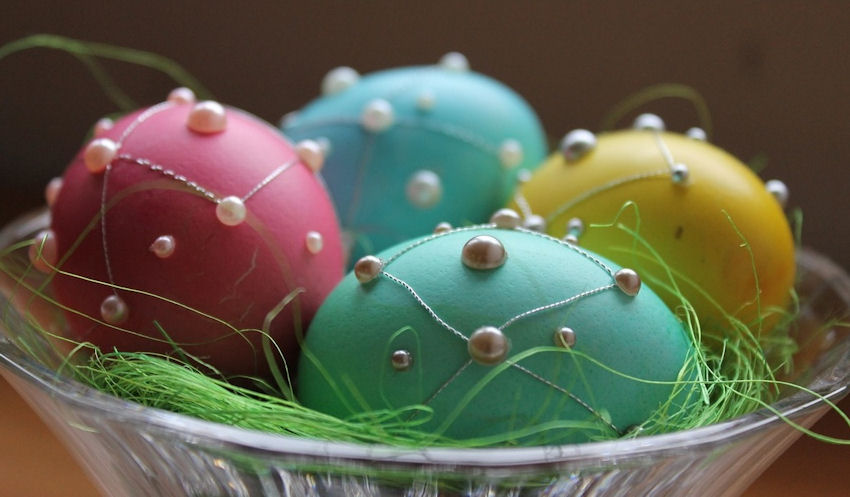
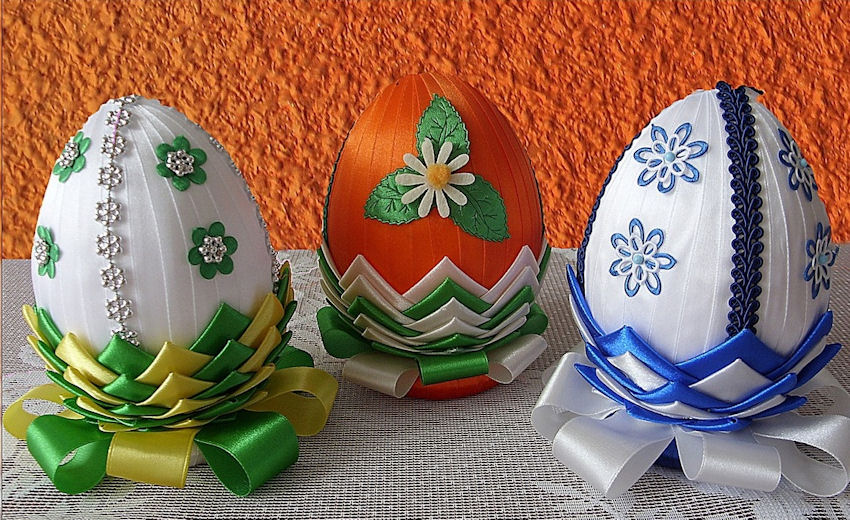
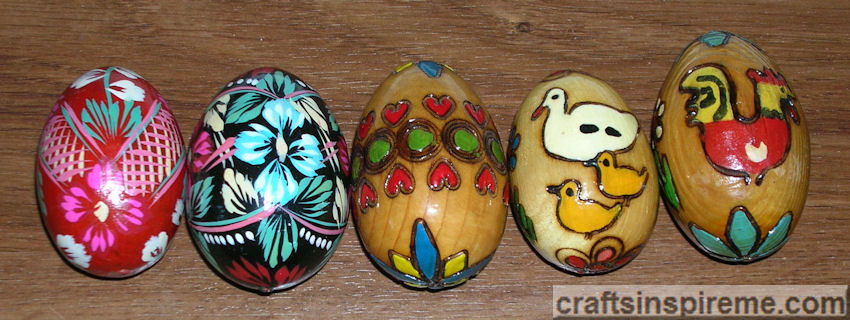
It is an age-old question.  In this case, we are not talking about breakfast.  Instead, let’s talk about egg decorating.  The eggs can be hard-boiled or blown eggs, as well as wooden, ceramic, and plastic eggs.  Decorations include paints, markers, ribbon, fabric, glitter, string, quilling paper, and stickers.  Below are several examples to inspire you:

Strategy Meeting: Egg Production (Hen) & Egg Distribution (Bunny) lol

Dyed Eggs

Iridescent Eggs

Pearlescent Eggs

Paint Pour Eggs

Air-Brushed Eggs

Hand Painting Supplies

Hand Painted Watercolor Eggs

Hand Painted Pastel Eggs

Hand Painted Multicolor Eggs

Hand Painted 3D Multicolor Eggs

Hand Painted Egg Ornament

Hand Painted Egg Artwork

Dyed Eggs with Stickers

Dyed & Beaded Eggs with Metallic Trim

Dyed & Woven Bead Wrapped Eggs

Fabric Wrapped Eggs with Ribbon Trim

Ribbon Wrapped Eggs

Dyed Eggs with White Marker Designs

Dyed Eggs with Multicolor Marker Designs

Decoupage Egg Ornament

Quilled Eggs

Carved & Painted Wooden Eggs

Multicolor String Wrapped Egg Ornaments

Express Delivery Crew

With so many eggs to deliver this year, the Easter Bunny hired some extra helping hands (paws)!  lol

I hope your creative ideas are flowing.  Do you have a favorite decorating technique?  I look forward to hearing your ideas.  Have fun decorating and thanks for reading.

Happy Easter & Happy Crafting!

The Bunny Hop – Painted Wooden Rabbit

Before we begin this Easter-themed project, we’ll need a little inspiration. Let’s take a look at a few of Mother Nature’s color scheme choices in the adorable bunny photos below:

Tan Baby Bunny
Baby bunnies are just so cute! That’s a lot of love wrapped in a soft tan and cream coat.

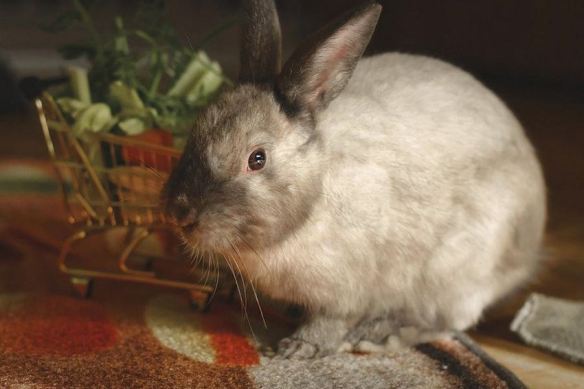
Gray & White Bunny
This stylish rabbit is modeling the very popular gray and white color combo.

Tan & Brown Bunny
Wild rabbits often have a blended fur coat of brown, tan and black to help camouflage them from predators. The one pictured above looks perfectly content to nap where he is without a care in the world.

Black & White Bunny
Last but not least is this precious black and white baby. His delicate features, including his button nose, inner ears and the outline of his eyes, are a soft pink.

Now that we’ve seen a few ideas, let’s get started painting!

How to Paint a Wooden Rabbit:

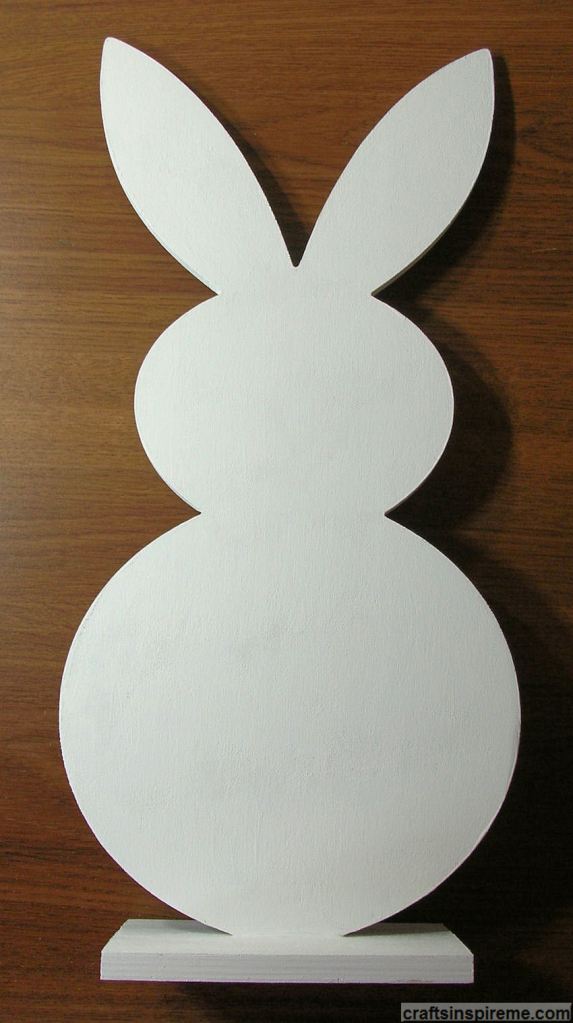
Raw Wood Bunny
Thick wood has been cut out in the shape of a rabbit and has the advantage of strong, rectangular base. Both sides and all the edges will need to be painted. Due to the raw nature of the wood, it may require a little sanding, especially along the edges.

Bunny Supplies
Supplies:
Wooden Rabbit (17” high x 8” wide x 1/4” thick) (Base is 5-3/4” wide x 4”deep)
Acrylic Paints – brown, black, gray, tan, green & white
Fan paintbrush, small detail paintbrush and thicker brush for base coats
Sandpaper
Optional: Fabric paints – black, brown, white (Refer to Advanced section below)

Painted White Bunny
Step 1 – Paint the rabbit with 2) coats of white acrylic paint, including both sides and all edges.

Painted Back Bunny
Step 2 – Start painting the fur on the back. Experiment with colors and brush techniques. I poured black, brown and gray paint onto an artist’s palette. Dip a fan brush into each color and then apply to wood surface to create a fur-like effect. Because the paints have not been mixed, each new brush stroke will have a slightly different combination of colors, just like real fur. Repeat thus process until the back is completed. The white tail will be added later.

Layout Details Front Bunny
Step 3 – On the front, draw the face (eyes, eyelids, eyelashes, muzzle with nose, mouth, whiskers), ears and feet with a pencil. Paint the inside of the ears and eyelids tan.

Painted Front Bunny
Step 4 – Create the fur by repeating the procedures in Step 2. Be sure to make long brush strokes along the edges of the ears to resemble thick fur. You can leave the eyes, muzzle, and feet white for now. These areas will be detailed in the next step.

Bunny Closeup1
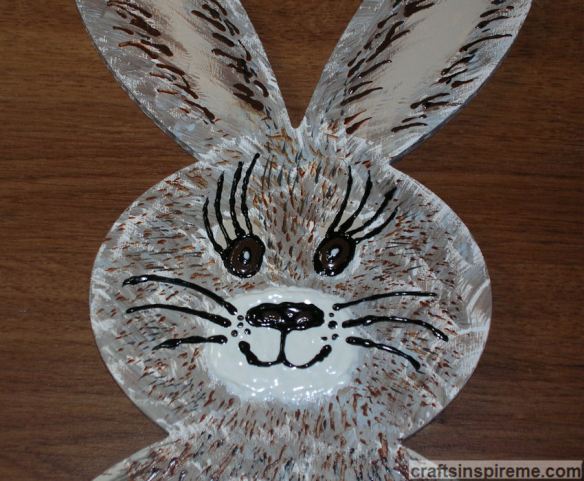
Step 5 – Paint the facial details. I painted the eyes, eyelashes, nose, mouth and whiskers black.

Bunny Closeup 2
Step 5A – This is an alternate version for the eyes and nose. A brown iris has been added to each eye, the eyelashes have been extended, and brown nostrils define the nose. For a more lively expression, don’t forget to put a dot of white in the pupil of each eye.

Finished Bunny
Step 6 – The finished rabbit has white feet with black lines to define the toes. The base was painted with two coats of green.

Finished Bunny Tail
Step 7 – Paint a big, white fluffy tail on the back.

At this point your project is finished and ready to display. If you would like to take this design to the next level, please follow the steps below.

Advanced Rabbit in 3D
Followers of this blog know how much I love creating 3D details on wood projects using fabric paints. If you appreciate three-dimensional effects, this section is for you! Unless otherwise noted, all paints listed below are dimensional fabric paints.

3D Bunny Face
Start by painting 2 thick coats of white fabric paint on the muzzle, and brown paint for the eyes.

3D Bunny Feet
Next paint the feet with 2 thick coats of white paint.

3D Face Details
To complete the face, use black paint for the nose, mouth, whiskers, eyelashes, and the outline around the eyes. Add a black pupil in each eye. Paint a white dot in the center of each pupil, and use brown paint in each nostril.

3D Body Details
Add long brown fur along the inner edges of both ears and define the two front legs using the same paint. Add the black lines to define the toes on each foot.

Detail Facial Fur
Using short strokes, bring the black and brown fur mixture up into the face.

Detail Legs and Feet
Layer additional black and brown fur to define the body, and add the two back feet.

Finished 3D Bunny Front
Because the rear legs are in the background, keep the paint lighter by using tiny strokes with just the brown paint in an upward direction. If you want additional fur texture, you could use acrylic paints and a brush to thicken the fur coat with highlights and lowlights.

Finished 3D Bunny Back
The last step is painting the tail with 3 coats of white fabric paint.

Mission accomplished! This cute little guy is ready to be displayed in your home, bringing joy to your life for years to come.

Happy Easter and Happy Crafting!

Gifts from the Heart

Frog with Heart
As Valentine’s Day approaches, it’s a nice reminder to show appreciation for those who share our lives, including family, friends, and yes even our pets.  It doesn’t have to cost a lot.  In fact, you may already have what you need for the perfect gift.   Here are a few creative ideas to get you started:

Sweets for the Sweet
Homemade Candy & Cookies
Homemade cookies and candy will satisfy any sweet tooth.

Nature Lover
Fruit Hearts
This edible art is delicious & nutritious.

Heart of the Vineyard
Wine Corks Heart
Connoisseurs will appreciate shared memories celebrated with a nice glass of wine.

The Personal Touch
Clay Heart Vase
Gifts made by hand are always the best way to show your love.

Two Hearts Beat as One
Metal & Wood Hearts
Whether you prefer working with wood or metal, this universal symbol of love says it all.

Love is in the Details
Mosaic Heart
Glass, tile, and stones can be used to create mosaic jewelry, tabletops, wall art, etc.

A Rose by Any Other Name
Paper Roses
As timeless symbols of love, these paper roses will forever be in bloom.

Big Bear Hugs
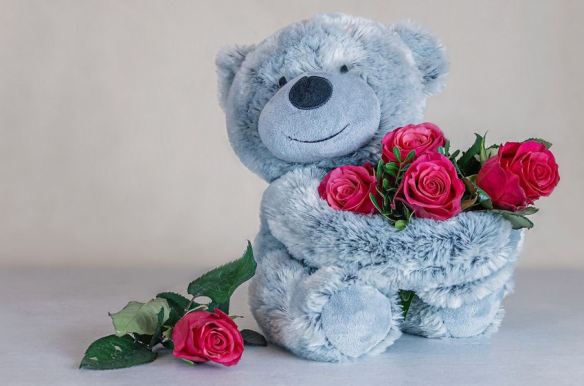
Teddy Bear & Flowers
Everyone could use a hug.  Teddy bears can be sewn, crocheted, or knitted.  If you don’t have those skills, buy one and add a personal touch, such as a bunch of silk flowers or homemade chocolates.

Soft & Dreamy
Watercolor Painting
Watercolor, acrylic or oil paints are the perfect choice for creating beautiful artwork to be treasured for years to come.

Heartfelt Adventure
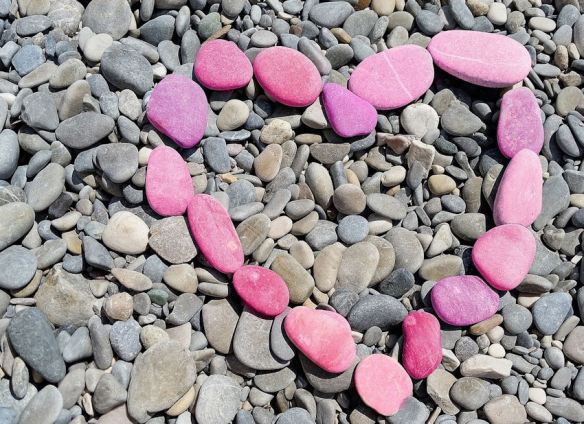
Pink Stone Heart
Outdoor enthusiasts will enjoy taking a romantic walk along a beach or trail on a “treasure” hunt, consisting of well-placed hearts made from stones, shells, or flowers.

Presentation is Everything
Heart Earrings
At the end of the treasure hunt mentioned above, surprise your companion with a little gift, such as a bouquet of wildflowers or handmade jewelry.

Reflective Photography
Black Swan
At first glance, you might only notice the beauty of this black swan but look closer and you will see the perfect heart shape created by his reflection.

Just the Two of Us
Romantic Silhouettes
A sunset photo of a couple is a nice keepsake and posing just right forms a heart.

Your BFF
Dog Wearing Scarf
Our best friends are always looking for affection.  A new scarf or a heart charm for the collar are nice options, but the best way to show your love is by giving them your time and attention.  Works for people too!

Thanks for reading.

Happy Valentine’s Day & Happy Crafting!

The Basics of Decorative Painting

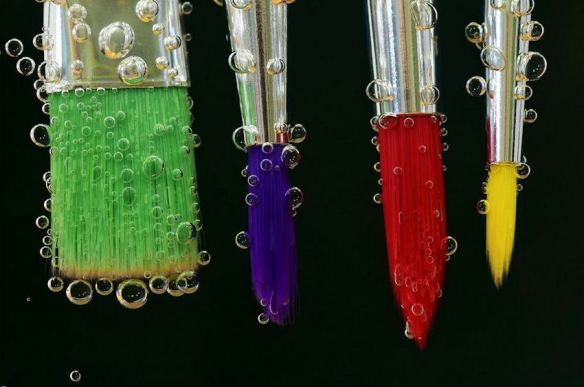
Paint Brushes
In a post a few weeks ago, faux finishing was discussed with several painting options and instructions for sponge painting. Faux finishing is part of a larger category called decorative painting, which includes stenciling, murals, and custom painted details.

At it’s most basic, decorative painting can be as simple as painting vines on a flowerpot. Be sure to use weatherproof paint, not only to protect it from rain and sun, but also from watering the plants.

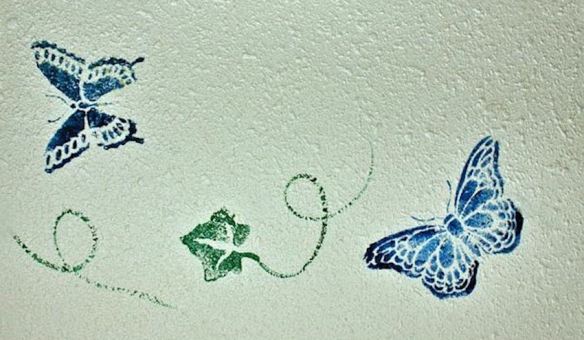
Stenciled Butterflies & Vines
Stenciling
Stenciling is a fairly easy process. Choose a plastic stencil, a few paints, and some sponge brushes. Painter’s tape is great for holding the stencil in place while you work, painting one color at a time. Crafter Tip: Stenciling on a textured wall is not recommended. The bumpy texture can cause the colors to bleed, and the designs may appear stretched or irregular.

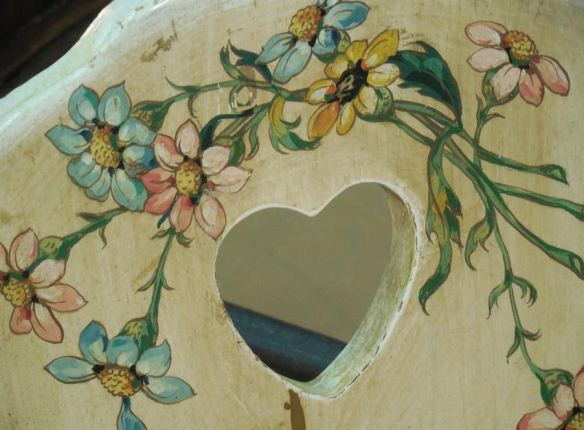
Antiqued Wood Chair with Painted Floral Seat Back
Furniture presents the challenge of durability. Paint alone is not enough. Crafter Tip: Consult a specialist, or research what types of paints and sealants to use to ensure your designs will withstand every day wear and tear.

Stippling
Stippling
This is an example of stippling layered over a multi-color background. The base coat is created using sponges or brushes to blend the colors together. Stippling consists of little dots to create light and dark areas by changing the density of the dotted pattern.

Watercolor
Watercolor
In this technique, water-based paints are thoroughly mixed with water and blended together while still wet. It’s important to remember that you will want to start out with light washes of color and gradually build up to the darker areas. If you get too dark too fast and don’t like the results, you will need to start over.

Layered Techniques
Mixed Media
Here we see an interesting mix of free-hand painting, stenciling, and stamping. Pressing painted corrugated cardboard against the surface created the parallel lines.

Now if you’re really feeling ambitious, here are some amazing painted murals:

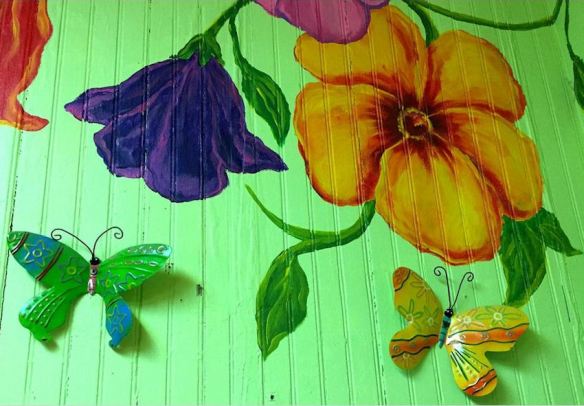
Floral Wall Mural with Metal Butterflies
This bead board paneled wall was painted green as a background color, and then the flowers and vines were added. Crafter Tip: Even though you are painting a mural, you don’t have to paint everything yourself. There are plenty of wall art options, which will coordinate with your painting, such as these sculpted metal butterflies, the perfect complement for this gardener’s retreat.

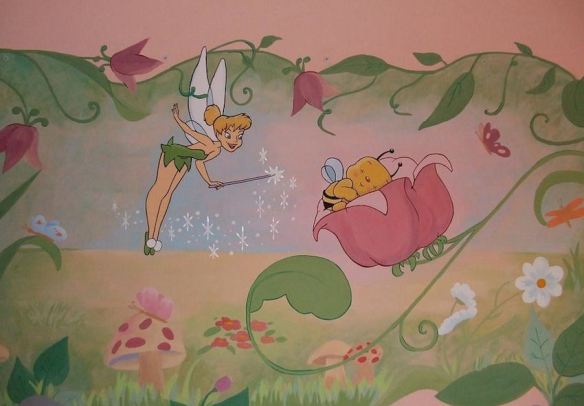
Tinkerbell Wall Mural
Disney characters are sure to be childhood favorites. The flowers and vines in this mural can be painted by hand or stenciled. Crafter Tips: In lieu of using a paintbrush, delicate details can be made using a fine tipped paint pen. If Tinkerbell seems a bit beyond your skill set, purchase a Disney decal, or wallpaper version and adhere it to the wall after the mural is complete. It will save you time, and from a distance, no one will ever know.

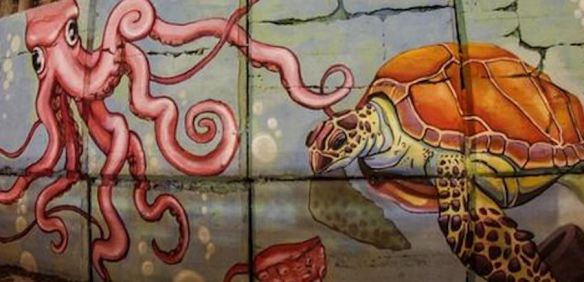
Ocean-Themed Exterior Wall Mural
The old block wall in this photo has been given new life through wall art. Because of the large scale, and dependence upon the weather, the artist used a paint sprayer to speed up the process. With the overall design blocked out, the details can be added using a combination of a fine spray nozzle and paint brushes. Crafter Tip: Using a paint sprayer will certainly give your arms and upper body a workout. You won’t need to go to the gym that day!

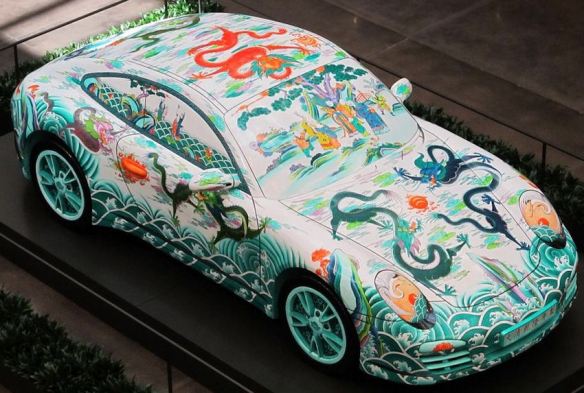
Asian Water Dragons Mural on a Porshe
Vehicle painting is a specialty in itself. Painted details can include logos, initials, stripes, and full-size murals. Crafter Tip: Vehicle painting is best left to the pros. Manufacturers’ new vehicle warranties will most likely become void if the body paint is altered.

How To Decoratively Paint a Powder Room

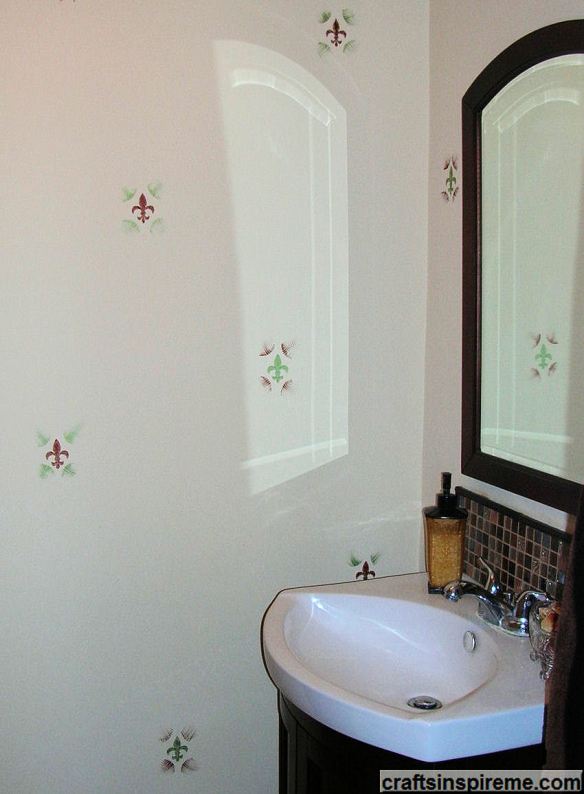
Fleur-de-lis Powder Room
Powder Room
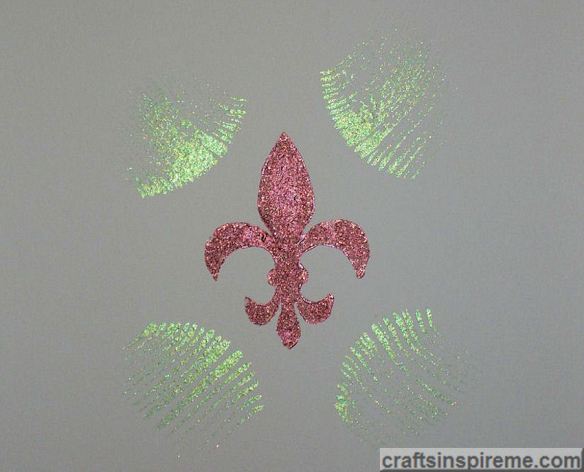
Fleur-de-lis design was made using an ink stamp, which was purchased from the scrapbooking department at Michael’s craft store.

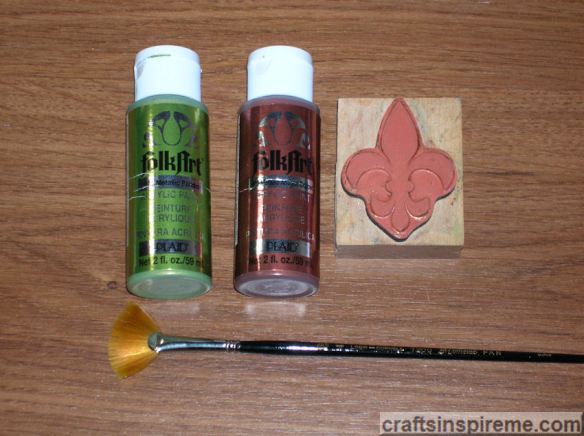
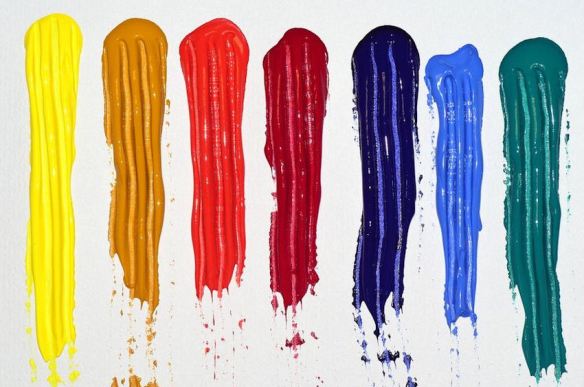
Acrylic Paints, Ink Stamp & Fan Brush
Powder Room Paints
To produce more consistent imprints, paint was applied directly upon the stamp using a small flat brush. The stamp was then pressed against the wall, spacing the pattern by eye. All the brown fleur de lis designs were completed first, and then the stamp was cleaned in preparation for the green paint.

Create a Fleur-de-lis Pattern
Painted Powder Room

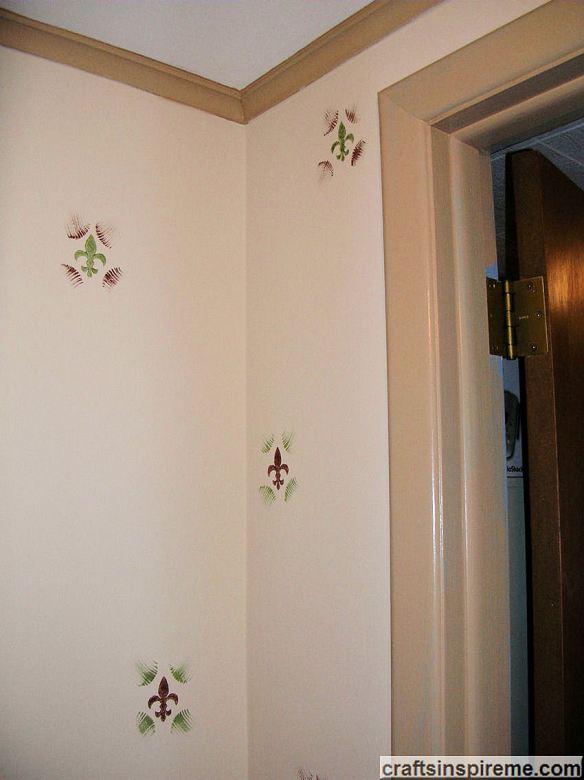
Fleur-de-lis Detail
Powder Room Paint Detail
Using a fan brush at the four corners, brush strokes were applied with the contrasting metallic paint color.

For continuity and consistency of the design, it is probably best to have one person working on a project. However, if your friends or family would like to help, assign a particular design element to each person to be completed throughout the project. Using the fleur-de-lis project as an example, one person could do all the stamping while another applies the flourishes at the corners.

Crafter Tip – Future Decorative Paint Removal
I once had a painter in my home to give estimates on a few small projects. I had recently finished a mural in one of the bedrooms, and as we walked by, the painter said, and I quote, “Do you know how much Kilz it would take to cover that?” Although I was appalled at the idea, it certainly gave me food for thought. At some point in the future, how could I easily cover over painted designs without filling the house with toxic fumes? The answer is simple: paint over it using the same paint used to create it. There was an acrylic midnight blue design (Folk Art Brilliant Ultramarine) painted across the upper half of one wall. White acrylic paint (Folk Art Wicker White) was brushed over the dark paint. Just to be sure, a second coat was applied. The painter was stunned to see how well it covered. The new wall paint was a pale blue, covered in only one coat, and there were no toxic fumes. To protect the air quality in your home, be sure to select low odor paints, with low or no VOCs (volatile organic compounds).

Thanks for reading & Happy Crafting!
Why Just Paint? Faux Finish.


Faux finishing is a great, inexpensive way to transform a room and can be easily done over a weekend, and sometimes in a few hours with minimal effort.

There certainly is no shortage of ideas and inspirations for faux finishing including: retail stores, restaurants, shopping malls, magazines, books, websites, videos, craft and paint stores. Instructional videos can be found on YouTube, but don’t forget to check paint manufacturers’ websites as well.

You may already have many faux finishing tools in your home without even realizing it. Paint can be applied using rolled up plastic wrap or fabric; synthetic sea sponges; brushes, sponge rollers; and trowels. Application methods include dabbing, rolling, splattering, brushing, and glazing. Additional supplies and advice are available through local craft stores, and home improvement or hardware stores.

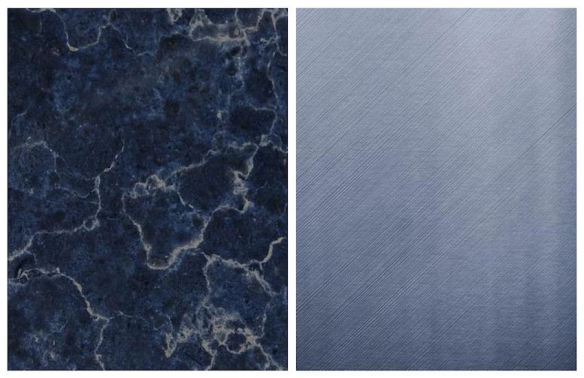
                          Faux Marble                                               Faux Metal
Faux Marble and Faux Metal
Faux Marble has a mottled background and white veining applied using a feather.

Faux Metal is created using a specialty iridescent metallic paint applied on the diagonal for a hammered metal appearance.

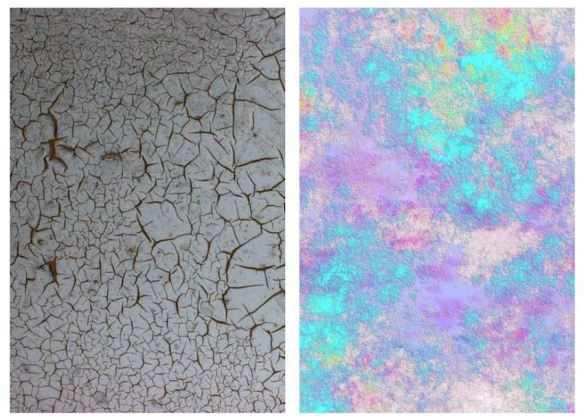
                       Crackle Finish                                      Faux Venetian Plaster
Crackle Finish and Faux Plaster
Crackle Finish involves painting a background color first, followed by a special antiquing medium, which cracks as it dries, revealing the color beneath for an aged, weathered look.

Faux Venetian Plaster has color and texture applied at same time with a trowel, which is a two step process, followed by a drying period, and sanded afterward to create a soft sheen finish.

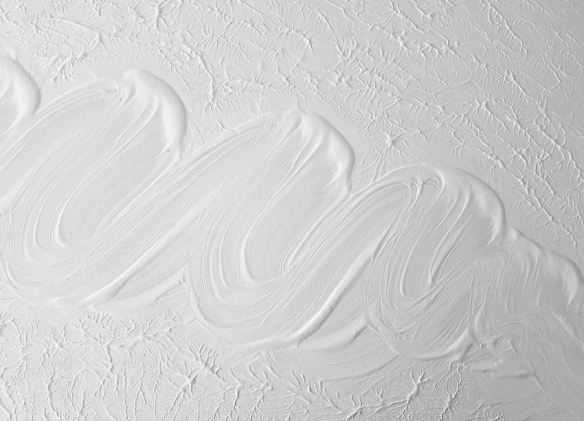
Textured Wall Paint
Textured Wall Paint
Textured Wall Paint is probably the easiest faux finish to apply. No special skills are required. If you can use a paint roller, you can texture a wall. After it dries, the wall will resemble the texture of plaster, and the softness of wallpaper. With a bold punch of color, it can be used as an accent wall in a living room, dining room or master bedroom.

Textured Wall Paint
Textured Paint
Faux Plaster can be created simply by applying a thick layer of paint and using assorted “tools” to texture the surface while the paint is still wet.  Additional layers can be applied for greater texture and depth.

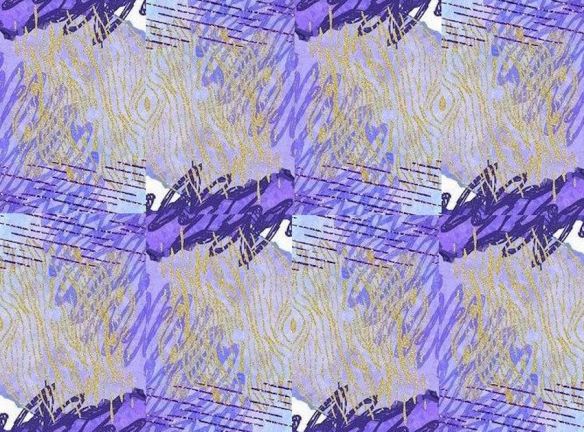
Faux Wood Grain over an Abstract Background
Faux Wood Grain
Faux Wood Grain requires the use of a stencil.  Paint the base coat first in a light or medium color.  When it has dried, go over it with the stencil using a darker color to simulate the natural wood grain, or try using metallic glitter paint as shown above.

These faux finishing techniques are not limited to walls. The same processes can be applied to ceilings, furniture, and just about any other surface.

How To Faux Finish A Room
Research faux finishing ideas and installation methods. Choose your design. Choose the paint colors. Having several color combinations is fine because the first step will help you narrow down the choices. Purchase the paints and corresponding application tools required for your chosen faux finish.

Trying something new for the first time can be a stressful experience. What if you make a mistake? What will you do if you fail halfway through the project? If the paint colors looked great in the store, why do they look so different in my home?

Sample Board
Paint Sample Board
Crafter Tip – Sample Boards are your best friends.
You need to experiment with your color schemes and methods of paint application. The simplest solution is creating a sample board. Sample boards give you a chance to get your feet wet, so to speak, without the overwhelming feelings that can come when faced with full-size wall or an entire room. Hone your skills on the sample boards. With proven skill and newfound confidence, you’ll be ready to take on the full project. Keep your sample board handy for reference while you are painting.

24” x 36” poster board is an easily manageable size. Another option is foam board, also known as foam core, which consists of two pieces of poster board with a piece of foam sandwiched in between for strength. The ability to pin inspirational photos is an advantage of foam core over standard poster board.

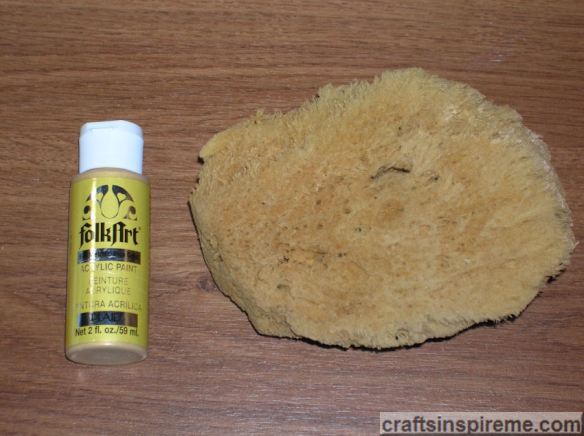
Gold Metallic Paint & Synthetic Sea Sponge – (2nd paint color, taupe, not shown)
New Bath Paint
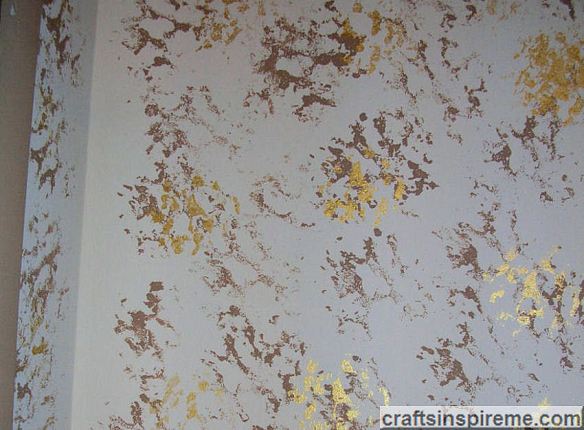
For the technique demonstrated in the bathroom below, first paint a coat of the background wall color on the sample board, and let it dry. Apply each group of colors on different areas of the sample board, being careful to label or make note of colors used. Feel free to experiment with various brush and or sponge techniques. Let the paints dry.

Faux Finish Close Up Detail Sponge Painting
Sponge Painting Detail
Now lean the sample board against a wall in the room to be painted. It is important to see the colors under the existing natural and artificial lighting. Begin the elimination process. Some will be very obvious missteps for one reason or another. A few usually rise to the top of your list. At this point, you can do some additional testing. You may want to create another sample board with larger samples of your top picks.

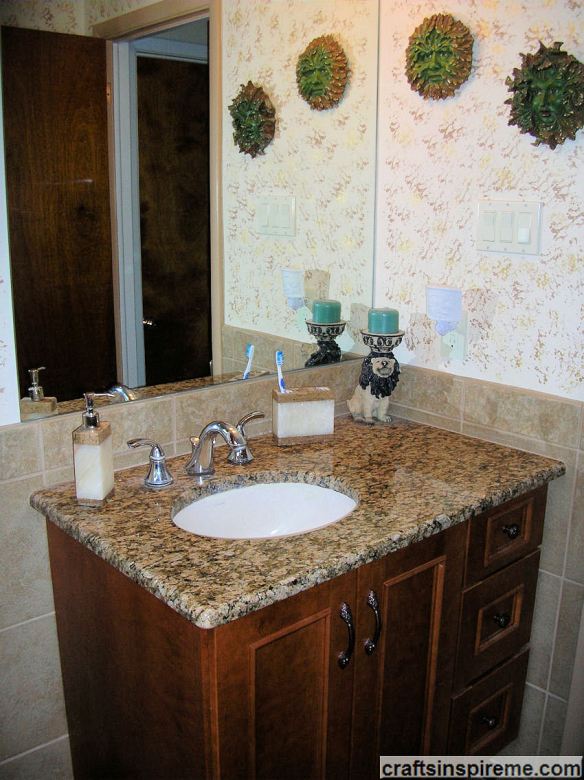
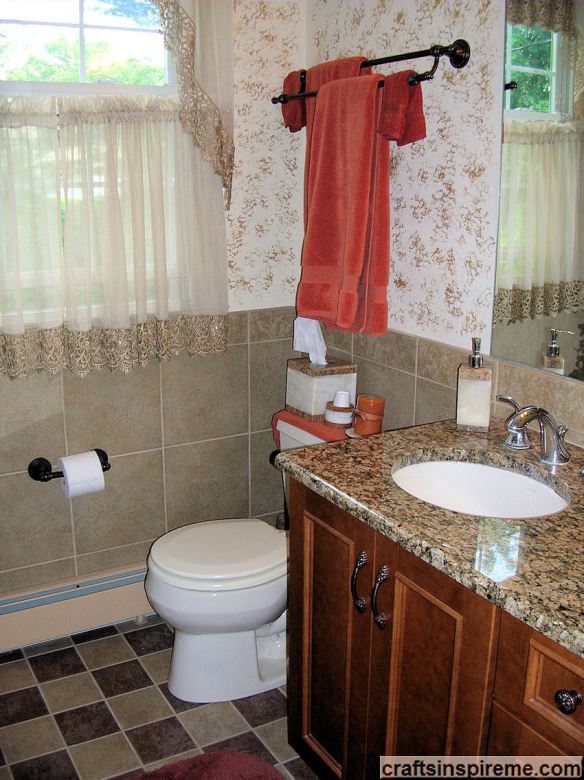
Sponge Painted Bathroom

Sponge Painted Bathroom
Once you have decided, it’s time to tackle the faux finishing of all the walls in that room. Take your time, and remember it doesn’t have to be perfect. The beauty of hand-applied finishes is the variation and artistry. If you are using multiple colors, apply one color at a time, and then repeat the process.

You can do this!

Thanks for reading & Happy Crafting!

The Beauty of Woodcrafting

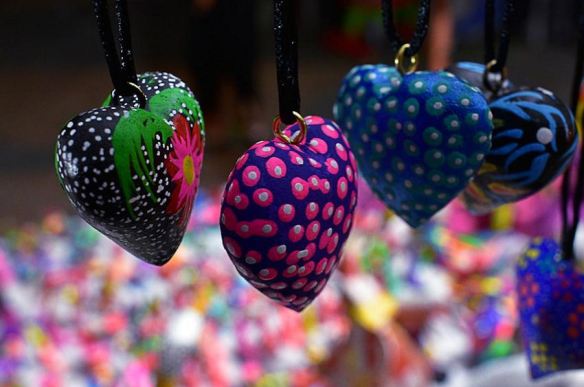
Wooden Heart Pendants
Painted Wood Hearts
Woodcrafts are a fun and inexpensive way to express your creativity. From birdhouses to toys and home décor, there’s something for everyone and these projects are great activities to do with the kids. With a few craft supplies and a little inspiration, you’ll be ready to create your next masterpiece. Here are a few ideas to get you started:

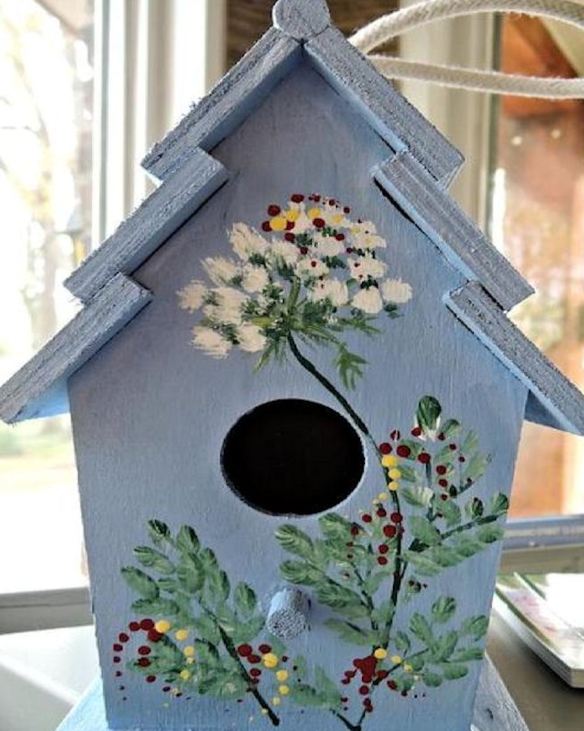
Blue Floral Birdhouse
Floral Birdhouse
Birdhouses are very popular, easy to complete woodcrafts. A quick coat of paint and a few freehand leaves and flowers were all that was needed to complete this project. A realistic looking feathered bird perched in front of the entrance would be a cute addition to this indoor decoration. Crafter Tip: For outdoor use, choose a birdhouse with an access door for easy cleaning.

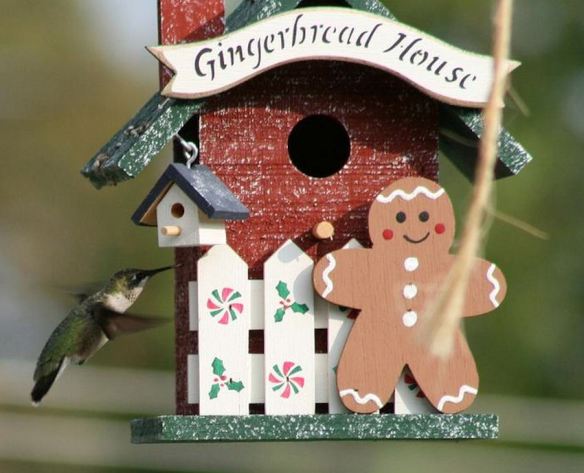
Accessorizing A Birdhouse
Gingerbread Birdhouse
This artist took woodcrafting to the next level by layering multiple wood decorations, upon a simple birdhouse frame, including a gingerbread man, festive white picket fence, signage, and a miniature birdhouse hanging from the roof. Enhancing a ready-made item adds personality, and unique design flare. Crafter Tip: It is helpful to keep sandpaper on hand. Most woodcrafts are ready to be painted or stained, but sometimes rough edges need a little attention before additional finishes can be applied.

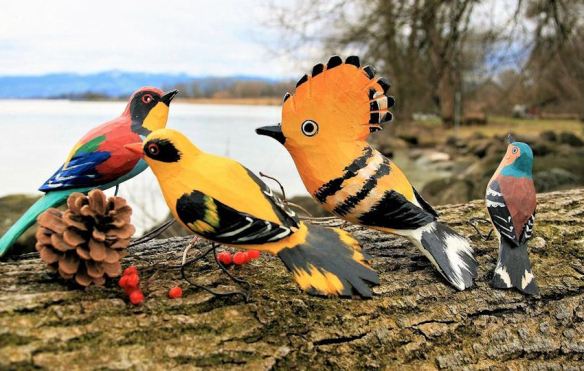
Painted Carved Wood Birds
These colorful fellows have wire attached to their feet for easy attachment on branches, or stakes. Be sure to always use the appropriate type of paint (indoor versus outdoor) depending upon where you choose to display your creations.

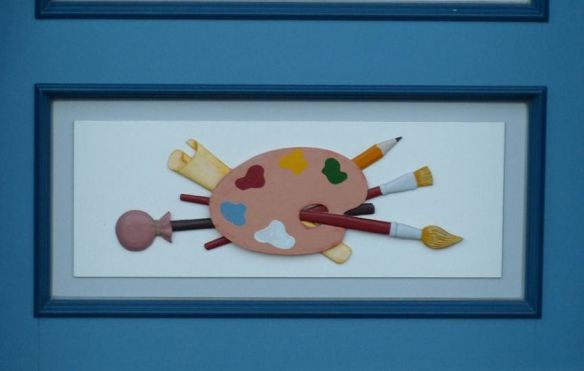
Painted Wood Relief Plaque
Wood Relief Plaque
This three-dimensional plaque proudly adorns a two-tone raised panel on an exterior door. Similar plaques would be a great way for kids to express their personalities on their bedroom doors.

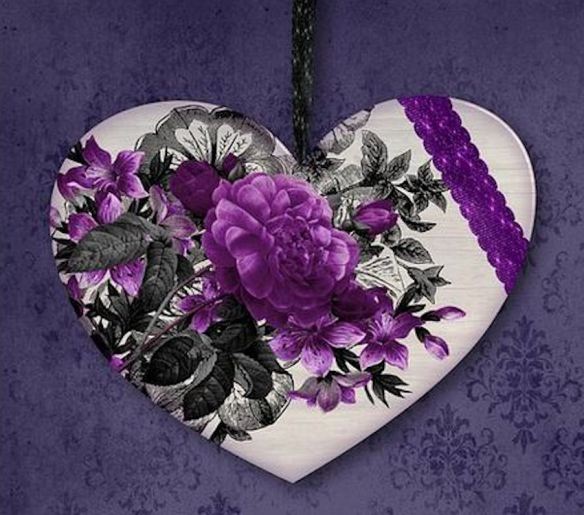
Purple & White Heart Wall Hanging
Purple & White Heart
Hearts are a favorite décor item. Instead of using the usual red or pink color scheme, this crafter chose a pretty purple and black floral scrapbooking paper with a touch of lace. Although they can’t be seen in this photo, be sure to paint the edges to match the background color prior to attaching the paper. Crafter Tip: As a more romantic alternative, the edges could be wrapped with coordinating ribbon or lace.

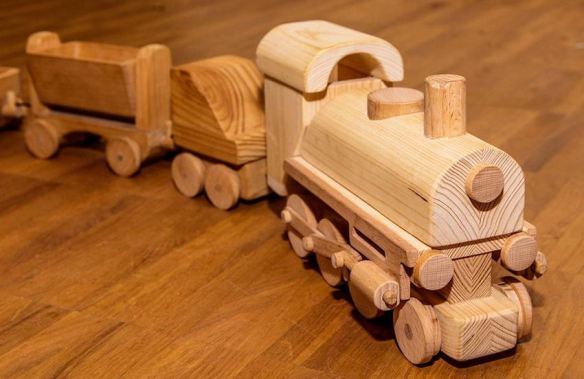
Toy Train
Toy Train
If you are looking for an absolutely effortless craft store project, you could purchase a few train cars, set it up at home and call it done. Natural wood grain is beautiful just the way it is. There’s really no need to do any painting, but if you feel you want to add just a little color, stickers from the scrapbooking department will work just fine. Crafter Tip: Or let your kids handle it and everyone wins.

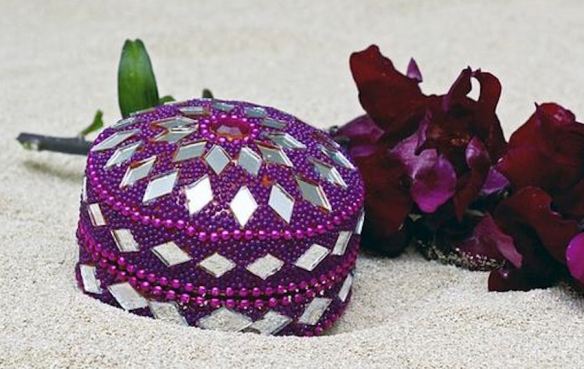
Jeweled Box
Jeweled Box
To create this jeweled box, start by painting the exterior iridescent purple, which will peek through the beads. Apply large mirrored pieces first and establish mid-size purple beaded borders. Fill in the remainder with tiny seed beads. The inside could be lined with velvet or satin fabric. Crafter Tips: Use full strands of beads for borders to make the gluing process easier, and ensure they are glued firmly in place at the edges of the lid because they may loosen over time with wear and tear.

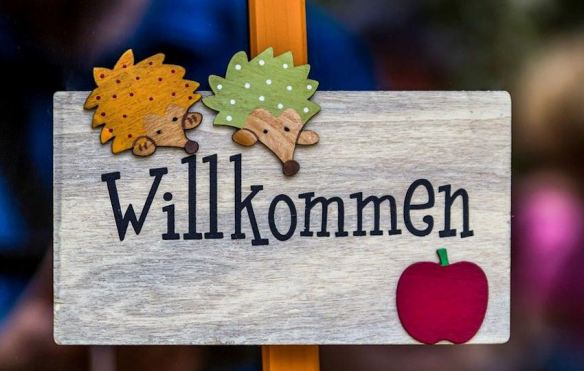
Welcome Sign & Lawn Decor
Welcome Sign
Part of your exterior décor may include “Welcome” signs, house number plaques, and humorous lawn ornaments such as garden gnomes and sheep. Large-scale seasonal items are also ready to paint, such as pumpkins and reindeer.

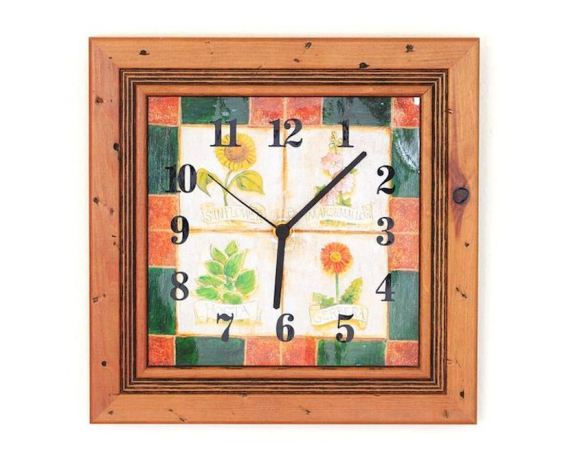
Personalized Wall Clock
Wall Clock
After staining this wall clock, a floral and checkerboard scrapbooking paper was applied along with self-stick black numbers. Craft stores carry kits, which include clock hands and the battery operated mechanism for the back. The unfinished clocks in several shapes and sizes are sold separately.

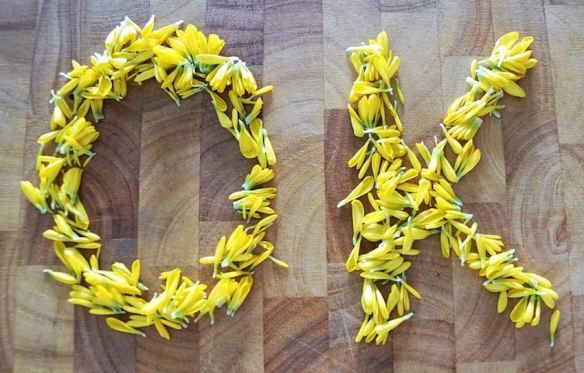
Floral Letters Wall Art
Letters have become popular wall art. Simply use your initials, or any words you like. In this photo, silk flower petals were glued on the top and sides of each letter. It’s super easy to do and ready to hang up. Crafter Tip: As alternatives, you could use mini pom poms, glass marbles, or self-stick gemstones.

Decorated “Home” Wall Art
A distressed paint finish in four different colors, a few sprigs of silk foliage, and a butterfly create a casual, welcoming message. Hanging an antique key enhances the warm feelings associated with “Home.” Crafter Tip: To achieve this distressed look, allow the paint to dry, and then use sand paper to “age” the letters.

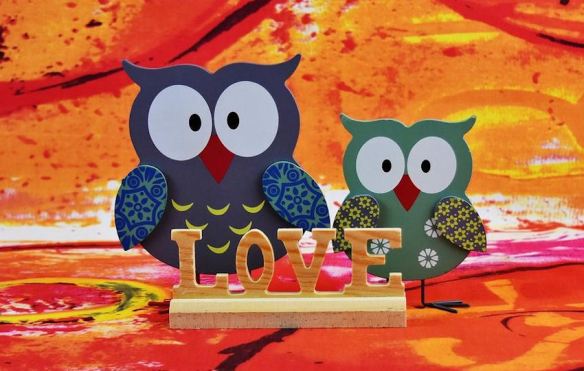
Freestanding Inspirational Art
Wooden Owls
Whether you work in an office or from home, it never hurts to have a little inspiration to lift you spirits and bring a smile to your face. These cute little owls fit the bill, along with an empowering message too.

Wooden Serving Tray
Wooden Serving Tray
A plain wooden serving tray was spruced up with some spray paint, and lined with a bamboo placemat. If necessary, trim the bamboo to fit. The dark gray paint, which peeks through the wood slats, contrasts nicely with the light color bamboo. Crafter Tip: Pier 1 has a large variety of unusual placemats, which can be used for many crafting projects.

Please stay tuned for next week’s post featuring detailed instructions for painting woodcrafts.

Thanks for reading & Happy Crafting!
Celebrating 100th Post

100th Post
Today marks a very important milestone – my 100th post! It has been a wonderful experience, and I thank all my readers and followers for taking this journey with me. Below are photos and links to each category of arts and crafts covered to date. Please take a few minutes to peruse your favorites.

Baking & Candy Making

Beaded Jewelry & Gemstones

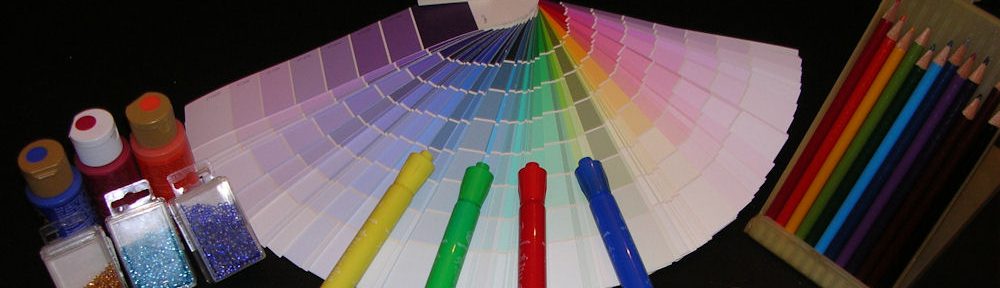
Color Theory
Color Theory

Floral & Home Decor
Floral & Home Decor

“How To” Projects
How-to Projects

Inspiration
Inspiration

Miscellaneous Crafts

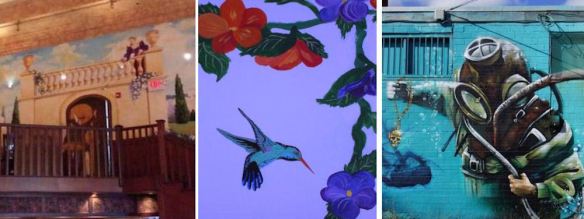
Painting – Decorative Techniques
Decorative Painting

Seasons & Holidays
Seasons & Holidays

Wood Crafts
Wood Crafts

Please let me know, in the comments section, if you have any suggestions for future arts and crafts topics. I am looking forward to the next 100 posts. This achievement would not be possible without all of you! Thank you!!

Thanks for reading & Happy Crafting!