Regardless of whether you call it a bar, pub or saloon, bartenders frequently say to customers, “Pick Your Poison.” If you are unfamiliar with this expression, it means what kind of alcohol do you want. I found a “Pick Your Poison” sign, which will make a great addition to my brother’s bar. Let’s get started.
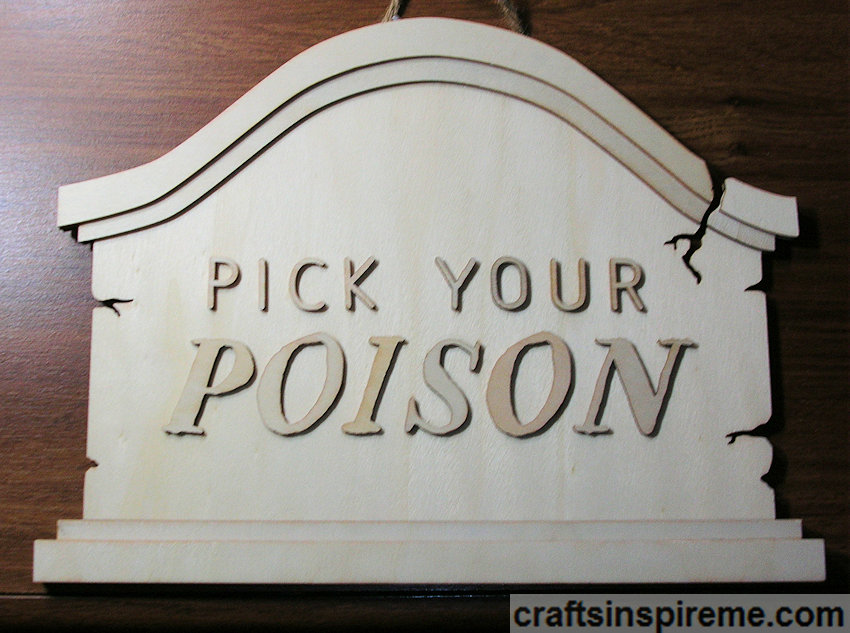
Unfinished Sign
I purchased this sign at Michaels Arts & Crafts from their Halloween collection. Experiment with color schemes on scrap paper and then choose your supplies. Later in this post, you will see further experimentation using photo editing software.
Supplies
Supplies:
“Pick Your Poison” Sign (14” wide x 1” deep x 8” high)
Acrylic Paints – black
Magic Markers – green, black
Paintbrushes
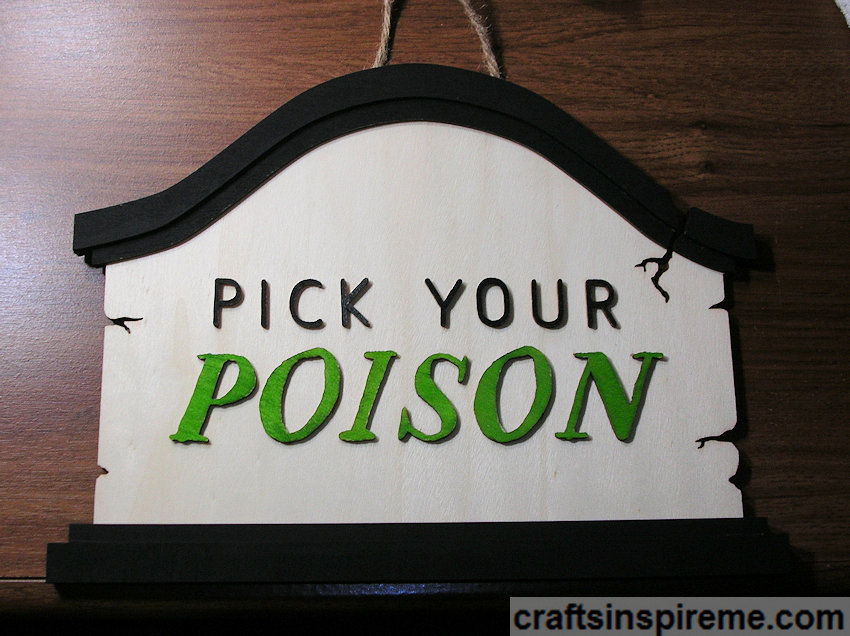
First Line Colored Black
Using a black marker, color the top line of text. It may require a few coats.
Second Line Colored Green
Color the next line of text green. It may require a few coats.
Top & Bottom Trim Painted Black
Paint the trim black. I wanted the word poison to really stand out but the marker just wasn’t enough. I switched to paints as you will see below.
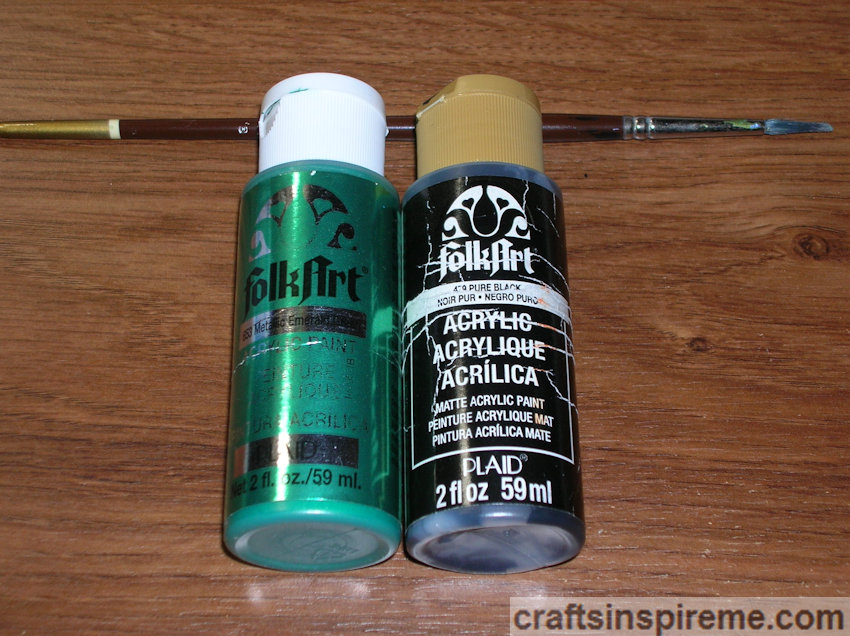
Revised Supplies
Revised Supplies: Acrylic Paints – black, metallic green Paintbrushes
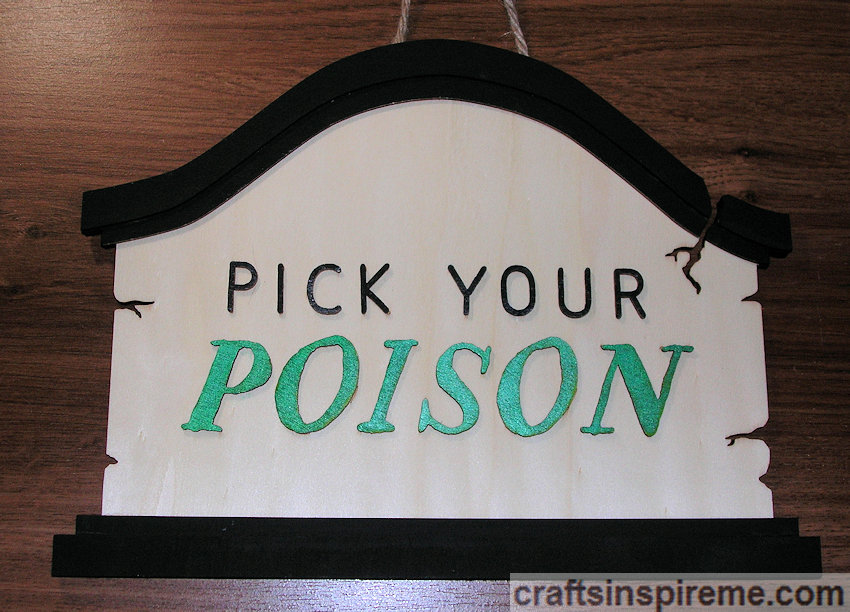
Painted Letters
Paint the word Poison with several coats of metallic green. I considered adding drips of 3D paint to make the green letters appear to be bubbling or oozing but decided against it. You could stop at this point if you like the wood grain background.
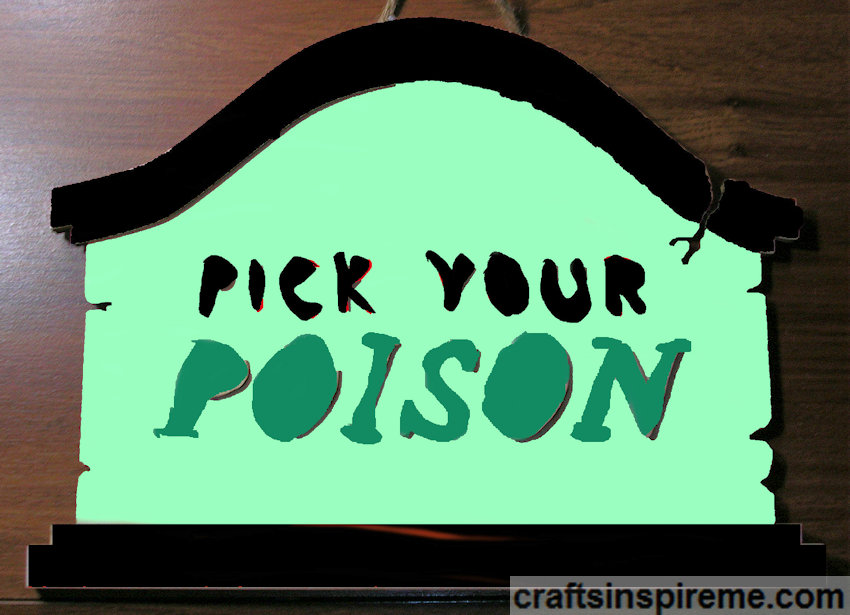
Photo Editing – Experiment 1
Using photo editing software, I experimented with different background colors. I was just dabbling so I apologize for the sloppy lettering. It was just what I needed to decide how to proceed.
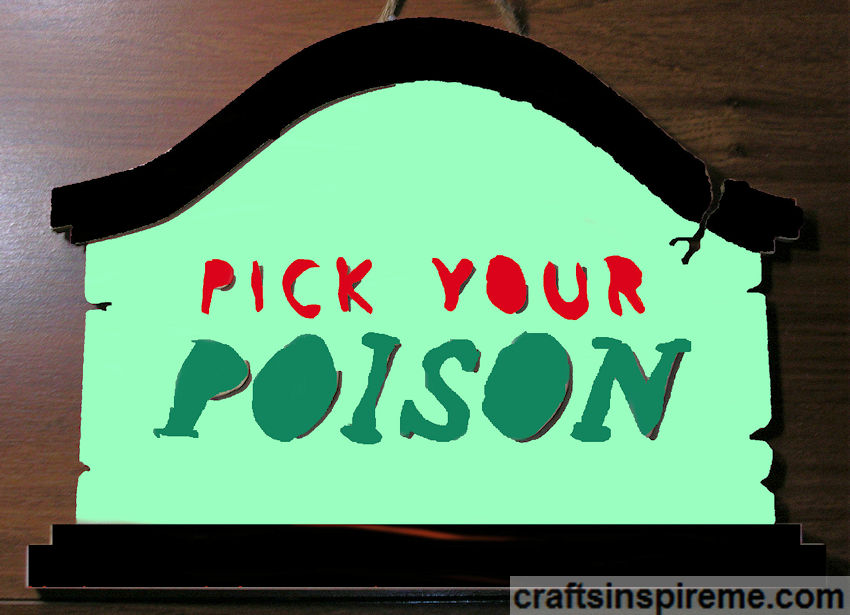
Photo Editing – Experiment 2
I also tested different color combos for the text against the new backgrounds.
Photo Editing – Experiment 3
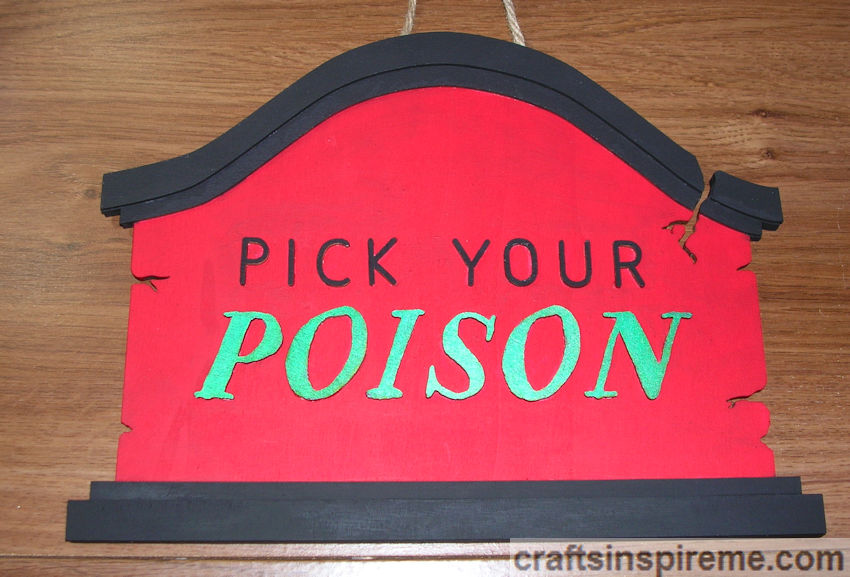
Because I liked the high contrast and implied sense of danger, I chose red as the background color.
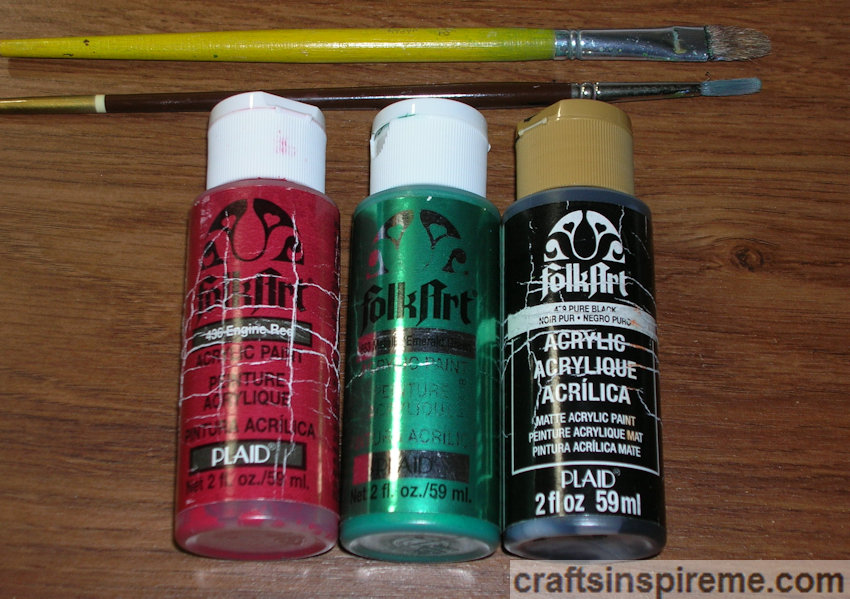
Finalized Supplies
Finalized Supplies: Acrylic Paints – black, metallic green, red Paintbrushes
Painted Background Red
Paint the background red. Due to streaking, which did not appear until after the paint had dried, it took several coats of paint.
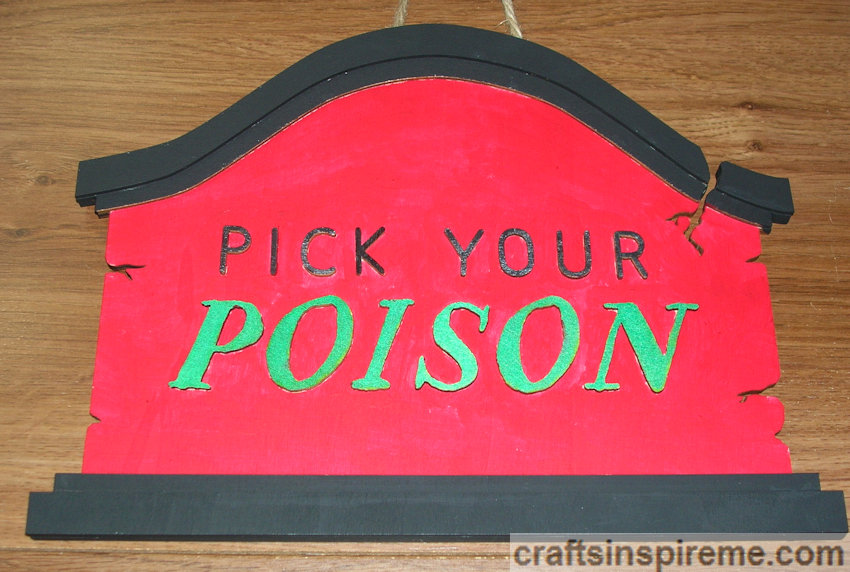
Finished Sign
Here is the finished sign, ready to be hung above the bar.
I hope you enjoyed this quick & easy project as much as I did. Sitting here at the bar, I drink a toast to my readers. I’ll save the seat next to me in case you decide to join me.
Look at that little face! Is he cute or what? The inspiration for this project is an adorable spotted piglet. In a previous post, “Year of the Pig 2019,” I mentioned my brother’s affinity for pigs. We usually find a way to include a pig at any gift-giving occasion. Sometimes it’s just a card, or a flying pig ornament for the Christmas tree. We all share the same sense of humor, and the more ridiculous the pig, the greater the laughter.
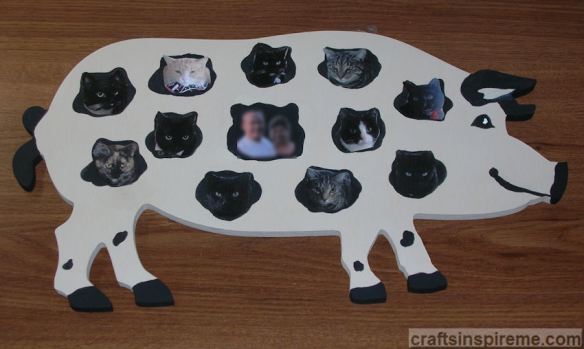
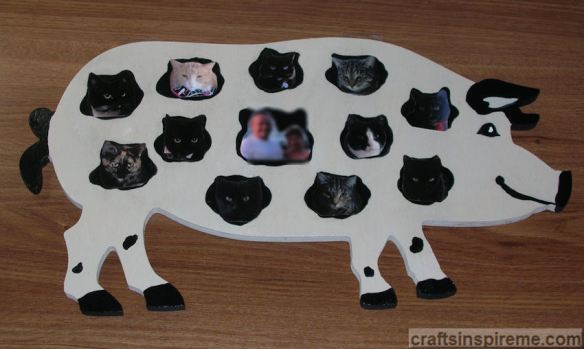
For my brother’s birthday this year, I decided to combine two of his favorites: pigs and cats. Believe it or not, he and his wife share their home with 11 feline fur babies. Yes, you read that correctly. That’s a lot of mouths to feed! Each cat started out in life under very difficult circumstances, but after being rescued, they live comfortable, happy lives filled with play and lots of tender loving care. Such an unusual family deserves an equally unique family portrait.
How to Create a Wooden Pig Photo Plaque
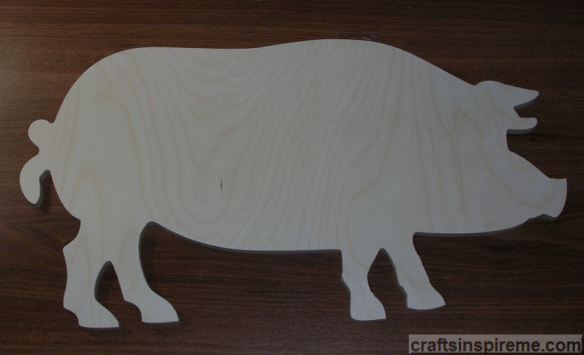
On a recent visit to AC Moore, I noticed a large wooden pig plaque. It was really cute, but I held off buying until I could come up with something my brother would appreciate and ended up liking the idea of a family portrait. The pig is large enough to accommodate photos of all eleven cats with my brother and his wife in the center. Any size or shape plaque will work as long as it is large enough to fit all the images. You could also create a plaque to commemorate a special event, such as a graduation, a birthday, or your favorite vacation. Let’s get started.
You may need to do some light sanding to ensure the surface and edges are smooth.
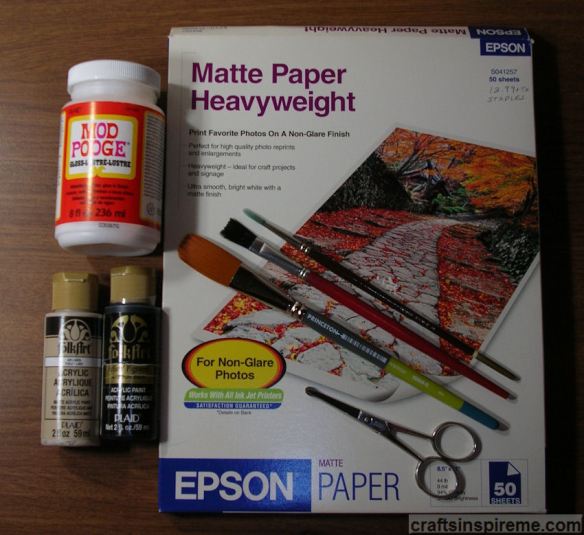
Supplies:
Wooden Pig (20-1/2” wide x 11-1/4” high x 1/2” thick)
Acrylic Paint – tan & black
1) Jar of Mod Podge Gloss
1) Oval Mop Paintbrush
1) Elmer’s Permanent Glue Stick
2) Paintbrushes – one for base coat, and a fine brush for details
Heavyweight Matte Finish Photo Paper
Sandpaper
Scissors
You might want to print a quick draft version of your photos to make it easier to lay out on the plaque. This will also give you a chance to experiment with different ways of cutting them out to make your design look more attractive. Be sure to reprint your photos on heavyweight paper for the final project. If you try to use regular printer paper, it will bubble and curl as soon as you apply the Mod Podge, and you’ll have to peel it off and start over. How do I know this you ask? Because it happened to me! It was awful!
How NOT to Complete a Photo Plaque
I watched a tutorial video to learn how to use Mod Podge for decoupage. They made it look sooooo easy but looks can be deceiving. They mentioned you could use laser printer color copies but said nothing about needing heavyweight paper. All my photos had been meticulously cut out and glued down using Mod Podge on the backs. Initially there was a little bubbling, but it smoothed out as it dried. While the Mod Podge does dry clear, the recommended sponge applicator leaves streaks behind and it dries that way! Instead, I recommend using an oval mop paintbrush, which produces a smoother finish. Next, I applied an even coat over the entire plaque. This should have been the finale, but I knew I was in trouble after the first few cats had been coated. Within seconds, the photos bubbled and curled up into little blobs! It was horrifying! They didn’t mention that in the how-to video! Frantically, I scraped the photos off and then used soap and water to clean the surface of the plaque. Back to the drawing board!
The Correct Way to Create a Pig Photo Plaque
This time I suggest a few changes to the process:
First, print your images on heavyweight matte finish photo paper.
Apply one coat of Mod Podge over the entire page of photos, using an oval mop paintbrush.
Allow drying time.
Cut out the individual photos. I chose to cut out the cat’s ears and round the bottom edges so that they would resemble spots on the pig.
Lay out the photos upon the plaque.
Trace the photos to determine the locations of the spots.
Paint each of the black spots a little larger than the photos. I ended up making all the spots solid black to prevent tan paint from peeking out from behind the photos.
Paint the pig’s face, ears, hooves and tail. A painted smile goes a long way to give this little guy some character.
Trim the photos and/or adjust the painted black spots as needed.
One at a time, paste each photo using Elmer’s Glue Stick.
Place a clean sheet of paper on top and firmly rub the surface and edges to ensure a good seal. Repeat this process. Let dry.
Apply a coat of Mod Podge over the entire plaque. Congratulations! Mission accomplished!
This is a fun and unique way to display family photos. Although pigs may not be for everyone, there are plenty of interesting wooden plaque shapes to match your family’s unique style and personality. Deciding which photos to use is a fun and adventurous activity. Let your creativity soar and be open to new possibilities as you create this memorable family portrait for everyone to enjoy.
New ideas are always brewing at the arts and crafts studio. Here is a sneak peek at a few of the upcoming projects…
Cake Decorating
Cake decorating has been a popular topic on this blog, and I have lots of new cake designs to share.
Crafting with Feathers
Craft stores always have feathers, and there are many creative ways to include them in your artwork.
Full Color Makeover
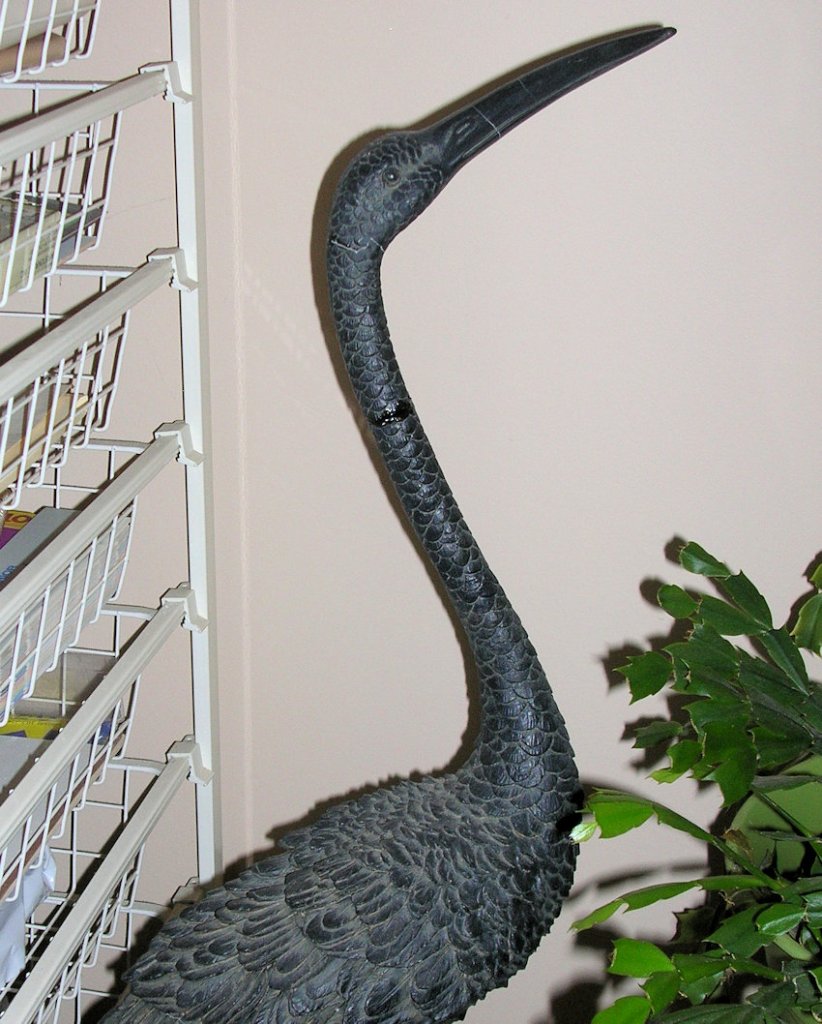
This monotone crane has been standing next to a potted plant for years. It is high time he gets some much-needed attention. Believe it or not this makeover will transform him into a crowned prince.
Cookie Decorating
The only time of year my family decorates cookies is Christmas. This post will inspire you to create beautiful cookies any time of year.
Painted Wood Crafts
Wood crafts are inexpensive, easy to color or paint, and quickly produce attractive décor for your home.
Magical Creatures from Harry Potter
The world of Harry Potter is inhabited by some extraordinary creatures. With a little creative magic, you can conjure one to adopt into your family.
Art Studio Mascots
Speaking of adoption, our foster cats have become permanent members of the family, and they will be popping into the studio from time to time for a visit. Here are a few of their recent comments: “Being an inspiration is exhausting and we’re working for kibble. F.Y.I., the feather projects will be delayed indefinitely…you don’t have any. You’re welcome. Wake us when there’s a big juicy mouse project!”
I hope you enjoyed this brief look into future posts. Comments and suggestions are welcome, and I look forward to hearing from you.
All babies are cute, but baby elephants are so expressive like the one above having the best day ever!
Baby Nuzzles Mom
Standing beside their watchful mothers, they look so small and somewhat fragile.
Baby’s First Steps
With those big floppy ears, it’s easy to imagine them taking flight, playfully floating upon the breeze and coming to a landing in our love-filled hearts. Let’s bring some of that joy into this week’s project.
How to Paint a Wooden Baby Elephant:
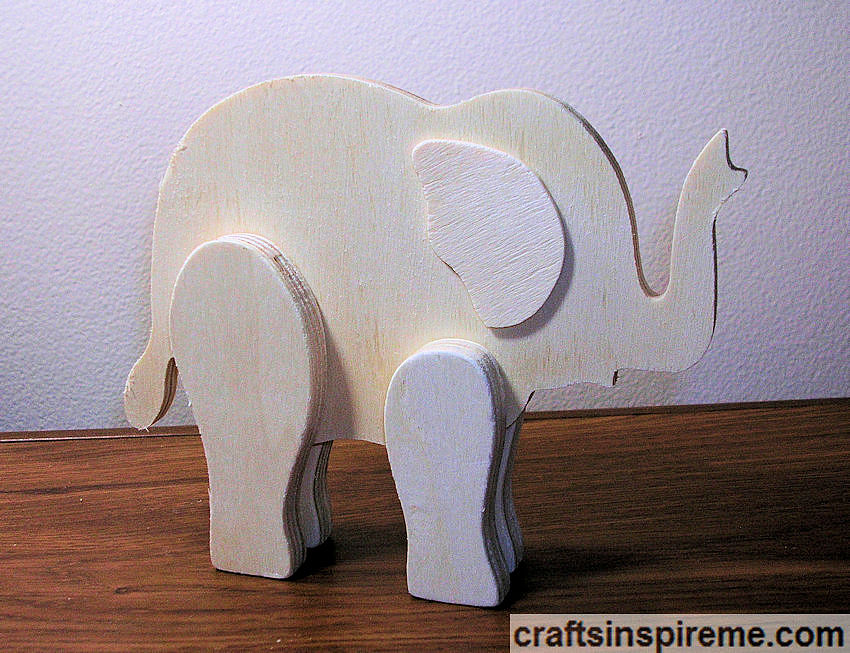
Raw Wood Elephant
In previous painted wood projects, the animals had feathers, scales, or fur. Elephants present a unique challenge: wrinkles. I must admit this took much longer than expected as I progressed through a series of trial and error to achieve the desired appearance by layering. Let’s get started…
Supplies
Supplies:
Wooden Elephant (5” high x 6-1/4” wide x 1-1/4” thick)
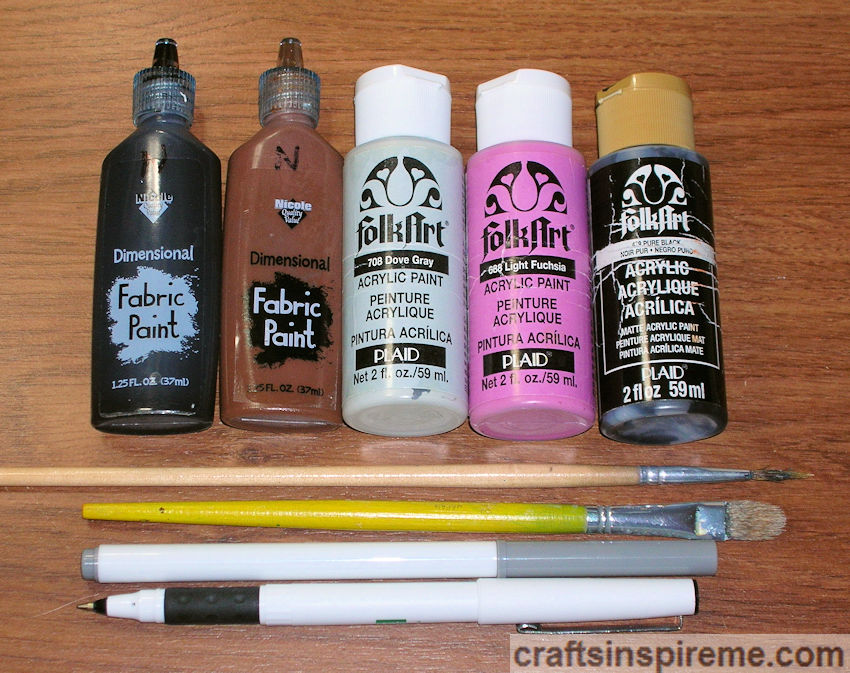
Acrylic Paints – Gray & Black, (Pink is optional)
Paintbrushes
Markers – Gray
Pens -Black Fine Point
1) Bottle fabric paint – Brown
1) Bottle fabric paint – Black
1) Bottle fabric paint – White (not shown)
Texture Building
Start building texture with three-dimensional fabric paint. I used white, but any color will do because we will paint over it in a later step. Draw both eyes with a pencil. Thicken and shape the ears and outline the eyes with fabric paint.
Paint the Body
Paint the body gray, including both sides and all the edges.
Draw Details with a Marker
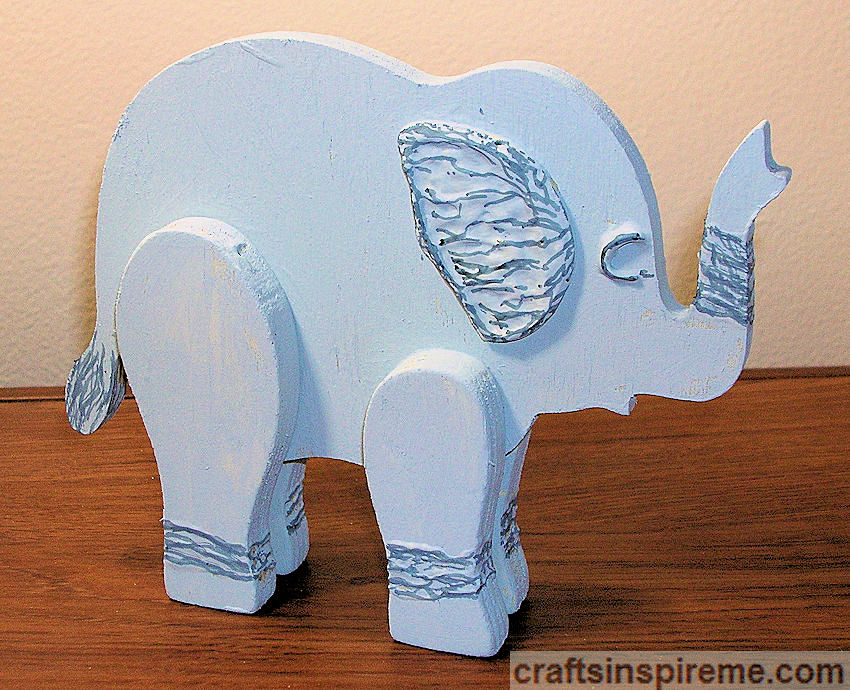
Define the wrinkles using a gray marker.
Add More Wrinkles
After viewing numerous photos, I added wrinkles all over the body using a marker but immediately regretted it. I should have followed my own advice: Draw or paint what you feel, not what you know.
Repaint the Body
A fresh coat of paint gives us a clean slate to try again and allows the marker lines to lightly show through, which is great for the next step.
Cautiously Draw Wrinkles
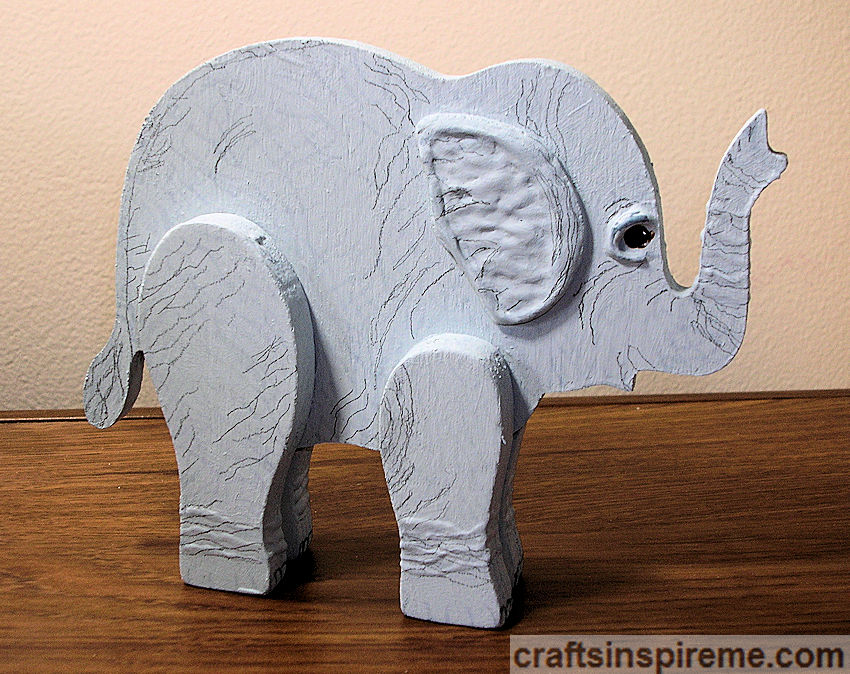
Using a pencil, slowly add details in key areas to imply overall wrinkles. Build up the eyes with brown fabric paint.
Trace with a Marker
With a gray marker, trace the wrinkles and outline the eyes. Finish building the eyes up with brown fabric paint and allow it to dry. Add pupils and a white spot in each to bring them to life.
Trace with Fabric Paint
Retrace the wrinkles with black fabric paint. You are probably thinking, “Here she goes again. Jumping in with both feet,” and you are correct. The difference is this time … I like it! Don’t worry about too much contrast because we will tone it down in the next step. Develop the eyes with the same fabric paint.
Repaint & Create More Texture
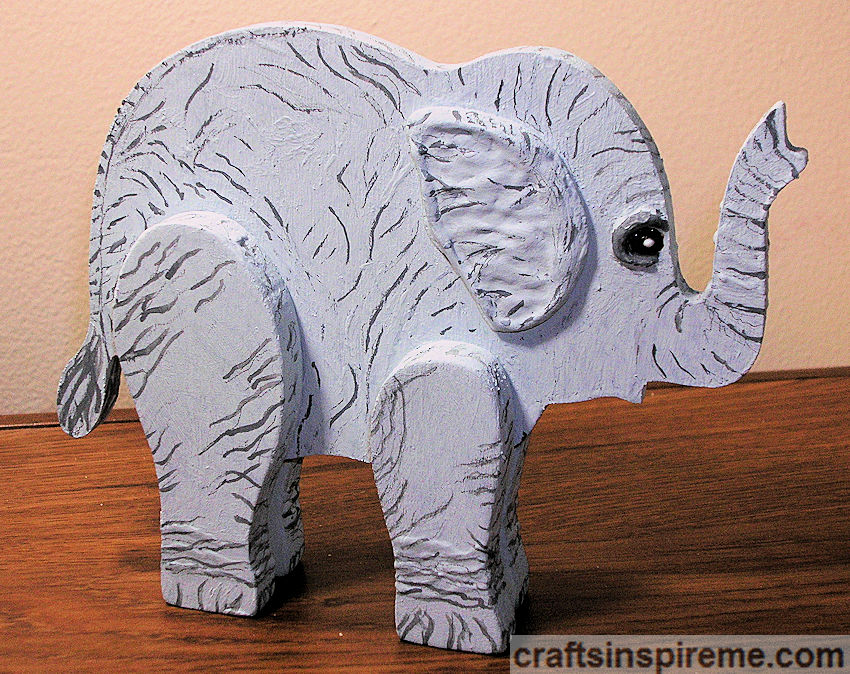
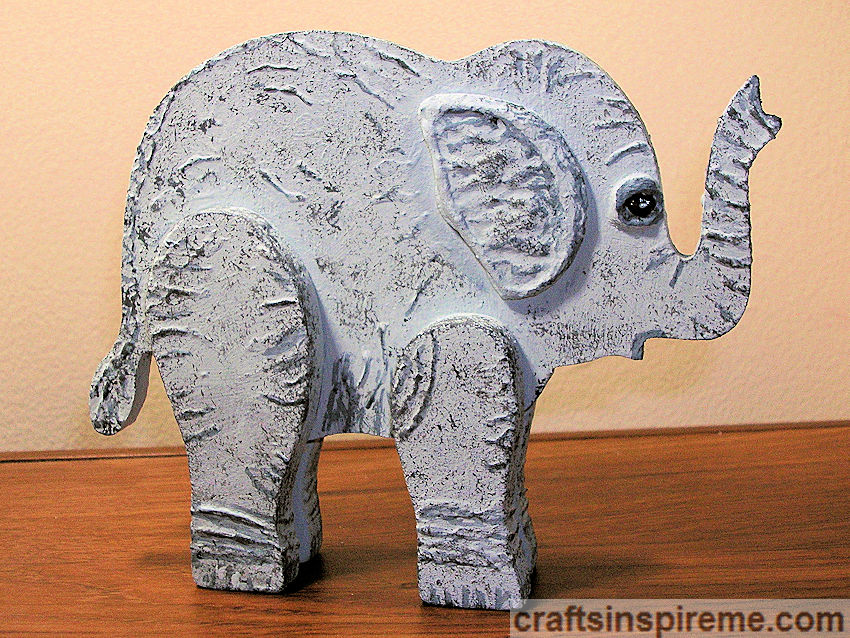
By repainting the body with gray paint, the raised wrinkles recede, becoming part of the thick skin. Next, mix black and gray acrylic paint to create a darker gray. Dip a cotton ball in the new dark gray paint and dab it on a piece of scrap paper to remove the excess. Lightly dab the cotton ball all over the body to create new subtle layers of texture. Repeat as needed.
Trace with a Marker
Retrace the wrinkles, ears, and eyes with gray marker. Add lines around the mouth and tip of trunk. At this point you could stop, but I wanted to add a few little details to make this elephant look like a baby. For that we need a little inspiration.
Adorable Baby Elephant
Three things stand out: eyelashes, the pink inside of the mouth, and peach fuzz hair running along the spine from top of the head to the tail. Markers or paint will work nicely for the first two details, but the third requires a special ingredient…
A Longhair Cat
Yes, I am recommending the use of cat hair for an art project. I must say it is the oddest ingredient I have ever used. Longhair cats require daily brushing, so collecting soft hair is no problem. (lol)
Completed Baby Elephant
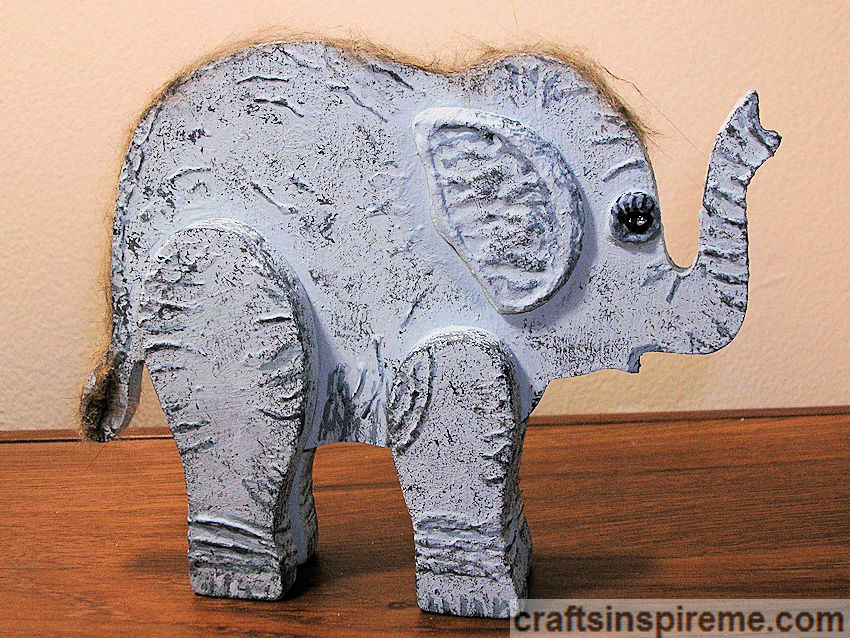
Glue on the hair with Elmer’s glue. Adjust and trim the hair as needed. Add eyelashes with a fine point black pen and paint the inside of the mouth pink.
Closeup of Elephant’s Face
Although these details are minor, I think they provide softness and a “cuteness” factor to this baby elephant, just like his living counterparts.
Baby Elephant – Before & After
This completes our project. Persistence pays off. Experimentation is a tremendous help in solving artistic problems. If you are not happy with the results, let it sit for a day or two and the inspiration will come to you just when you need it most.
Have you faced any artistic challenges like wrinkles? Have you used an unusual item, such as cat hair, in an arts and crafts project? Please share your ideas in the comments section. Thanks for joining me. Good luck with your future works of art.
Sixty-five million years ago the Tyrannosaurus Rex, also known as T-Rex, spent his days hunting, eating, and making little dinosaurs. Archaeologists, writers, and world-renowned movie directors have been thrilling us ever since with all the gory details of this master predator.
Did they roar like lions? Were they solitary animals or did they mate for life? Having such short arms, I wonder, how did they get back up after a fall?
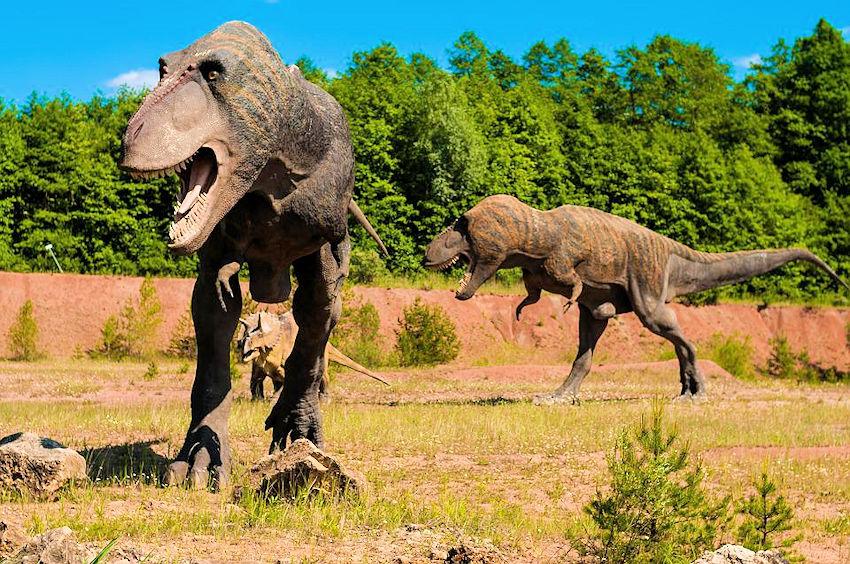
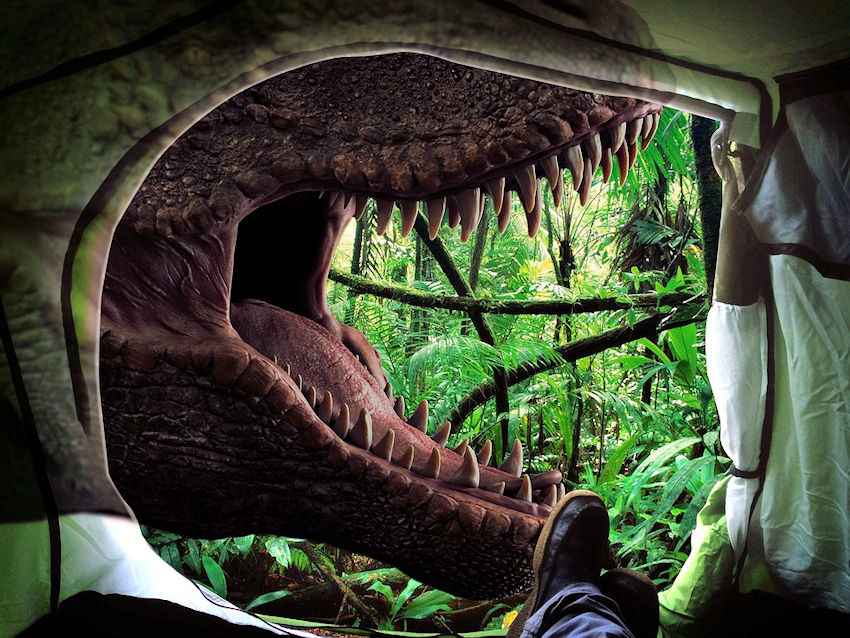
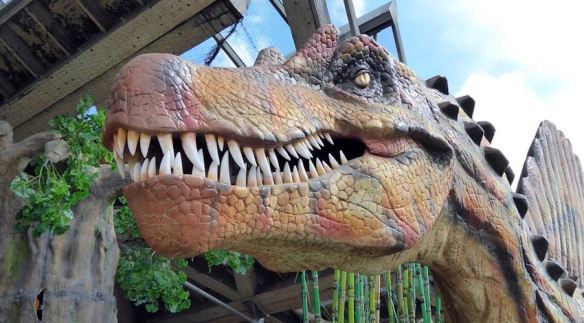
After viewing this photo, who wants to go camping? (lol) The mere thought of facing a creature, capable of eating its prey whole, leaves us with mixed feelings of fear and awe. And we love it. To bring a few of those Jurassic thrills into our lives, let’s jump into our next project:
Inspiration
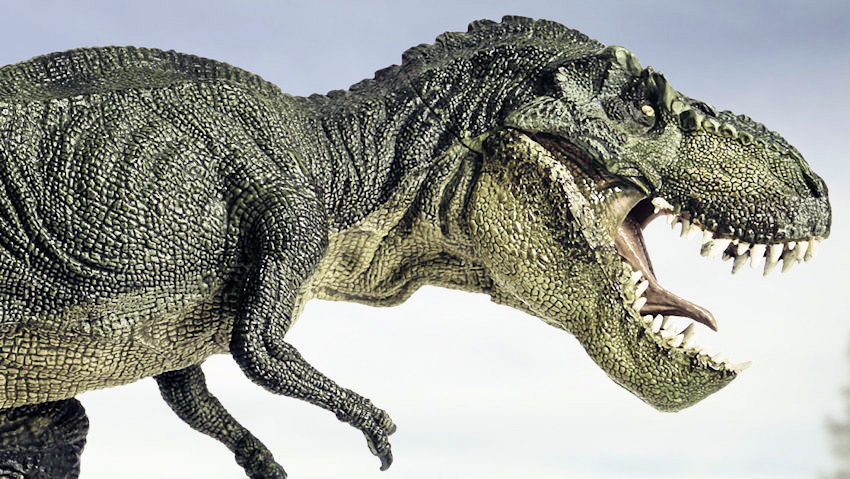
Huge jaws, piercing eyes, and razor-sharp teeth – what’s not to love?
Inspiration
When we look at large lizards alive today, we can visualize tyrannosaurs having thick, textured skin, consisting of scales and bony plates, with a ridge along the spine.
Inspiration
Predators typically have camouflaging patterns and colors to give them an advantage while hunting. With these ideas in mind, we can begin the creative process to bring the T-Rex back to life. Let’s go!
How to Paint an LED Tyrannosaurus Rex:
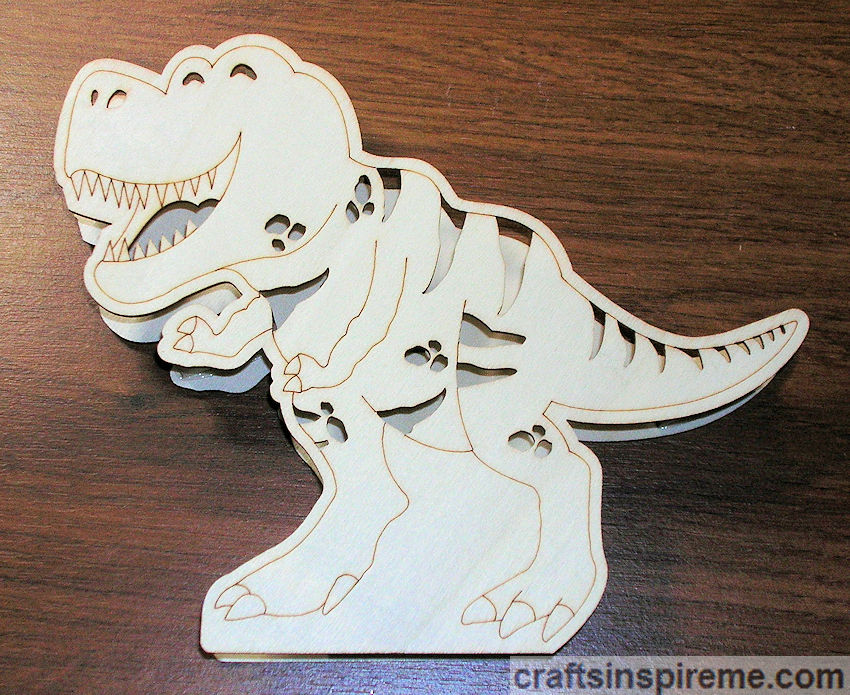
Raw Wood T- Rex, Front
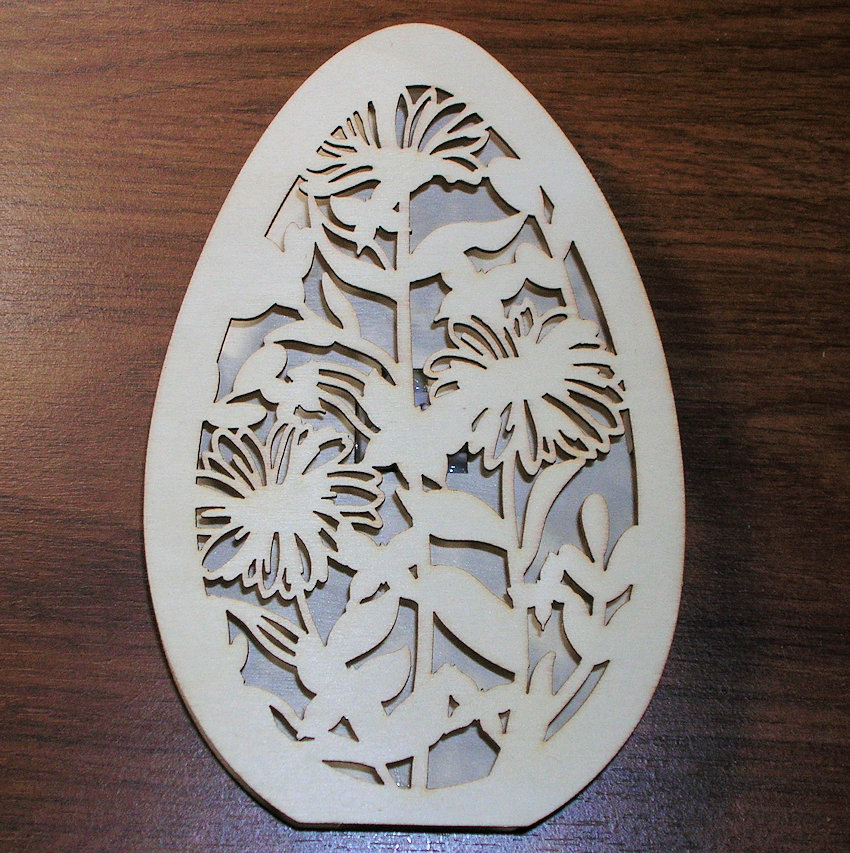
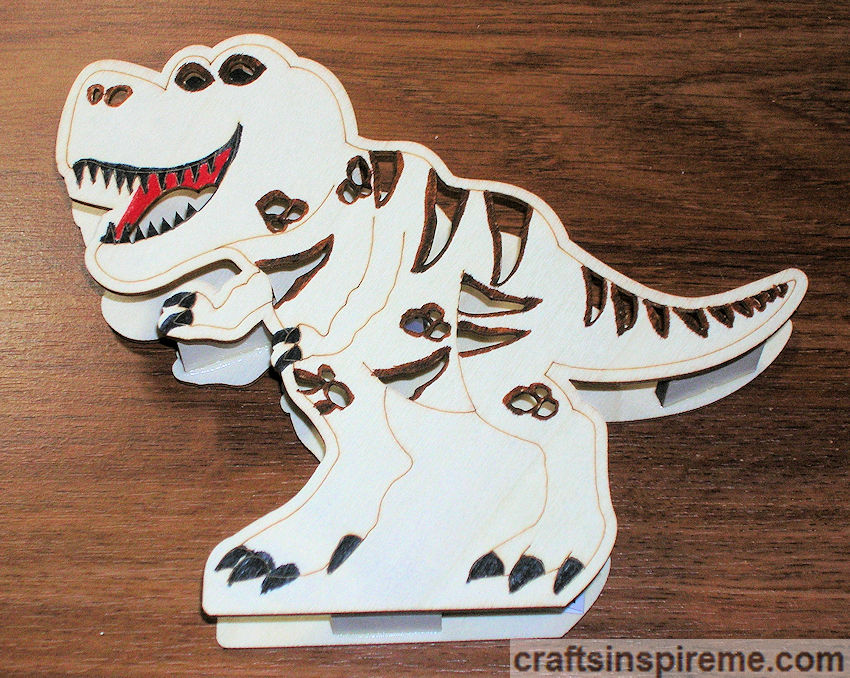
This wooden T-Rex (available at Michaels) has preprinted details and cut outs to enable green light from a concealed LED bulb to penetrate the figure and cause an eerie glow in the surrounding area.
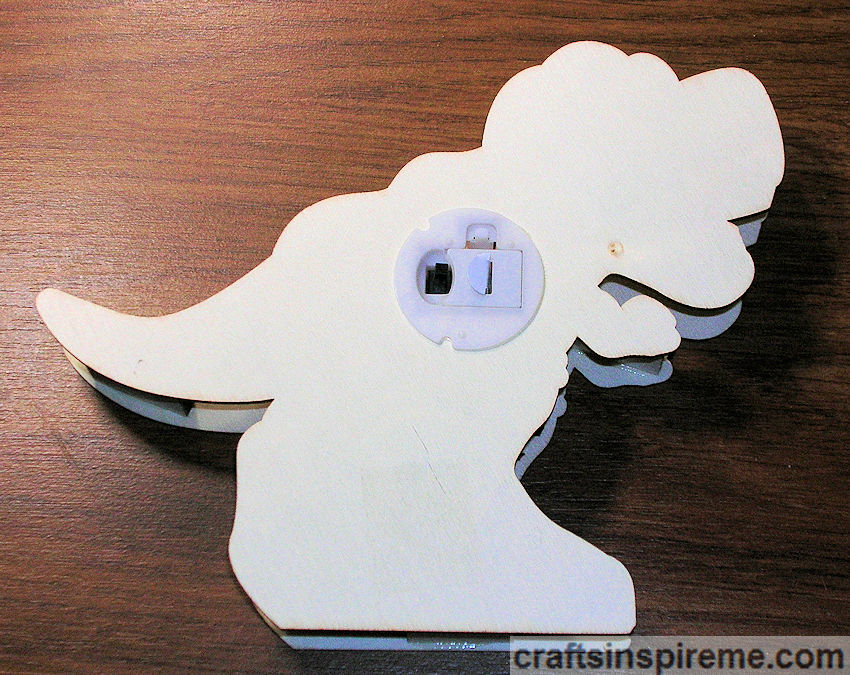
Raw Wood T- Rex, Back
The back is plain wood with the on/off switch and battery compartment. The wood on the front is smooth, however you might want to sand the back lightly, however that is entirely up to you.
Supplies
Supplies:
LED Wooden T-Rex (5-3/4” high x 7” wide x 1” thick)
Acrylic Paints – Cappuccino, Light Fuchsia, & Dove Gray
Paintbrushes
Markers – Brown & Black
Marker Drawn Details
Use magic markers to figure out the color scheme.
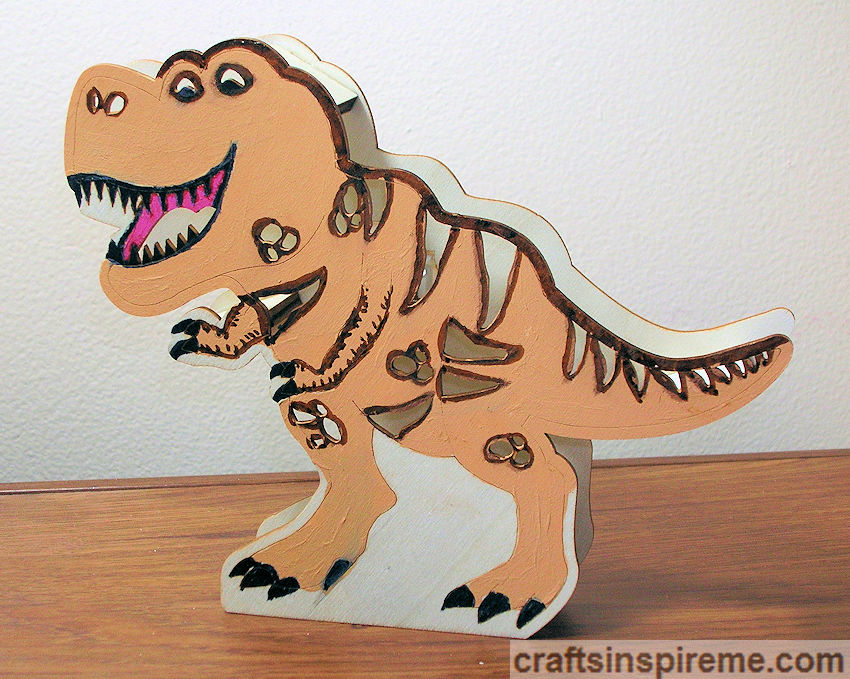
Painted Basecoat, Front
Paint the entire body with the basecoat.
Painted Basecoat, Back
Paint the basecoat on the back. I did not add any details, but you can if you wish.
Marker Drawn Details
Go over the details with markers.
Painted Gray Background
Paint the background gray to contrast with the tan body. At this point you could stop.
If you have been following this blog for a while, you know there is a more advanced painted version. Please read on to discover how to give this dinosaur a more reptilian appearance.
Advanced 3D Painting:
Three-Dimensional Fabric Paints
Supplies:
1) Bottle fabric paint – Brown
1) Bottle fabric paint – Black
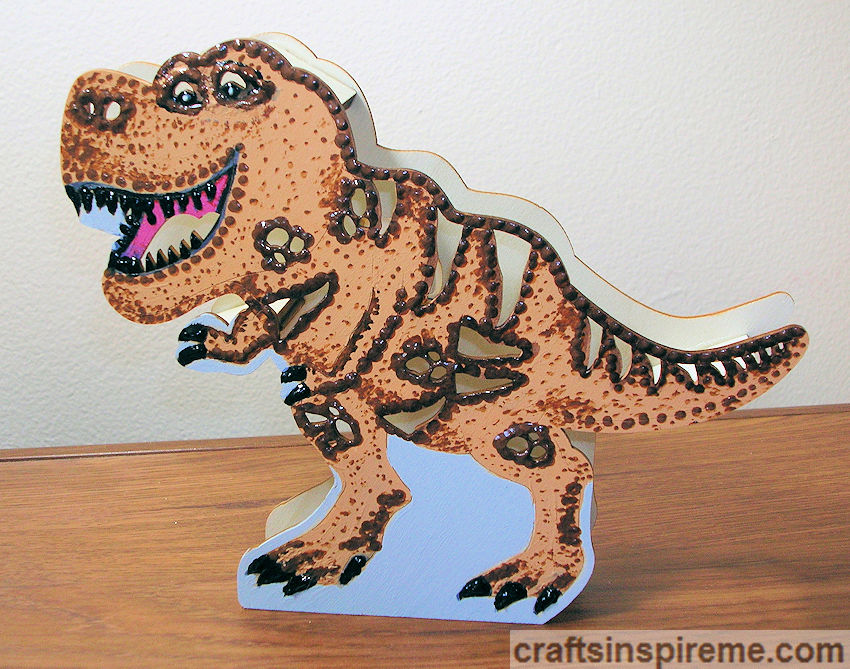
Painted 3D Details
Using brown fabric paint, apply nubby texture to the body. The black paint is for the teeth, pupils, and claws. I outlined the eyes in black too but didn’t like it. To me, he appeared to be wearing a pair of sunglasses. (lol) You can see the revision below.
Completed T-Rex
This is the completed Tyrannosaurus Rex in all his glory.
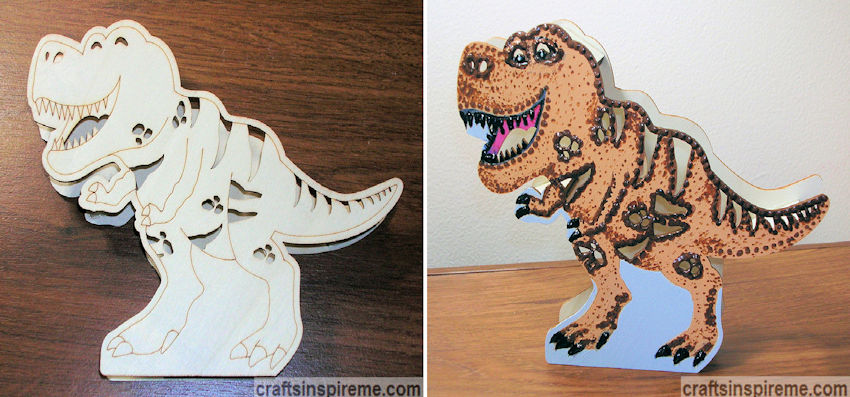
T-Rex Before & After
I am always surprised seeing the plain original wood side by side with the completed project. Caught up in the creative process, it’s easy to forget where we started.
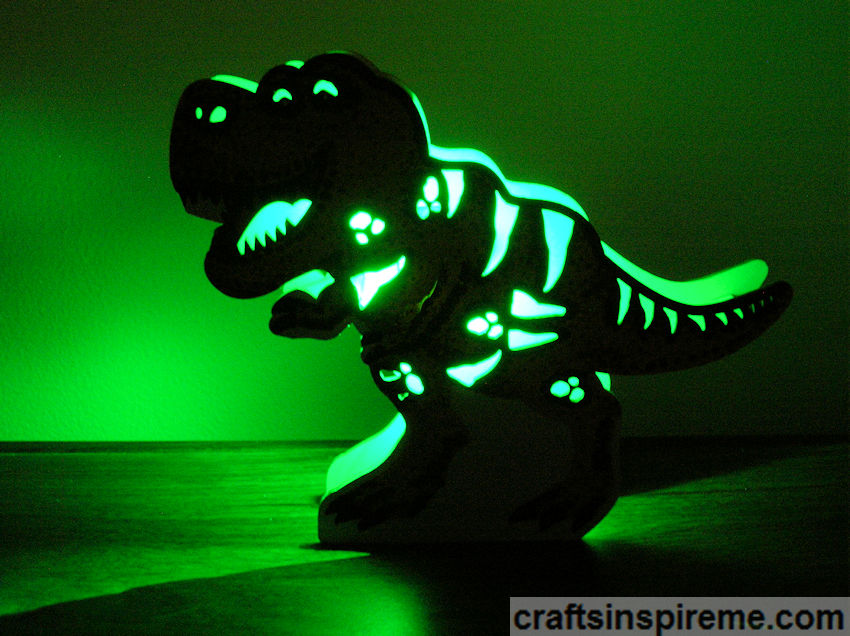
Lit T-Rex with Flash
This photo, taken using flash photography, shows the soft glow of the LED light.
Lit T-Rex without Flash
In a dark room, this T-Rex makes a cool nightlight.
I hope you enjoyed this transformative journey. Thank you for coming along for the ride. What is your favorite dinosaur and why? Please let me know in the comments section.
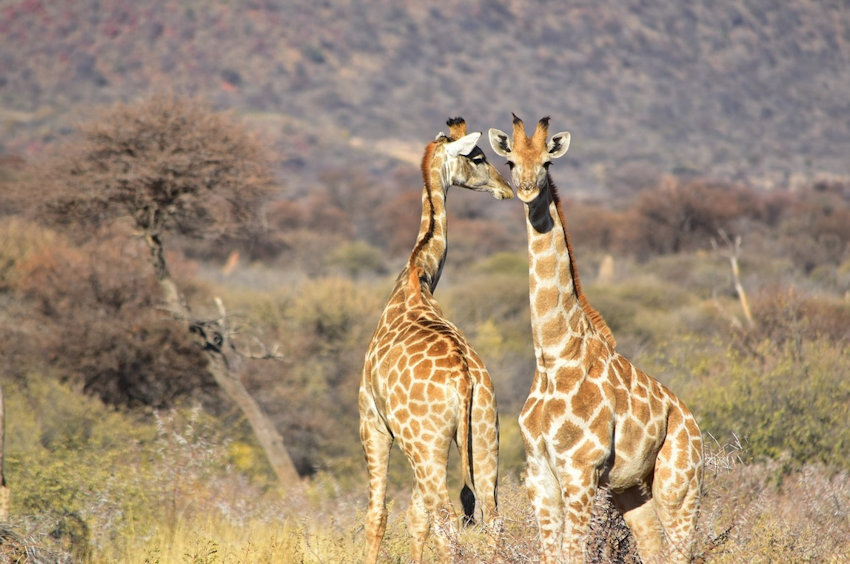
One of the most easily identifiable animals upon the face of the earth is the giraffe. There is nothing else like it – that long neck, towering legs and a fur pattern that resembles mosaics. Giraffes are so tall, that the babies are born at a minimum height of six-feet tall to feed from the mother.
Each subspecies has unique fur patterns and colors. There is a ridge on the forehead and two horn-like protrusions on top of the head.
Some have spots down the length of their legs, while others have solid tan or white below the knee. For this project, you will need to look at giraffe photos and decide which pattern you prefer.
How to Paint a Wooden Giraffe:
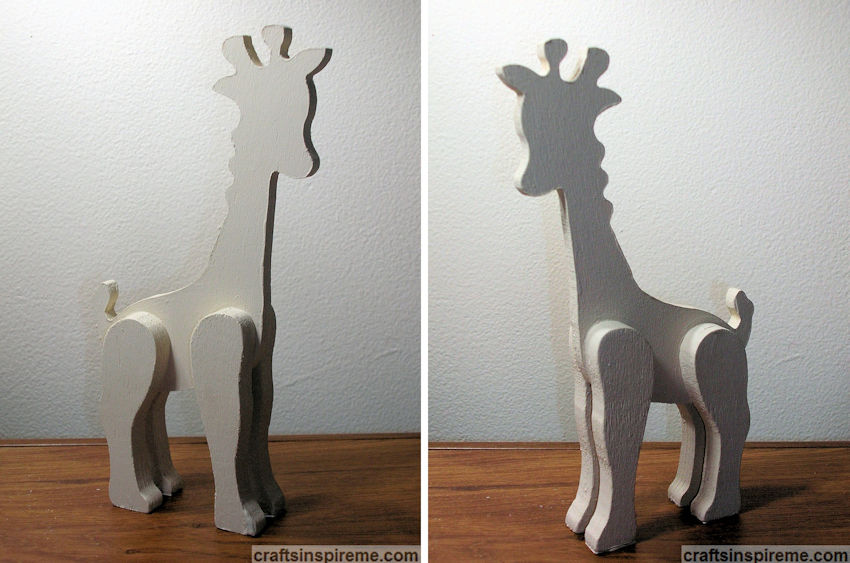
Raw Wood Giraffe
Both sides and all the edges will need to be sanded and painted. Ensure the giraffe stands without wobbling. If needed, restore balance by gluing pieces of thin cardstock to the bottom the feet.
Supplies
Supplies:
Wooden Giraffe (8-1/4” high x 4-1/4” wide x 1-1/4” thick)
Acrylic Paints – red, brown, orange, black, tan
Bottles Fabric Paint – brown, black
Paintbrushes
Sandpaper
Pencil
Sand & Paint Base Color
After sanding, paint the entire body tan.
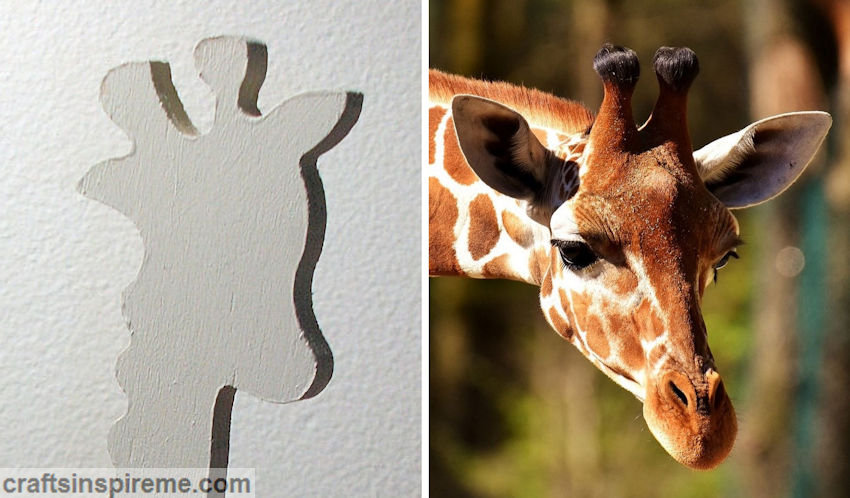
Reference – Giraffe’s Face
I bet you didn’t expect to have a Giraffe anatomy lesson! Typically, wood craft animals stand facing forward. If you look at the close-up photos above, you will notice this giraffe is turning his head to the side. This effects both sides of the head. Both eyes need to be on the same side. We will address the back of the head in a later step.
Hand Draw Details
Because this appears to be a baby giraffe, the facial features are cute but small, including the ridge between the eyes. I began drawing some of the spots to understand what the layout should be. To keep the pencil lines to a minimum, the remainder of the spots were freehanded with the paint brush.
Mix Custom Paint Color
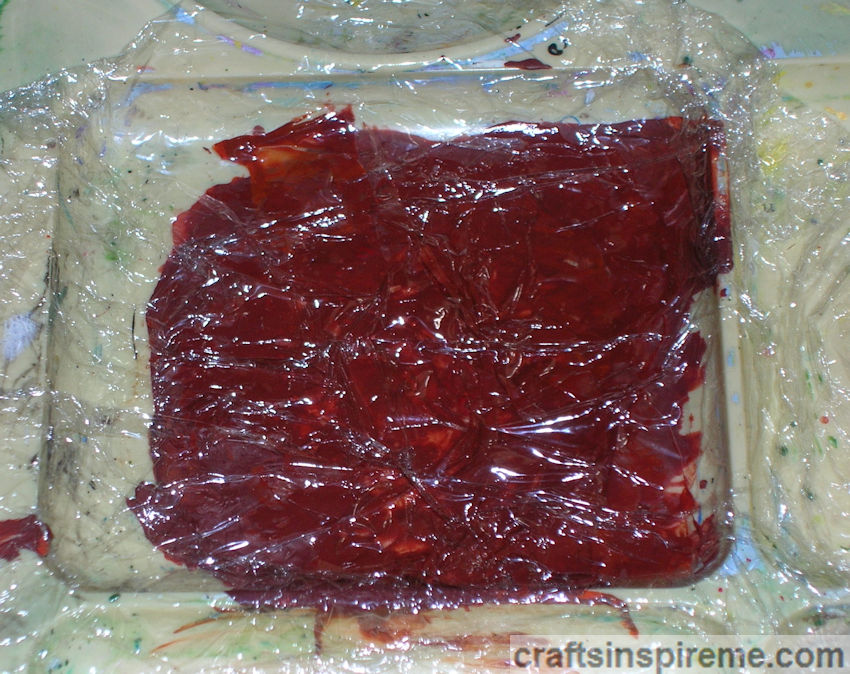
Be sure to mix enough paint for the giraffe’s spots to last throughout the project. To keep the paint moist on a paint palette, cover it with plastic wrap, ensuring the plastic is pressed down upon the paint surface and the edges are sealed. You may need to moisten the paint, but the color will be preserved. I created a reddish-brown by mixing brown, red and orange acrylic paints.
Paint the Spots on the Neck
Use a fine brush for the spots. Be sure to leave space in between, which resembles mosaic tile set in grout.
Paint Spots – Right Side
As you work your way down the body, the size of the spots diminishes. Be sure to paint spots on the edges, including the front and back of each leg and the neck too.
Paint Spots – Left Side
For this step, the following areas will remain tan: the back of the head, the mane, the inside of each leg, the feet, and the tail.
Defining the Details – Right Side
Paint the head and facial details, except for the eyes, which will be completed in a later step. Paint the tail and hooves black. The muzzle and fur between the eyes are darker, while the cheeks are lightly spotted. The “horns” are a combination of black and brown.
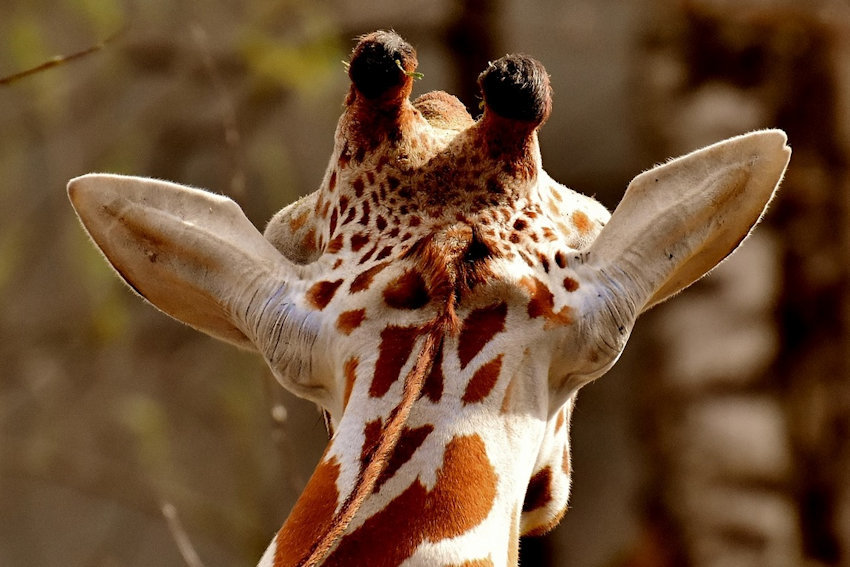
Reference – Back of Giraffe’s Head
Figuring out the back of the head was difficult. Because our giraffe is looking off to the side, you will only see a portion of the face.
Reference – Back of Head & Mane
When the giraffe moves his head and neck, the mane twists and turns.
Reference – Back of Head & Mane
There are no spots on the ears. Notice how the mane twists as the neck shifts.
Defining the Details – Left Side
Draw the details on the back of the head. Be sure to show the twisting mane. Paint all the details except for the mane.
Paint 3D Details – Right Side
The eyes are painted with brown fabric paint for a 3D effect and outlined in black. After it dries, add black pupils and white dots in the center to bring life to the eyes. Using brown fabric paint, create a raised mane, centered down the entire length of the neck. It will take two coats to make the furry mane to stand upright. Create fur on the “horns” with black fabric paint.
Paint 3D Details – Left Side
Paint the eye with brown fabric paint and outline with black. Using brown fabric paint, complete the twisted mane on the back of the head. Create fur on the “horns” with black fabric paint. Allow it to dry overnight.
Finished Close Up – Face
The following steps apply to both sides: Because fabric paint is shiny, paint over the mane with brown acrylic and then highlight it with reddish brown and tan. Paint the horns with black acrylic. Some reddish-brown paint was brushed into the ears and up onto the furry horns.
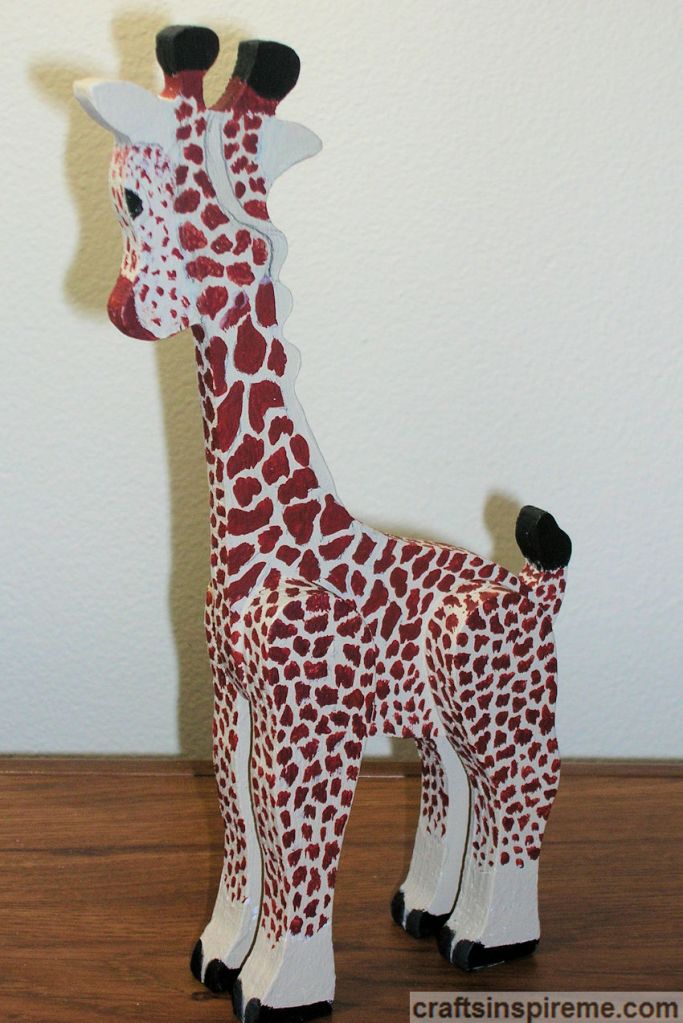
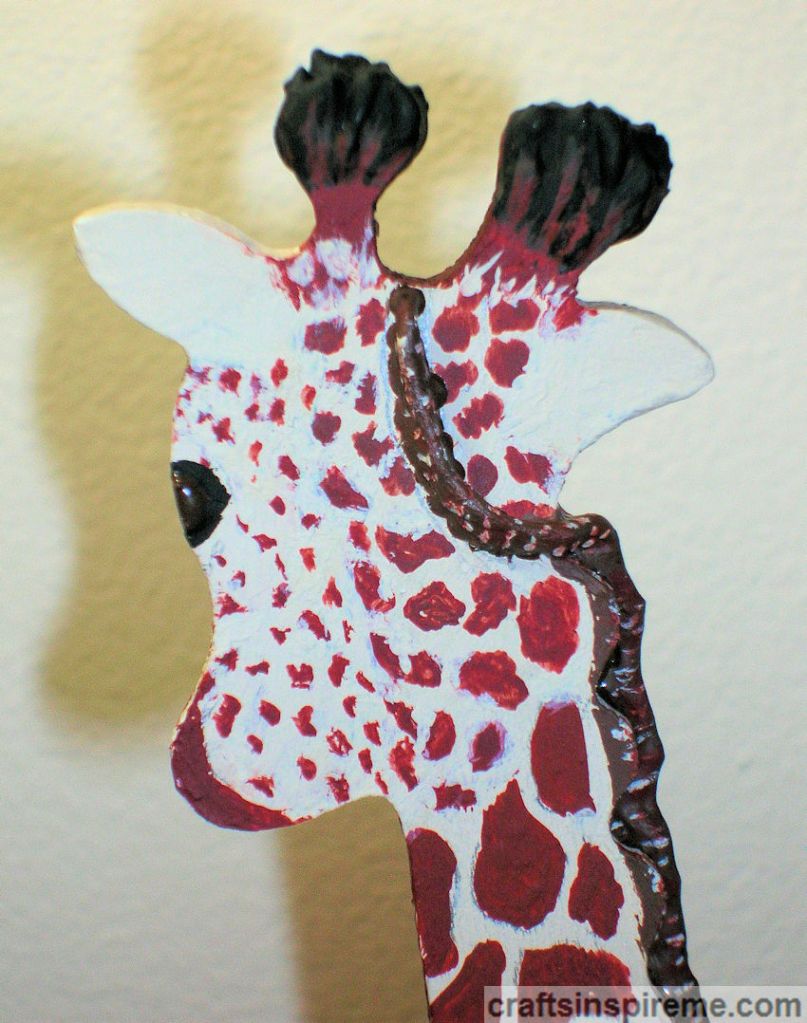
Finished Close Up – Back of Head
Touch up any details as needed. The spots on the left side of the neck, closest to the face, curve toward the face to give a three-dimensional roundness to the upper portion of the neck.
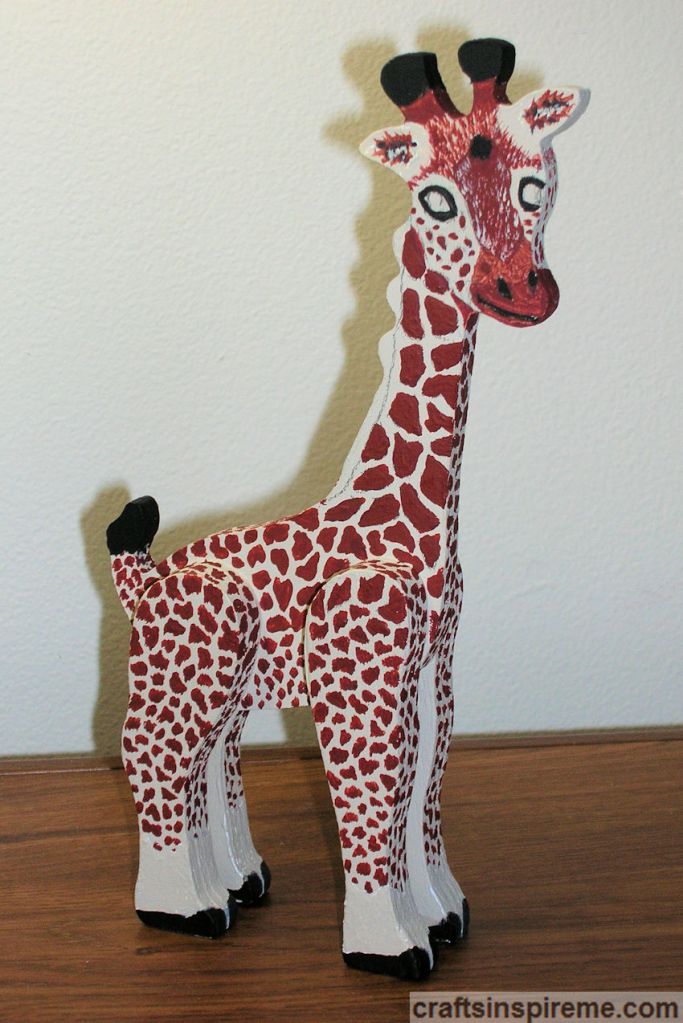
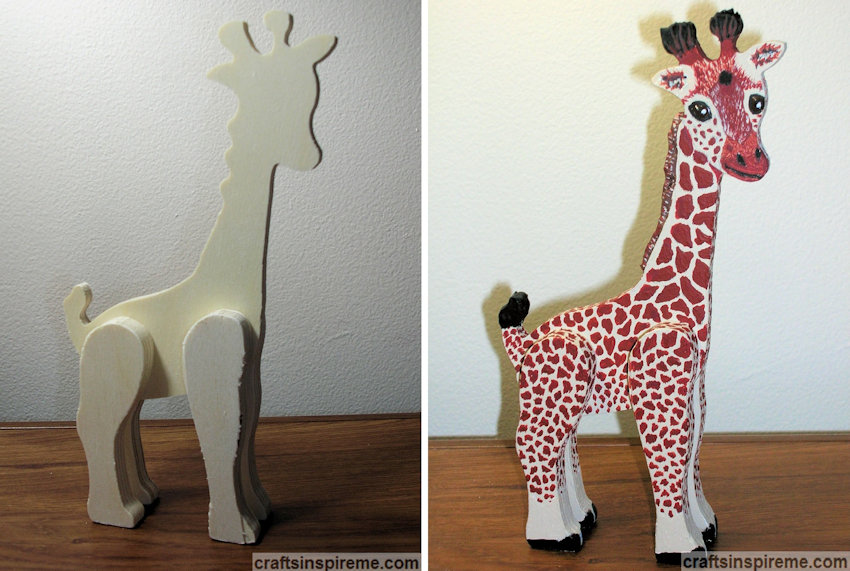
Giraffe – Before & After
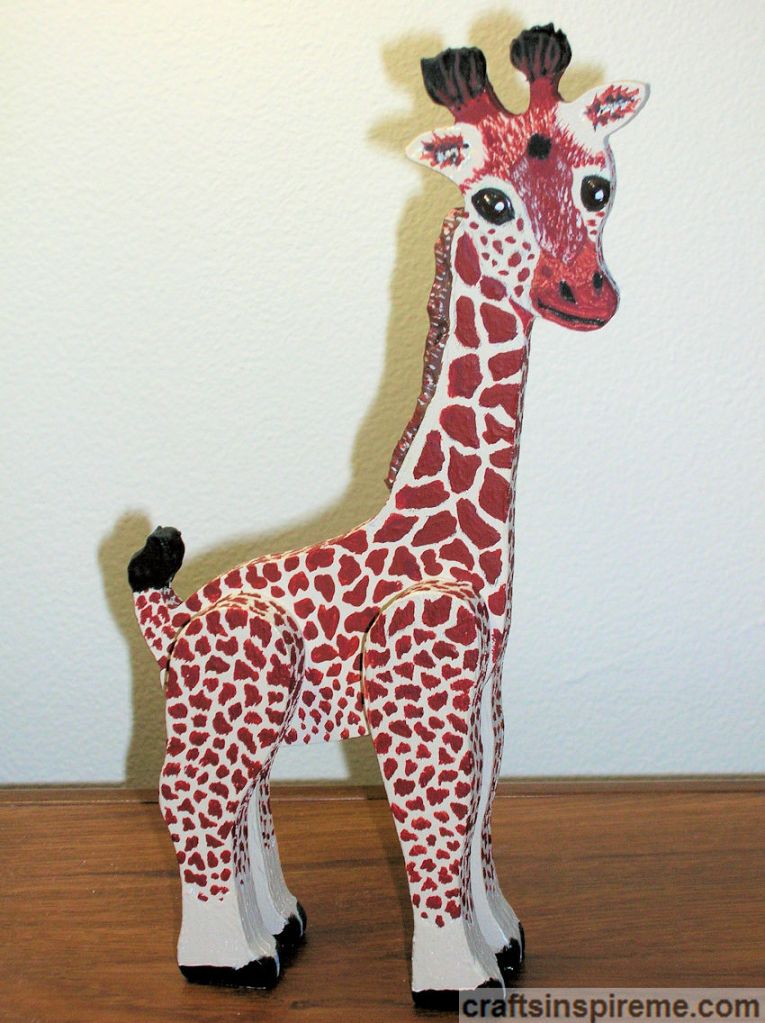
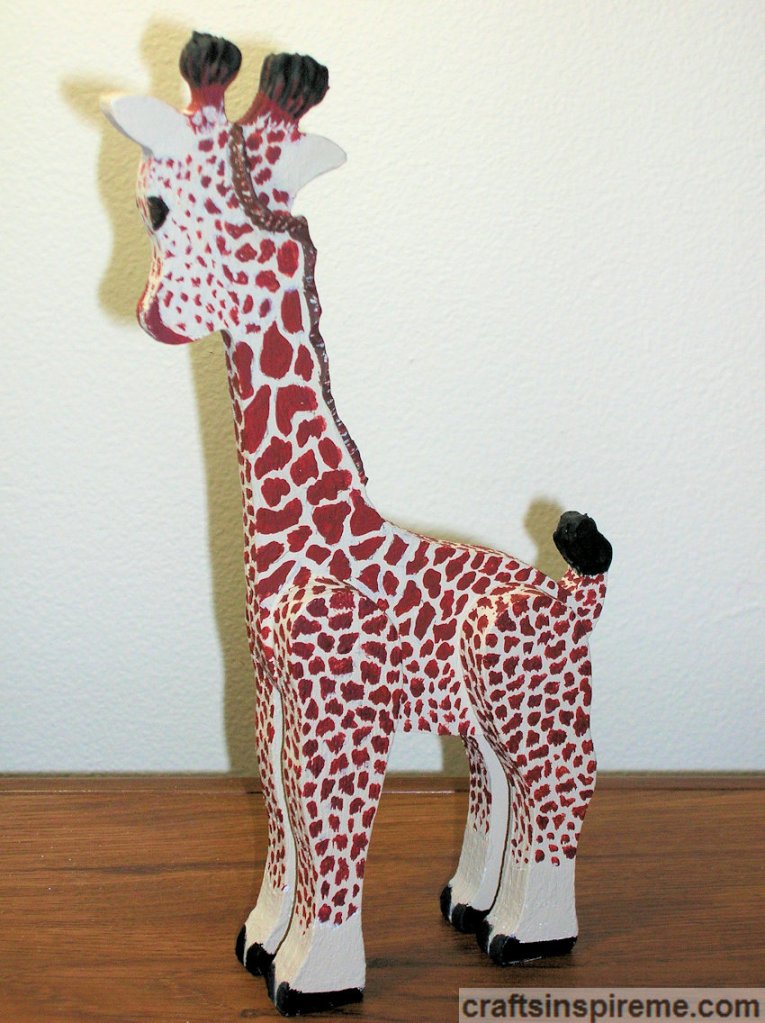
Here is a side-by-side comparison of the original raw wood giraffe and the fully detailed project at completion.
I had a lot of fun painting this little guy. Figuring out the anatomy was challenging and rewarding. There are many wooden animal crafts waiting for good homes. Check out your local craft stores or the internet to find one you will love. Good luck!
Whose turn is it to walk the dog – I mean dinosaur? Something tells me that 25-foot leash will not be long enough! Dinosaurs are real fan favorites. You can’t get much wilder than that. And what’s not to love?
A Dinosaur Nursery – They’re kind of cute at this stage.
Somewhere between adolescence and adulthood they seem to lose their charm! (lol)
Even when they’re dead, they instill an odd mixture of fear and fascination. Movie Director Steven Spielberg brought dinosaurs back to life on the big screen in the epic movie, Jurassic Park – an emotional roller coaster, that started with awe and wonder, but quickly escalated to bone chilling terror.
We love dinosaurs anyway. Want proof? Look at all the books, movies, television shows, and merchandise. At some point, every kid draws and colors his or her favorite dinosaur. Here’s your chance to feel like a kid again. Grab some paints and brushes and let’s go!
How to Paint a Wooden Stegosaurus
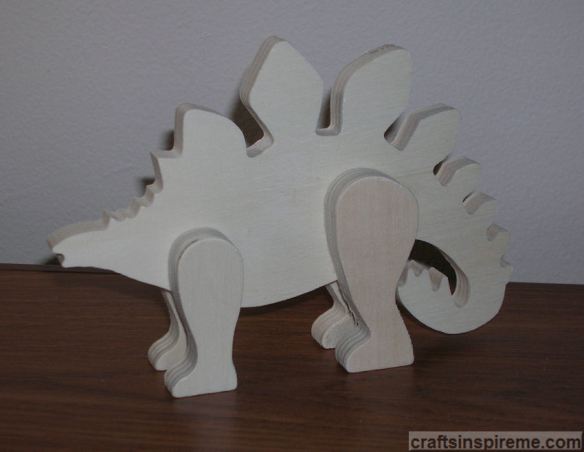
With a little paint you can design your own dinosaur. It can be as simple as a single coat of paint, or as detailed as you like. First we need a little inspiration.
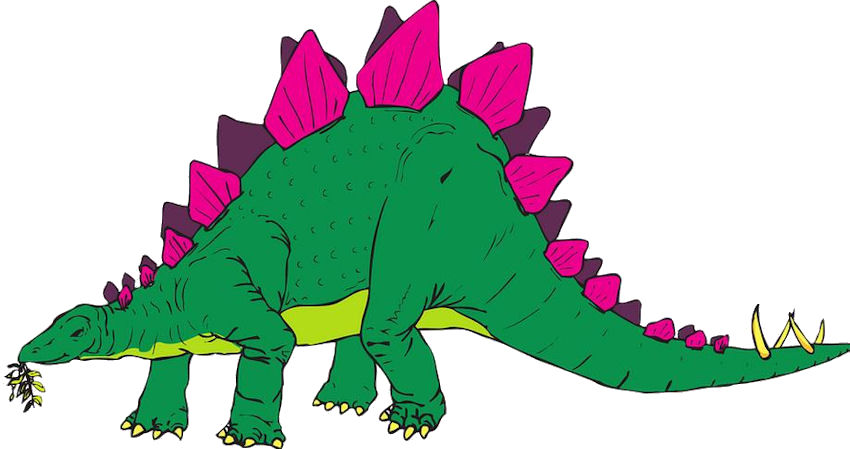
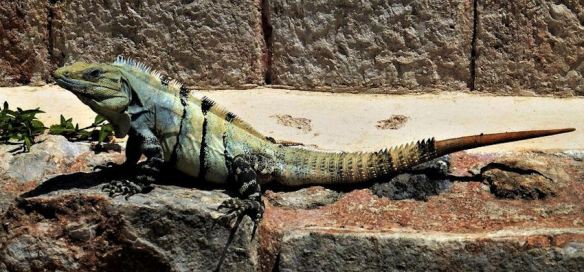
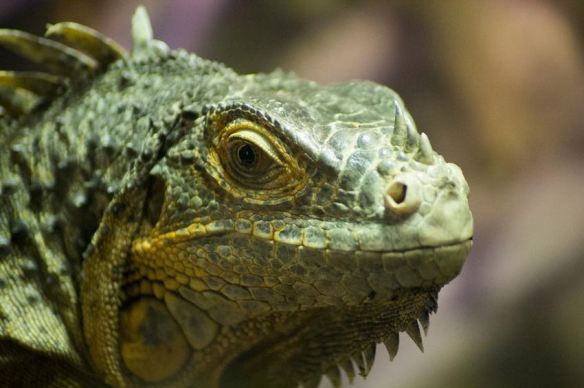
Since dinosaurs lived sixty-five million years ago, there’s no one around to tell us exactly what they looked like. For this project, photos of creatures living today, such as iguanas and lizards, can be inspirational. Check out those spines!
This carved wood stegosaurus, available at AC Moore, has sturdy legs, making it a freestanding, three-dimensional piece. Both sides and all the edges will need to be painted. Due to the raw nature of wood, it may require sanding, especially along the edges. (There are several types of animals in this carved wood collection. To see a painted flamingo project, please click here.)
Supplies:
Wooden Stegosaurus (4-1/4” high x 7-1/4” wide x 1-1/4” thick)
Acrylic Paints – black, brown & metallic green
1) Bottle fabric paint – brown
Paintbrushes
Sandpaper
Step 1 – Paint the dinosaur with green acrylic paint, including both sides and all edges. The great thing about paint is that it’s cheap. Feel free to experiment. If you don’t like the results, it can be easily changed.
Seeing it in color revealed a major anatomical mistake in the tail design. If you loved dinosaurs as a kid, you’ll remember that the stegosaurus has spikes on the top of its tail. The artist chose to curl the tail underneath, and as a result, mistakenly placed the spikes on the underside of the tail. This poor animal would have trouble walking because the spikes would continually get caught on the ground as it moved through the forest, making it easy prey.
Step 2 – To make it right, cut off the tip of the tail as shown.
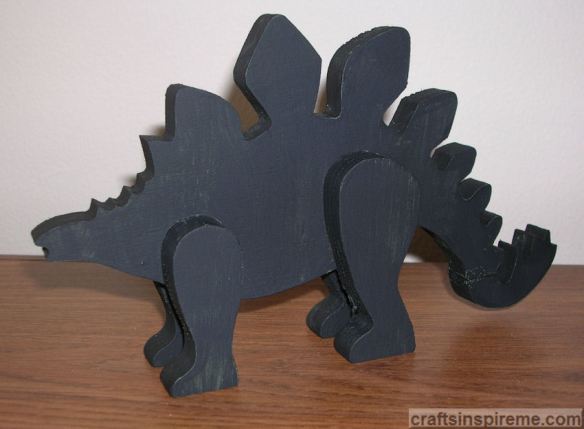
Step 3 – Turn the cut tail piece around, and glue it in place. Paint the entire figure black as a base coat, which will help delineate the scales added in a later step. Looks much better doesn’t it?
Step 4 – Paint the top of the head, the back plates, and the tail with brown fabric paint. Paint the sides of each plate with green fabric paint and add spikes along the sides of the tail. Brown acrylic paint was applied with a brush in between the back plates, because it was too narrow to fit the tube of fabric paint.
Step 5 – Add brown fabric paint on top of each leg and more spikes along the entire length of body. Create a scale pattern on the body using metallic green paint, and use the same color in the sides of the plates on his back.
Step 6 – Add a small dotted pattern to each leg. Paint the head brown, and add a few green scales along with the eyes. Congratulations! You now have your very own pet dinosaur. Fortunately for you, he’s a “Veggiesaurus,” unlike the one in the next photo.
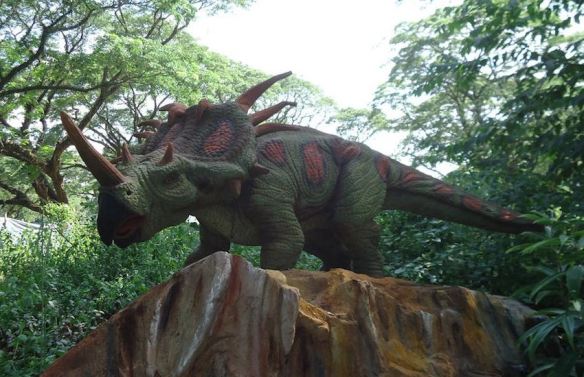
What a view, right? Thank goodness this is only an observation tower! Because if it was real… It would be the last thing you ever saw.
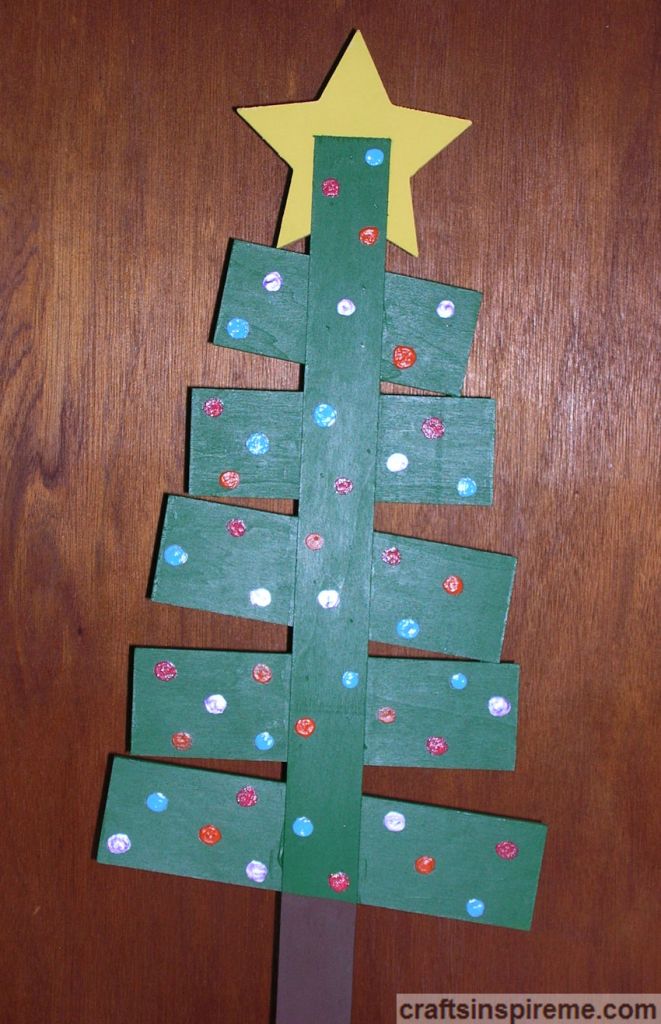
This Christmas tree is unlike most. It consists of individual flat pieces of wood, much like a signpost, ready for your painted decorations and inspiring words.
Words/Poetry
Most of my craft projects do not call for poetic or inspirational words. Grab a piece of paper and a pen and scribble down some possibilities. Take as much time as you need. Listen to song lyrics, read poems, or notice seasonal phrases from movies, books, or advertising.
Christmas Magic Sign
You will need to consider how many words/lines will fit.
Santa Christmas Sign
Use any fonts you like. You could use stencils for the lettering or freehand.
Merry Christmas Sign
Add decorative painted accents such as holly leaves and berries, or enhance your project with accessories like garland, and lights.
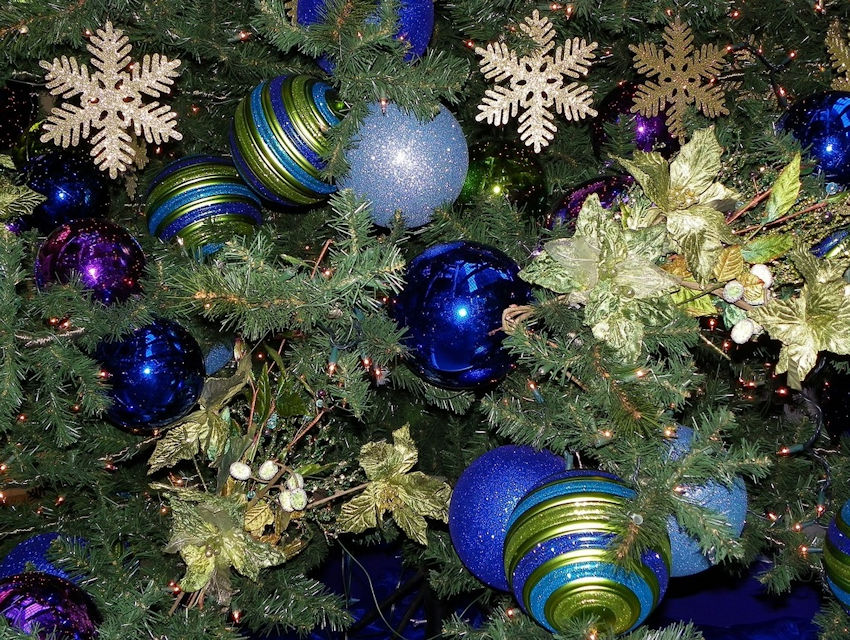
Decorated Christmas Tree
Even though this Christmas tree is made with flat pieces of wood, you still need to consider how to decorate it, starting with a color scheme.
Warm Colors
The warm color palette consists of reds, oranges, and yellows.
Cool Colors
The cool color palette includes greens, blues, and purples.
Monochromatic
With a monochromatic scheme, all decorations are the same color, and the variety comes from unique designs.
Multicolor
Create a festive atmosphere with all the colors of the rainbow.
Christmas Tree Lights
Instead of painting Christmas ornaments, you may want to paint lights with metallic acrylics. Another option is wrapping the tree with mini, battery-operated string lights.
How to Paint a Wooden Christmas Tree:
Raw Wood Tree
This freestanding, raw wood tree may need light sanding, especially the edges.
Supplies
Supplies:
Wooden Signpost Tree (28-1/2” high x 10-1/4” wide x 1/4” thick) (base 8”x4”x1/2” thick)
Acrylic Paints – green, yellow, brown
6) Bottles fabric paint: black, purple, blue, orange, pink, glow in the dark white
Paintbrushes
Paint the Tree & Star – Front
Using acrylics, paint the star, the “branches” and the trunk. You will need a thin brush to paint the trunk between the slats of green. Paint both sides of the tree, the base and all the edges.
Paint the Tree & Star – Back
Because this tree is meant to be seen from both sides, I came up with a finished design for the back. Paint the trunk brown from the base to the bottom “branch,” and green for the remainder.
Paint Details – Back
Apply fabric paints in thick dots to resemble ornaments upon the tree.
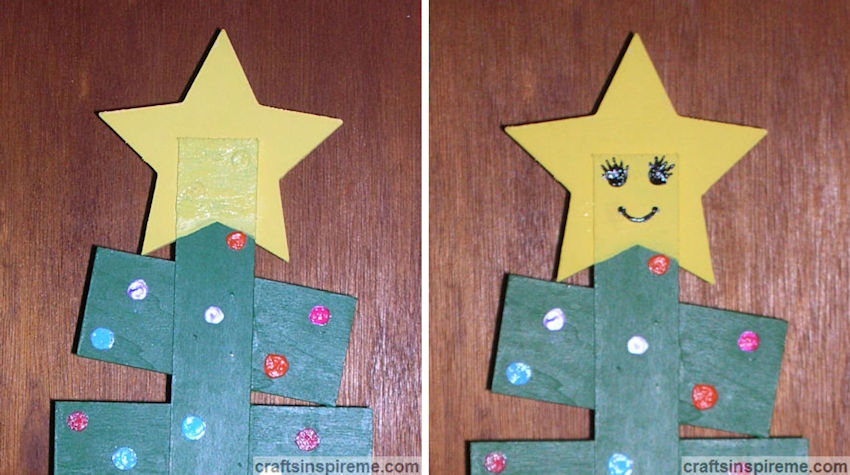
Repaint Star – Back
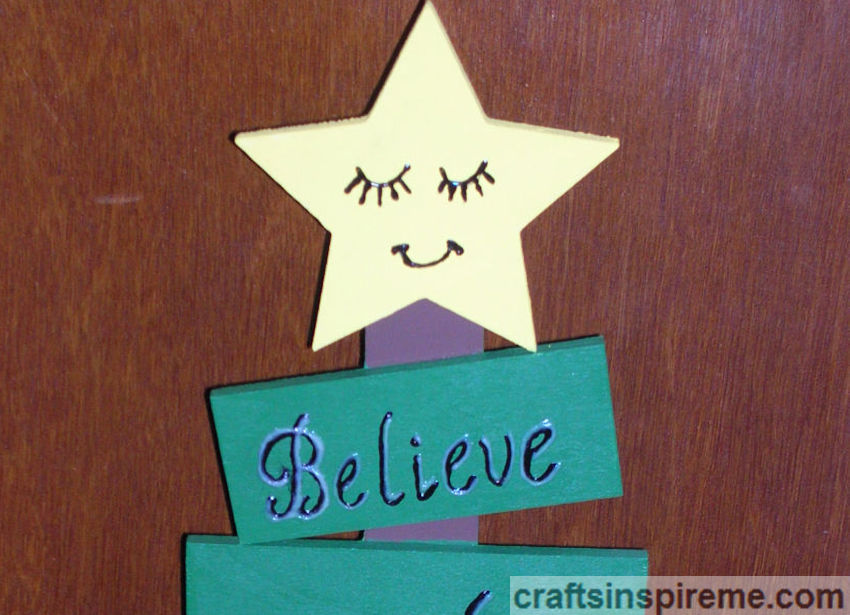
I didn’t like the look of the squared off piece of wood on the back of the star and thought it would better to see the full star on both sides. To accomplish this, I extended the star shape and filled it in with yellow as shown. A smiling face was added to the star, using black fabric paint, to give it personality.
Finished Tree – Back
The back of the tree is now complete. Only two more steps to complete this project.
Finishing the Tree – Front
Using black fabric paint, write the words you have chosen upon each board. Finish by giving the star a cute face. Allow it to dry overnight.
Finishing the Tree – Front
Using glow in the dark white fabric paint, trace the black letters to make them stand out better against the green tree. Every night, when you turn out the lights, the glowing words will make you smile. And what a nice way to fall asleep with inspirational thoughts floating in your dreams.
I hope you enjoy this project and are inspired to explore your creativity. Good luck in all your artistic endeavors and have fun decorating for the coming holidays!
“Dashing through the Snow” calls to mind sleigh rides and Santa Claus on his gift giving journey. With a wooden sleigh and a few accessories, you can create a wonderful holiday centerpiece. Before we begin, let’s look at color schemes and designs of several sleighs to get your creative ideas flowing:
Antique Sleigh
Although this sleigh needs some love, wood in its natural state is attractive. With a little polish, the brass runners will shine again. The lights and evergreen garland are great seasonal details.
Stained Wood Sleigh
The beauty of natural wood grain may not require color. A clear sealant coat helps preserve wood for years to come. Wood stain is optional.
Green, Gold & White Sleigh
Green and gold are nice alternatives to the standard red and green Christmas colors.
One Horse Open Sleigh
A clear finish protects the natural wood color, while the open sides provide decorative opportunities for colorful pillows and blankets to keep riders warm on a cold winter day.
Formula 1 Sleigh?
If Ferrari built sleighs, this would be the one. This sleek aerodynamic design would allow Santa Claus to complete his rounds in half the time.
Red & Gold Sleigh
The brilliant red and shiny gold trim are popular choices for Santa’s sleigh.
Red & Gold Sleigh with Lights
Dazzling string lights create a magical ambiance, day or night.
How to Paint a Wooden Sleigh:
Unpainted Sleigh
There are many wooden sleighs available through craft stores or online.
Supplies
Supplies:
Wooden Sleigh (10-1/2” high x 14” long x 6” wide)
Acrylic Paints – red, black, metallic gold, & white
1) Bottle fabric paint: white
Paintbrushes
Sleigh Painted Red
Paint the sleigh with red acrylic paint. It may take a couple coats to ensure smooth, even color.
Black Painted Rails
Paint the rails black on both sides and all edges.
Painted Snow & Gold Trim
Draw snowflakes on all four sides and paint each with white acrylic paint. To enhance the designs, go over each snowflake with white dimensional fabric paint. Paint the edges of the sleigh with metallic gold paint. This will most likely require two coats.
This completes the sleigh. Now it is time to think about making it the focal point of a new centerpiece. Your next decision is: Who will pull the sleigh?
Dog Sledding
Dog sledding teams compete every year in an Alaskan race called the Iditarod Trail Sled Dog Race.
Horse Drawn Sleigh
Riding in a horse drawn sleigh has been a tradition for centuries. In warmer seasons the sleighs are swapped out with carriages for year-round enjoyment.
Reindeer Drawn Sleigh
Santa isn’t the only one using reindeer to guide his sleigh.
A perfect 10 on the Cuteness Scale
Holding the reins securely in his paws, this adorable yorkie steers a course straight into the hearts of viewers in this moose drawn sleigh.
With your selections in mind, it is time to complete this project. There are no wrong answers. You may already have everything you need.
Christmas Sleigh Centerpiece
I chose a pig to pull the sleigh. His hat is a floral pick, without the stick. Fabric ribbon serves as reins, and I made a collar with a few jingle bells. Tuck one end of the reins into the collar, and the other is held by a squirrel, wearing a red crocheted hat.
Christmas Sleigh Centerpiece
A floral garland fills the sleigh with a harvest of red berries and green leaves. It looks like this cute little squirrel is stocking up for the winter. A male cardinal hitches a ride on the sleigh. All the red accents unify this design, while the pig provides a bit of whimsy.
Who will pull your sleigh and who will ride? Please let me know in the comments.
Hermione and Harry never go anywhere without their magic wands.
Logo/Sign at Ollivander’s Wand Store, Universal Studios
Every Hogwarts’ wizard goes to Ollivander’s to choose his or her magic wand.
Magic Wands at Ollivander’s Wand Store
While doing research, I was surprised to see that many of the wands in the Harry Potter series were rather lackluster. I expected wizards to have exquisite, highly personalized wands to express their personalities as well as their power.
Wooden Chopsticks
For this project, we will transform wooden chopsticks into magic wands for Hermione Grainger and Harry Potter. Use these techniques to create a wand for any character and add whatever embellishments feel right to you.
How to Make Hermione’s Magic Wand:
Inspiration
Hermione’s wand has a fairly simple design, consisting of English ivy wrapped around a monotone magic wand.
Supplies
Supplies: Wooden Chopstick (9” long x 3/8” thick) Acrylic Paint: yellow ochre Bottle fabric paint: glow-in-the-dark white Paintbrushes Clear Spray Paint: Matte Finish Optional 1) Faceted rhinestone & Acrylic Paint: metallic peridot. See “Advanced Painting” below.
Painting Chopstick
Step 1 – If the chopsticks are lacquer-coated, you may need to prime the surface first, and then apply two coats of acrylic paint. Puncture a hole in a box to hold the wand upright for drying, but don’t forget to paint the tip later. To prevent fingerprints and scratches, handle with a tissue.
Painting Vines & Leaves
Step 2 – Starting at the top, use three-dimensional paint to create an ivy vine wrapping around the wand. Add an interesting twist by using glow in the dark white paint, but if you prefer, you can use plain white. If you want to be true to Hermione’s original wand design, wait until the 3D paint dries, and then paint the vines with yellow ochre to match the rest of the wand.
Hermione’s Finished Wand
To seal the paints, spray the wand with clear spray paint. At this point, the wand is complete. If you have been following this blog for a while, you know there is usually an enhanced version, which is shown below in the “Advanced Painting” section.
How to Make Harry’s Magic Wand:
Inspiration
Harry’s wand has a textured, two-tone design. Rough “tree bark” at the top serves as a handgrip, and the rest is smooth wood.
Supplies
Supplies: Wooden Chopstick (9” long x 3/8” thick) Acrylic Paint – licorice black, coffee bean brown 1) Bottle fabric paint – brown Paintbrushes Clear Spray Paint: Matte Finish Optional – Glue gun & 1) Faceted rhinestone. See “Advanced Painting” below.
Creating Texture
Step 1 – Using three-dimensional paint, draw long lines at top to create the basic texture as shown above.
Adding More Texture
Step 2 – Fill in with more texture, to create a rough tree bark appearance, including pointed edges across the top of the wand. Allow paint to dry overnight.
Painting Black
Step 3 – Paint the entire wand with black acrylic.
Dry Brushing Brown
Step 4 – Dry brush the rough bark with brown acrylic paint, allowing the black recessed areas to show through, as they do with real bark. Seal the paints with clear spray paint.
Harry & Hermione’s Finished Wands
This photo shows the two completed wands side by side. I wanted to take this project to the next level by creating more texture on Harry’s wand and more visual interest for Hermione’s.
Advanced Painting:
Hermione’s Wand – Defining the Leaves
Step 1 – Make the leaves more prominent by applying a thicker coat of the same three-dimensional glow in the dark paint on each individual leaf.
Close-Up Vines & Rhinestone
Step 2 – Create a glowing cap on the end of the wand and place a rhinestone in the center as shown. In case you didn’t know, fabric paint can be used in place of glue.
Glowing Wand
Step 3 – After being exposed to light, the vines, and leaves glow in the dark. You can test the glow by holding the wand under a bright light for several seconds and then switch off the lamp. Adjust the paint as needed.
Accent Painting the Leaves
Step 4 – Something still needed to be added, but I didn’t know what it was. Finally, I decided to apply a soft pastel green to the leaves, providing color as well as a subtle shimmer. Seal paints with clear spray paint. By day or night, this wand has stylish and surprisingly powerful.
Harry’s Wand – Creating Thicker Tree Bark
Step 1 – Using a glue gun, add long lines for more texture upon the handgrip.
Roughening the Texture
Step 2 – Use brown three-dimensional paint to roughen up the smooth lines of glue, to resemble tree bark more closely.
Painting Black
Step 3 – Paint the entire wand with black acrylic.
Dry Brushing Brown
Step 4 – Dry brush only the rough bark handle with brown acrylic paint, allowing the black recessed areas to show through, as they do with real bark. Use glow in the dark fabric paint to attach a rhinestone to the end of the wand as shown above. Seal paints with clear spray paint.
Harry’s Finished Wand
The thickened “tree bark” looks better, and the sleek black wand is the perfect choice for a powerful wizard.
Harry & Hermione’s Finished Wands
These two wands work well together, just like Harry and Hermione.
Close-Up – Both Finished Wands
I hope you have found a few inspirational ideas to create your own wands. Do you have a favorite wizard, or a favorite magical literary character? What kind of magic wand do you think that character would choose? Please let me know in the comments section. Enjoy the creative process, and let your ideas run wild.